



Relevant for Exams
Centre to introduce Bill to replace MNREGA with new job guarantee scheme.
Summary
The Centre is reportedly planning to introduce a Bill to replace the Mahatma Gandhi National Rural Employment Guarantee Act (MNREGA) with a new job guarantee scheme. This signifies a potential major legislative and policy shift in India's approach to rural employment and poverty alleviation. For competitive exams, understanding the existing MNREGA, reasons for its proposed replacement, and the features of the new scheme will be critical for questions on social sector schemes and economic policy.
Key Points
- 1The news indicates the Centre's intent to introduce a Bill to replace the existing Mahatma Gandhi National Rural Employment Guarantee Act (MNREGA).
- 2MNREGA, enacted on August 25, 2005, guarantees 100 days of wage employment per financial year to rural households.
- 3The scheme primarily targets adult members willing to undertake unskilled manual work in rural areas.
- 4The Ministry of Rural Development is the nodal ministry responsible for the implementation of MNREGA.
- 5This proposed legislative change could significantly alter India's flagship rural employment generation program and its impact on rural livelihoods.
In-Depth Analysis
The news of the Centre's intention to introduce a Bill to replace the Mahatma Gandhi National Rural Employment Guarantee Act (MNREGA) with a new job guarantee scheme signals a potentially monumental shift in India's approach to rural employment and poverty alleviation. Understanding this proposed change requires a deep dive into MNREGA's history, its impact, and the broader socio-economic context.
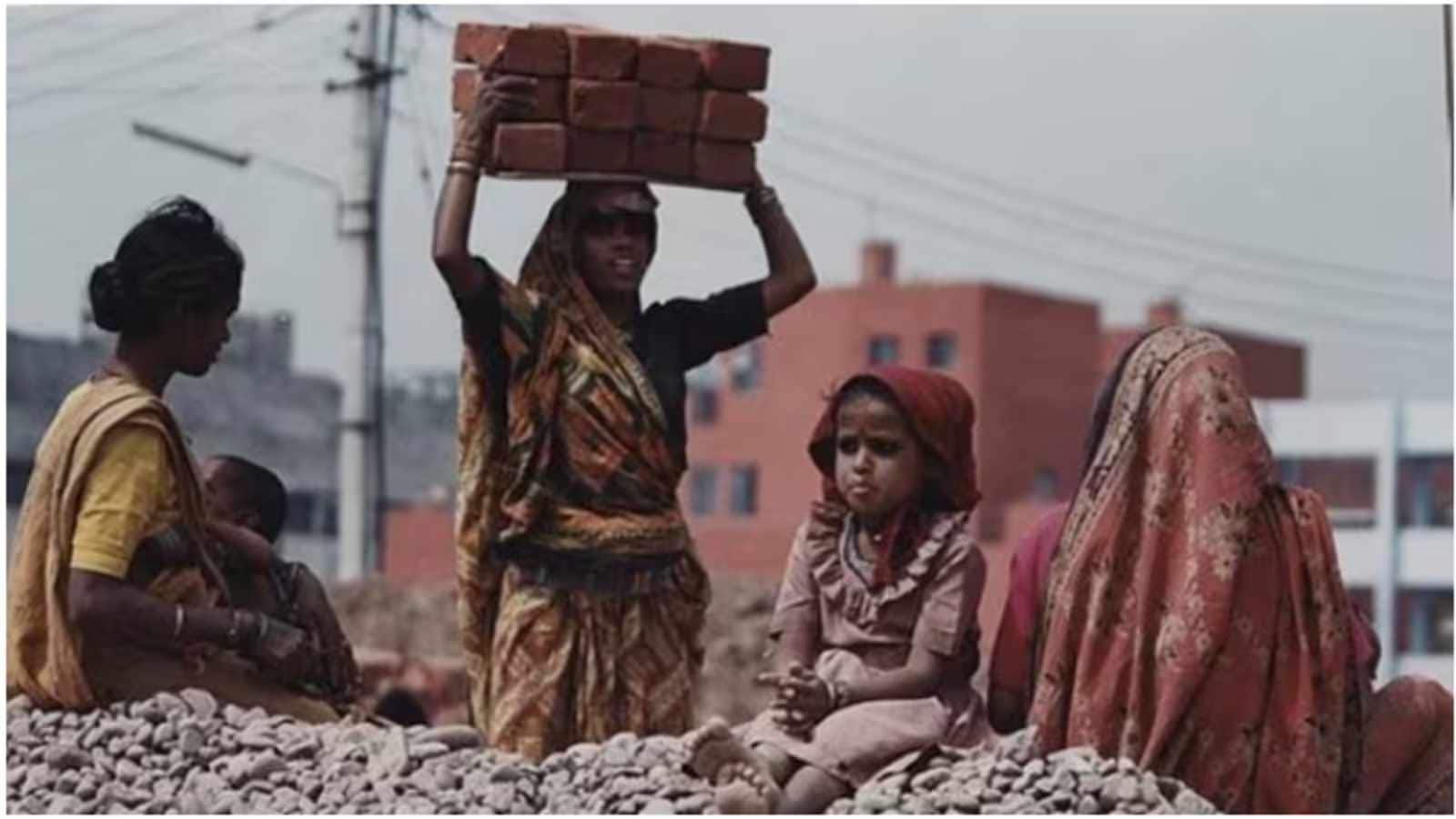
MNREGA, enacted on August 25, 2005, stands as one of the largest social welfare programmes globally. Its core objective is to guarantee 100 days of wage employment in a financial year to every rural household whose adult members volunteer to do unskilled manual work. This demand-driven scheme has been instrumental in providing a legal right to work, distinguishing it from previous employment generation programmes. It was designed to address rural distress, reduce distress migration, empower women (mandating 1/3rd participation), and create durable assets like water conservation structures, roads, and land development. The Ministry of Rural Development serves as the nodal ministry, overseeing its implementation with significant involvement from State Governments and Panchayati Raj Institutions (PRIs).
While the specific reasons for the proposed replacement are not detailed in the quick summary, MNREGA has faced various criticisms over the years. These include issues related to delayed wage payments, corruption, poor quality of assets created, administrative inefficiencies, lack of proper social audits, and the challenge of integrating it with broader skill development initiatives. Critics also point to the significant fiscal burden it places on the exchequer, even as proponents highlight its counter-cyclical role, especially during economic downturns like the COVID-19 pandemic, when it served as a critical safety net for millions of migrant workers returning to their villages.
Key stakeholders in this proposed legislative change are manifold. The **Central Government**, particularly the Ministry of Rural Development, is the primary architect of this policy shift, responsible for drafting the new Bill, securing parliamentary approval, and formulating the framework for the successor scheme. **State Governments** play a crucial role in implementation, wage disbursement, and local administration, often bearing a significant portion of the financial burden. **Panchayati Raj Institutions (PRIs)** are vital at the grassroots level for identifying beneficiaries, planning works, and ensuring transparency through social audits. **Rural households and workers** are the direct beneficiaries, whose livelihoods will be directly impacted by the features of the new scheme. Civil society organizations, economists, and advocacy groups also act as crucial stakeholders, monitoring implementation and advocating for the rights of workers.
This move holds immense significance for India. Economically, it could redefine the rural labour market, potentially shifting focus from purely unskilled manual labour to more skilled or semi-skilled work, or integrating with agricultural productivity. Socially, it impacts the livelihoods of millions, particularly the most vulnerable sections, and could alter patterns of migration and rural-urban dynamics. Politically, any change to such a popular and impactful scheme is fraught with challenges, requiring careful balancing of economic imperatives with social welfare. Historically, India has experimented with various employment guarantee schemes, with Maharashtra's Employment Guarantee Scheme (EGS) in the 1970s being a notable precursor that inspired MNREGA, proving the long-standing commitment to providing a safety net.
From a constitutional perspective, MNREGA, and any successor scheme, draws its spirit from the **Directive Principles of State Policy (DPSP)** enshrined in Part IV of the Indian Constitution. While not justiciable, these principles guide the State in making laws. Specifically, **Article 38** mandates the State to secure a social order for the promotion of the welfare of the people; **Article 39(a)** directs the State to ensure that citizens, men and women equally, have the right to an adequate means of livelihood; and **Article 41** speaks of the State making effective provision for securing the right to work, to education, and to public assistance in cases of unemployment, old age, sickness, and disablement. The MNREGA Act, 2005, operationalized these DPSPs, creating a legal right to work within its defined scope.
The future implications are substantial. The new scheme might aim to address MNREGA's perceived shortcomings by incorporating elements like skill development, linking work to more productive assets, increasing technology integration for transparency, or potentially even exploring an urban employment guarantee component. It could also alter the funding mechanisms and the balance of responsibilities between the Centre and States. The success of any new scheme will hinge on its design, ensuring a legal guarantee of employment, timely wage payments, robust grievance redressal mechanisms, and effective convergence with other rural development and social security programmes. The transition will need to be carefully managed to avoid disruption to the livelihoods of millions who currently depend on MNREGA, ensuring that the foundational goal of providing a safety net for rural India remains paramount.
Exam Tips
This topic falls under GS Paper II (Social Justice, Government Schemes, Welfare of Vulnerable Sections) and GS Paper III (Indian Economy, Employment, Rural Development) for UPSC. For other exams, it relates to Indian Economy and Government Schemes.
Study MNREGA's objectives, key features (e.g., 100 days employment, legal guarantee, 1/3rd women's participation, social audit), achievements, and common criticisms in detail. Compare it with other major poverty alleviation and employment generation schemes like PM-KISAN, NRLM, and NSAP.
Common question patterns include: direct questions on MNREGA's provisions; analytical questions on its effectiveness and challenges; policy-oriented questions discussing the rationale for its replacement and potential features of a new scheme; and Prelims-specific facts like enactment date, nodal ministry, and constitutional articles (DPSPs) it operationalizes.