



Relevant for Exams
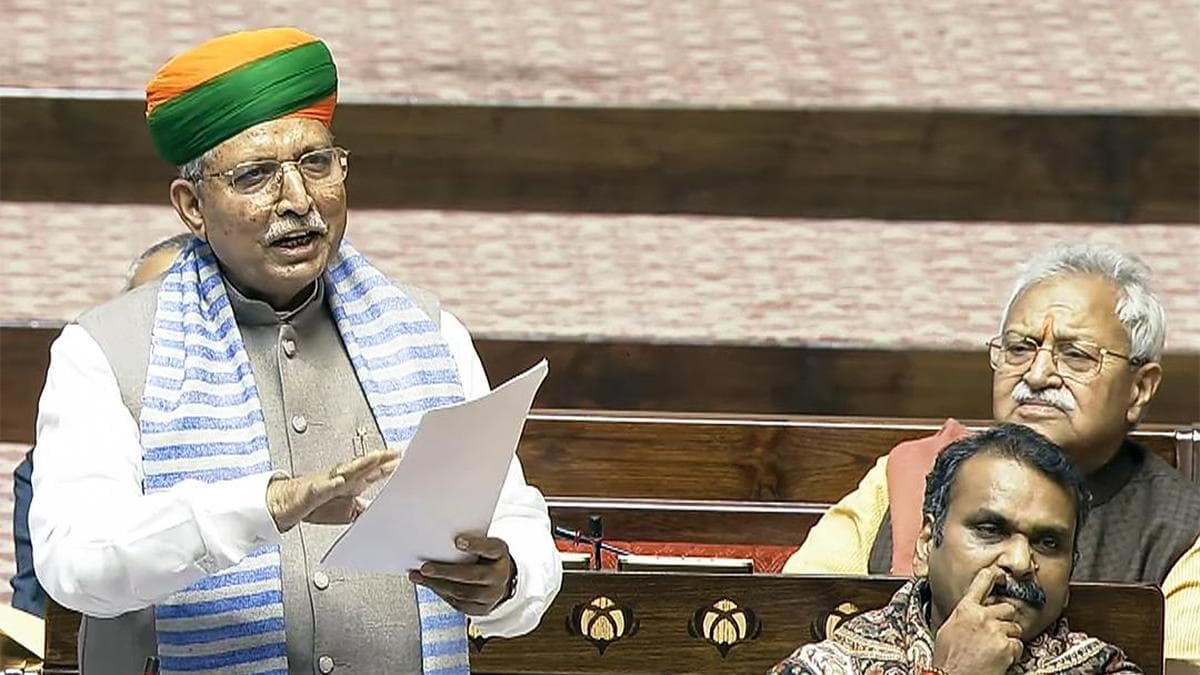
Rajya Sabha debates 'SIR' process and Election Commission's image, Centre defends constitutional framework.
Summary
During a Rajya Sabha discussion, the Centre defended the 'SIR' process, asserting it adheres to the constitutional framework. This came amidst accusations from Congress MP Digvijaya Singh about the BJP's alleged intent to establish a 'fascist state' without elections. Former PM Deve Gowda criticized the Opposition for repeatedly tarnishing the Election Commission's image. The debate underscores the significance of constitutional bodies like the Election Commission and the processes governing them for competitive exams.
Key Points
- 1The Centre defended the 'SIR' process in Rajya Sabha, stating it is based on a constitutional framework.
- 2Congress MP Digvijaya Singh accused the BJP of seeking to establish a 'fascist state' without elections during the debate.
- 3Former Prime Minister H.D. Deve Gowda criticized the Opposition for consistently tarnishing the image of the Election Commission.
- 4The discussion highlights the parliamentary scrutiny over processes related to electoral integrity and constitutional bodies.
- 5The Election Commission of India (ECI) is a constitutional body established under Article 324 of the Indian Constitution, responsible for conducting elections.
In-Depth Analysis
The recent discussion in Rajya Sabha, where the Centre defended a particular process ('SIR') as constitutionally sound while facing accusations of undermining democracy, throws light on several critical aspects of India's democratic framework. This debate is not merely a political spat but a significant reflection on the health of our constitutional institutions, electoral integrity, and the nature of parliamentary discourse. Understanding this event requires delving into its background, the roles of key players, and its broader implications for India.
At its core, the debate revolves around the perceived erosion of democratic norms and the integrity of electoral processes. The background context is the increasing polarization in Indian politics and frequent accusations by the opposition regarding the fairness and transparency of elections and the functioning of independent bodies. The 'SIR' process, though not explicitly defined in the provided snippet, is presented as a governmental initiative or procedure that the Centre asserts aligns with the constitutional framework. This defense came amidst a direct and strong accusation from Congress MP Digvijaya Singh, who alleged that the ruling BJP aims to establish a 'fascist state' by circumventing elections. Such strong language underscores the deep mistrust and ideological chasm prevalent in current political debates. Adding another layer to the discussion, former Prime Minister H.D. Deve Gowda stepped in to criticize the Opposition for consistently tarnishing the image of the Election Commission of India (ECI), suggesting that such actions weaken democratic institutions and ultimately harm the Opposition's own electoral prospects.
Key stakeholders in this scenario include the **Centre (representing the ruling party and government)**, which is defending its actions and processes; **the Opposition (represented by Digvijaya Singh)**, which is raising alarms about democratic backsliding; **former PM H.D. Deve Gowda**, who, despite being part of the broader opposition landscape, offered a critical perspective on the Opposition's conduct regarding the ECI; and **the Election Commission of India (ECI)** itself, a constitutional body whose reputation and independence are implicitly under scrutiny. The ECI, established under **Article 324** of the Indian Constitution on January 25, 1950, is entrusted with the superintendence, direction, and control of the preparation of electoral rolls and the conduct of all elections to Parliament and State Legislatures, and to the offices of President and Vice-President. Its independence is paramount for free and fair elections, which are the bedrock of India's democracy.
This debate matters immensely for India. Firstly, it highlights the continuous need to safeguard **electoral integrity**. Free and fair elections are not just a procedural formality but the very essence of popular sovereignty and legitimate governance. Any perceived threat to this integrity, whether through governmental action or political rhetoric, has far-reaching consequences for public trust in democratic institutions. Secondly, the discussion underscores the critical role of **constitutional bodies** like the ECI. Their independence and public perception of impartiality are vital. When an institution like the ECI is repeatedly questioned or its image tarnished, it can lead to voter apathy, decreased participation, and a crisis of legitimacy for the entire democratic process. Thirdly, it reflects the state of **parliamentary democracy** in India, where crucial issues are debated, but often amidst intense political polarization and accusations, sometimes overshadowing substantive discussion on policy and governance.
Historically, India has prided itself on its robust democratic traditions and the strength of its electoral system. From the first general elections in 1951-52, the ECI has evolved, undertaking significant reforms and facing various challenges. Landmark reforms, often driven by Chief Election Commissioners like T.N. Seshan in the 1990s, have strengthened its powers and ensured greater transparency. However, debates surrounding electronic voting machines (EVMs), voter lists, and the Model Code of Conduct continue to surface, reflecting ongoing concerns about fairness and accountability. The **Representation of the People Act, 1950 and 1951**, govern the conduct of elections, qualifications for membership, and related matters, forming the legal framework within which the ECI operates.
Looking ahead, the future implications of such debates are significant. A continued erosion of trust in the ECI or other constitutional bodies could jeopardize the stability of India's democratic system. It necessitates a more responsible approach from all political stakeholders – the government, the opposition, and civil society – to uphold constitutional morality and strengthen institutions. Constructive criticism is essential for accountability, but unsubstantiated allegations can be corrosive. This discussion also implicitly calls for greater transparency in government processes and potentially further electoral reforms to address any legitimate concerns that arise. Ultimately, the health of India's democracy hinges on the collective commitment to constitutional principles, the independence of its institutions, and a vibrant yet responsible political discourse.
Exam Tips
This topic falls under the 'Indian Polity and Governance' section of the UPSC Civil Services Exam (Prelims & Mains GS-II), State PSCs, and other competitive exams. Focus on the structure, functions, and powers of the Election Commission of India (Article 324).
Study related topics like electoral reforms in India (committees like Dinesh Goswami Committee, Indrajit Gupta Committee, Law Commission Reports), the Representation of the People Act (1950 & 1951), and the role of political parties and parliamentary procedures (Rajya Sabha debates, different types of motions).
Common question patterns include: MCQs on constitutional articles (e.g., Article 324 and its provisions), powers and functions of the ECI, composition of the ECI; descriptive questions on challenges to electoral integrity, the role of the ECI in ensuring free and fair elections, and the significance of parliamentary debates in a democracy.
Related Topics to Study
Full Article
During a discussion in Rajya Sabha, Congress MP Digvijaya Singh says BJP wants to establish a ‘fascist state’ without elections; former PM Deve Gowda says the Opposition will continue to get defeated in elections if it tarnishes the image of Election Commission every time