

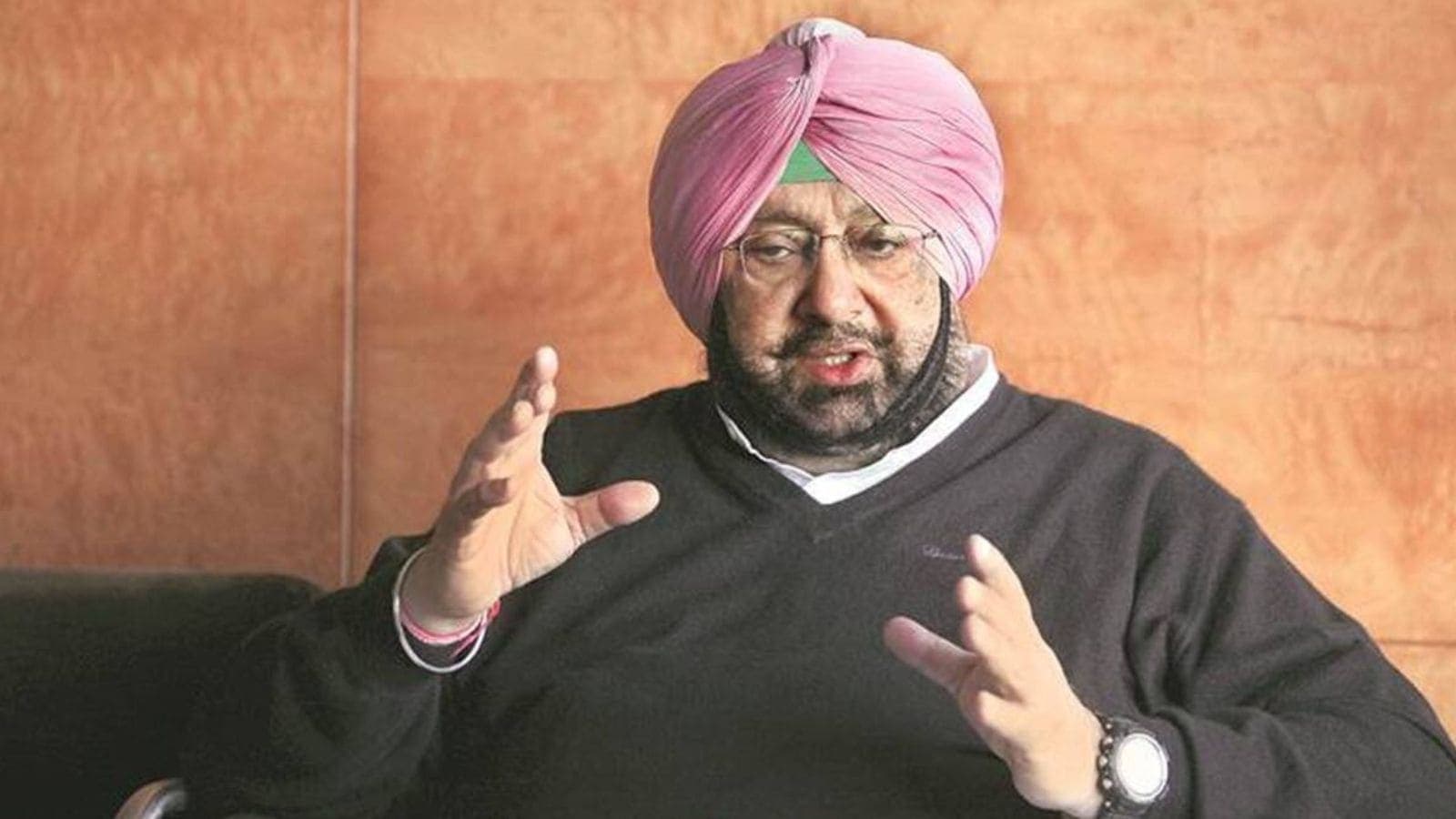


Captain Amarinder Singh's views on Centre-State dialogue mentioned in title; no content provided.
Summary
The article title suggests Captain Amarinder Singh's views on Centre-State relations, emphasizing dialogue for resolving issues. However, no actual content is provided for analysis. This lack of information prevents the extraction of specific statements, policy positions, or detailed context that would be relevant for competitive exam preparation.
Key Points
- 1The article content is unavailable, preventing the extraction of specific facts.
- 2No detailed statements from Captain Amarinder Singh on Centre-State relations are provided.
- 3Specific dates, names, or numbers related to the interview are absent due to missing content.
- 4The context or policy implications discussed in the interview cannot be determined.
- 5Lack of content makes it impossible to identify any constitutional or legal provisions mentioned.
In-Depth Analysis
The statement by Captain Amarinder Singh, "States, including Punjab, need not differ with all that Centre does … issues can be resolved via dialogue," while lacking specific interview content, provides a crucial entry point into understanding the complex and ever-evolving dynamics of Centre-State relations in India. This topic is central to India's federal structure and is a perennial area of discussion and debate in Indian polity.
**Background Context: India's Federal Framework**
India adopted a quasi-federal system, described by K.C. Wheare as "federal in form but unitary in spirit." The Constitution of India, enacted on January 26, 1950, meticulously delineates powers between the Union (Centre) and the States. This division is primarily enshrined in the Seventh Schedule, which lists subjects under the Union List (e.g., defence, foreign affairs, railways), State List (e.g., public order, police, health, agriculture), and Concurrent List (e.g., education, forests, trade unions). While states have autonomy over subjects in the State List, the Centre often holds residuary powers and can legislate on Concurrent List subjects, with Union law prevailing in case of conflict (Article 254). Furthermore, the Centre has significant financial leverage over states, collecting major taxes and devolving funds based on recommendations of the Finance Commission (Article 280).
**Interpreting the Statement: A Call for Cooperative Federalism**
The former Punjab Chief Minister's statement advocates for a less confrontational and more cooperative approach to Centre-State issues. This perspective suggests that despite inherent differences in governance priorities or political ideologies, a continuous dialogue mechanism can prevent stalemates and foster effective policy implementation. This is particularly significant coming from a leader of Punjab, a state with a history of strong regional identity and instances of friction with the Centre, notably during the Khalistan movement era, the Anandpur Sahib Resolution demanding greater state autonomy in 1973, and more recently, the farmers' protests against the central farm laws.
**Key Stakeholders and Their Roles**
1. **Union Government:** As the central authority, it sets national policies, manages macro-economy, and ensures national security and integrity. Its role often involves balancing national interests with diverse regional demands.
2. **State Governments:** These are closer to the ground realities and responsible for implementing welfare schemes, maintaining law and order, and fostering regional development. They often advocate for greater fiscal autonomy and legislative powers.
3. **Political Parties:** The stance on Centre-State relations often depends on whether a party is in power at the Centre or in a state. National parties, when in power at the Centre, tend to lean towards a strong Centre, while regional parties or national parties in opposition at the Centre often champion state autonomy. Captain Amarinder Singh, a Congress veteran, previously led a state government often at odds with the BJP-led Centre, yet his statement here suggests a pragmatic approach.
4. **Constitutional Bodies:** The Finance Commission (Article 280) recommends the distribution of tax revenues between the Centre and states. The Inter-State Council (Article 263) provides a forum for discussion and resolution of disputes among states and between the Centre and states. The GST Council (Article 279A) is a unique federal body for indirect tax policy.
**Significance for India: Cooperative vs. Competitive Federalism**
Healthy Centre-State relations are paramount for India's stability, development, and democratic functioning. A cooperative approach ensures smoother implementation of national schemes (e.g., Ayushman Bharat, Swachh Bharat Mission) which require state buy-in and resource allocation. It promotes national integration by addressing regional aspirations within the constitutional framework. Conversely, excessive friction can lead to policy paralysis, hinder economic growth, and strain the federal fabric. The debate often oscillates between cooperative federalism (where Centre and states collaborate) and competitive federalism (where states compete for investment and resources, often with central support).
**Historical Context and Evolution**
Post-independence, the initial decades saw a strong Centre, largely due to the dominance of the Indian National Congress at both Union and state levels. The rise of regional parties from the late 1960s, however, brought the issue of state autonomy to the forefront. This led to demands for greater financial resources, legislative powers, and concerns over the misuse of Article 356 (President's Rule). Major commissions like the Administrative Reforms Commission (1966), the Sarkaria Commission (1983), and the Punchhi Commission (2007) were appointed to review and recommend improvements in Centre-State relations. Their recommendations largely emphasized the need for greater consultation, financial devolution, and restraint in using central powers.
**Future Implications**
In a diverse country like India, the Centre-State dynamic will continue to be a defining feature. The future will likely see continued demands for greater fiscal autonomy from states, especially after the implementation of GST which subsumed many state taxes. The role of the GST Council as a model for consensus-building in fiscal federalism will be crucial. The effective functioning of forums like the NITI Aayog (which replaced the Planning Commission in 2015) and the Inter-State Council will be vital for fostering dialogue. A balanced approach, combining strong national leadership with respect for regional identities and autonomy, is essential for India's continued progress. The statement by Captain Amarinder Singh, therefore, underscores a pragmatic path forward, emphasizing dialogue as the cornerstone of resolving federal disputes rather than perpetual confrontation.
Exam Tips
This topic falls under UPSC Civil Services Mains GS Paper II (Polity & Governance) and is crucial for State PCS exams. Focus on understanding the constitutional provisions (Articles 245-255, 263, 279A, 280, 356, Seventh Schedule) and the recommendations of key commissions (Sarkaria, Punchhi).
Prepare analytical answers on the concepts of cooperative and competitive federalism, challenges to India's federal structure, and mechanisms for Centre-State dispute resolution. Be ready to discuss specific examples of Centre-State friction (e.g., farm laws, financial devolution issues).
Practice essay questions on the 'Spirit of Federalism' or 'Challenges to Indian Federalism'. For Prelims, memorize the articles related to legislative, administrative, and financial relations, and the composition/functions of bodies like the Finance Commission and GST Council.
Understand the evolving nature of Centre-State relations, especially in the context of economic reforms (like GST) and the role of new institutions (like NITI Aayog). Compare and contrast the roles of the erstwhile Planning Commission and NITI Aayog in fostering Centre-State cooperation.
Study the historical context of Centre-State relations, from the era of Congress dominance to the rise of coalition politics and regional parties. This will help in understanding the shifts in power dynamics and the reasons behind demands for greater state autonomy.