



Relevant for Exams
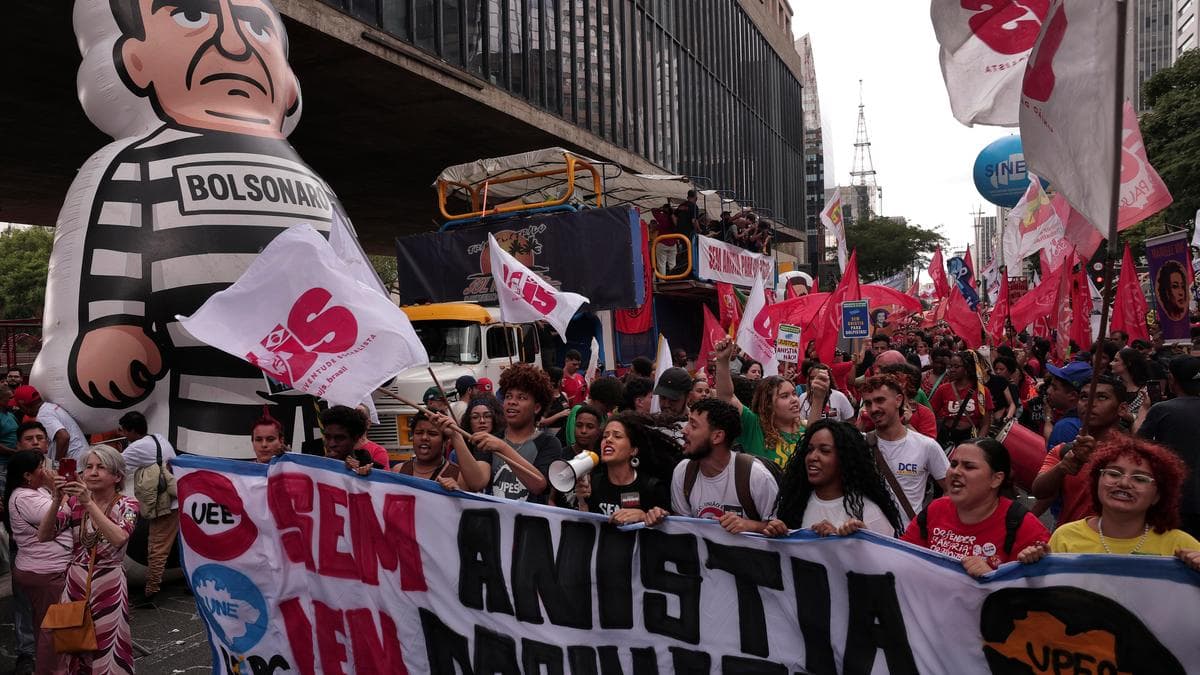
Brazilians protest bill potentially reducing former President Bolsonaro's prison time.
Summary
Brazilian citizens have launched widespread protests against a proposed bill that could significantly reduce the potential prison sentence for former President Jair Bolsonaro. These demonstrations underscore deep political divisions and public scrutiny over legislative attempts to influence judicial outcomes for high-profile figures, making it relevant for international current affairs.
Key Points
- 1Tens of thousands of Brazilians participated in protests against a specific legislative bill.
- 2The bill in question aims to potentially reduce the prison time for former President Jair Bolsonaro.
- 3Jair Bolsonaro is identified as the former President of Brazil.
- 4The protests occurred in Brazil, highlighting public opposition to the proposed legal change.
- 5The news item, categorized as "international," was reported by "thehindu.com."
In-Depth Analysis
The recent protests in Brazil against a proposed bill to potentially reduce former President Jair Bolsonaro's prison time highlight a critical juncture for Brazilian democracy and offer valuable lessons for other nations, including India. This event is not merely a legal dispute but a reflection of deep political polarization, the ongoing struggle for judicial independence, and the resilience of democratic institutions.
To understand the current situation, it's crucial to delve into the background of Jair Bolsonaro's presidency (2019-2022). Bolsonaro, a far-right populist, came to power on a wave of anti-establishment sentiment, promising to tackle corruption and crime. His tenure was marked by controversial policies, including environmental deregulation, skepticism towards COVID-19 vaccines, and frequent clashes with the judiciary and media. His rhetoric often questioned the legitimacy of democratic processes, leading to concerns about the erosion of democratic norms. After losing the 2022 presidential election to his left-wing rival, Luiz Inácio Lula da Silva, Bolsonaro faced numerous legal challenges. These include investigations into his role in the January 8, 2023, attacks on government buildings by his supporters, alleged electoral fraud, and the spread of misinformation, particularly regarding public health.
What happened is that tens of thousands of Brazilians took to the streets to protest a legislative bill that, if passed, could significantly reduce the potential prison sentences for certain crimes, particularly those that Bolsonaro has been accused of or convicted for. While the bill might be framed in general terms, the public perception is that it is specifically designed to benefit the former President, allowing him to evade severe legal consequences. These protests underscore the public's demand for accountability and justice, fearing that political maneuvering could undermine the rule of law and grant impunity to powerful figures.
Key stakeholders involved in this unfolding drama include Jair Bolsonaro himself, who is at the center of the legal battles and the beneficiary of the proposed bill. The Brazilian Congress (legislature) is the body debating and potentially passing this bill, showcasing the legislative branch's power and potential influence over judicial outcomes. The current government under President Lula da Silva, while not directly proposing the bill, represents the political opposition to Bolsonaro, and their stance on such legislative attempts is crucial. The Brazilian Judiciary, comprising various courts and prosecutors, is responsible for investigating and trying Bolsonaro, emphasizing their role as guardians of the law. Finally, the Protesters and Brazilian Civil Society represent the voice of the people, demonstrating their commitment to democratic principles, judicial independence, and holding leaders accountable.
For India, this situation holds significant relevance. Firstly, it underscores the universal importance of **democratic health and the rule of law**. Like Brazil, India is a vibrant democracy, and any attempt to undermine judicial independence or manipulate legal processes for political gain is a threat to the foundational principles of governance. India's Constitution, through articles like **Article 50** (separation of judiciary from executive) and the detailed provisions for the Supreme Court (**Articles 124-147**) and High Courts (**Articles 214-237**), firmly establishes the independence of the judiciary. The debates in Brazil echo similar concerns in India regarding the balance of power between the legislative, executive, and judicial branches. Secondly, the intense **political polarization** witnessed in Brazil serves as a case study for India, which also experiences deep political divisions. Understanding how other democracies navigate such challenges can provide insights into maintaining social cohesion and democratic stability. Thirdly, as a fellow member of the **BRICS grouping**, Brazil's political stability or instability can impact the collective strength and dynamics of this important international bloc, affecting India's broader foreign policy and economic interests in Latin America. Political turmoil can deter foreign investment, potentially impacting trade relations between India and Brazil.
Historically, Brazil's democracy is relatively young, having emerged from a military dictatorship in 1985. This history makes Brazilians particularly sensitive to actions perceived as threatening democratic institutions or granting undue power to political figures. The January 8th events, often compared to the US Capitol attack, highlight a global trend of challenges to democratic norms and institutions, making the current legislative push a critical test of Brazil's commitment to its democratic future.
Looking ahead, the **future implications** are profound. The outcome of the bill and Bolsonaro's ongoing legal battles will significantly determine his political future, including his eligibility to run for office again. More broadly, the way this situation is handled will be a crucial test for the strength and resilience of Brazilian democratic institutions. It will impact public trust in the political and legal systems and could either reinforce or weaken the principles of accountability and justice. For India, observing these developments offers a chance to reflect on its own democratic safeguards, the importance of a robust judiciary, and the vigilance required from civil society to uphold constitutional values and the rule of law.
Exam Tips
This topic falls under 'International Relations' (UPSC GS Paper 2) and 'Current Affairs' for all competitive exams. Focus on understanding the challenges to democracy and the rule of law in a global context.
Study related topics like the BRICS grouping, the concept of judicial independence, separation of powers (referencing Indian Constitutional Articles like 50, 124, 214), and the rise of populism globally. Be prepared to compare democratic challenges across different countries.
Common question patterns include MCQs on prominent political figures (e.g., Jair Bolsonaro, Lula da Silva) and their respective countries, or descriptive questions asking for an analysis of threats to democratic institutions, drawing parallels with India's constitutional framework.
Pay attention to the role of civil society and protests in democratic accountability. Questions might explore the significance of public participation in upholding democratic values.
Understand the distinction between legislative power, executive power, and judicial independence. Be ready to discuss how these branches interact and potential areas of conflict, especially when high-profile political figures are involved.
Related Topics to Study
Full Article
Tens of thousands of Brazilians have protested against a bill that could reduce former President Jair Bolsonaro’s prison time