



Relevant for Exams
BJP convenes Meitei, Kuki MLAs in Delhi to discuss Manipur's future; details unavailable.
Summary
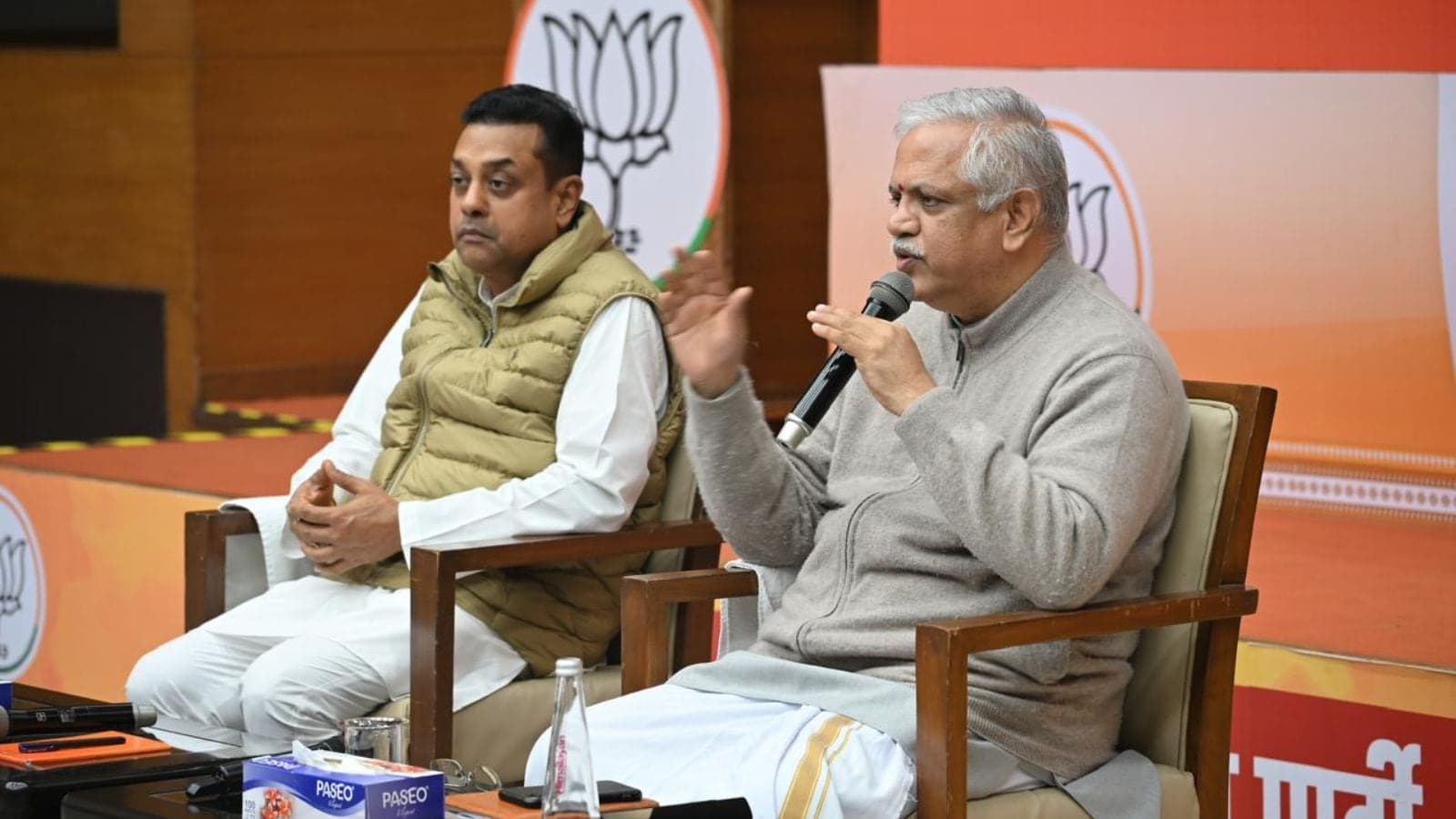
The BJP convened a meeting in Delhi bringing together Meitei and Kuki MLAs from Manipur. The objective was to explore a 'way forward' to address the ongoing ethnic conflict in the state. While the initiative signifies political efforts towards resolution, specific details of the discussions or outcomes are unavailable due to the lack of article content. This event is relevant for understanding ongoing governmental efforts to restore peace in Manipur for competitive exams.
Key Points
- 1The meeting involved the BJP bringing together Meitei and Kuki MLAs from Manipur.
- 2The primary purpose was to explore a 'way forward' to resolve the ethnic conflict in Manipur.
- 3The discussions took place in Delhi, indicating central government involvement in the peace process.
- 4Specific details regarding the points of discussion, proposals, or resolutions from the meeting are not provided in the source content.
- 5This initiative represents a political dialogue effort to address the protracted unrest in Manipur.
In-Depth Analysis
The recent initiative by the Bharatiya Janata Party (BJP) to convene a meeting in Delhi bringing together Meitei and Kuki Members of Legislative Assembly (MLAs) from Manipur marks a significant political step towards addressing the protracted ethnic conflict plaguing the state. While specific details of the discussions remain undisclosed, the very act of bringing representatives from the warring communities to a common platform under the aegis of the central ruling party underscores the gravity of the situation and the central government's direct involvement in seeking a resolution.
**Background Context: A State in Turmoil**
The ethnic conflict in Manipur, primarily between the Meitei community residing in the Imphal Valley and the Kuki-Zo tribes predominantly inhabiting the hill districts, erupted violently on May 3, 2023. The immediate trigger was a 'Tribal Solidarity March' organized by the All Tribal Students' Union Manipur (ATSUM) to protest the Manipur High Court's directive to the state government to consider including the Meiteis in the Scheduled Tribes (ST) list. This demand by the Meiteis, who constitute about 53% of the state's population and live mostly in the valley, is fiercely opposed by the Kuki-Zo and other tribal communities. The tribals fear that ST status for Meiteis would allow them to acquire land in the hills, dilute existing tribal reservations, and encroach upon their traditional rights, which are protected under various land laws and constitutional provisions like Article 371C, providing for a Hill Areas Committee in the Manipur Legislative Assembly.
Beyond the immediate trigger, the conflict is rooted in a complex interplay of historical grievances, land disputes, demographic anxieties, economic disparities, and the illicit drug trade. The Kuki-Zo communities accuse Meiteis of being dominant and discriminating against them, while Meiteis express concerns over illegal immigration from Myanmar, which they claim is altering the state's demography and exacerbating land pressures in the hills, especially in the context of poppy cultivation and drug trafficking.
**What Happened: A Bid for Dialogue**
The meeting in Delhi, orchestrated by the BJP, aimed to explore a 'way forward' to restore peace and normalcy in Manipur. By bringing together MLAs from both Meitei and Kuki communities, the central government signaled its intent to facilitate dialogue at the political level. This approach recognizes that a lasting solution requires political will and consensus-building among the elected representatives of the affected communities. Although the specifics of proposals or agreements are not public, such meetings typically involve discussions on de-escalation strategies, relief and rehabilitation efforts, security arrangements, and potentially, outlines for a long-term political settlement addressing the core issues of identity, land rights, and autonomy.
**Key Stakeholders Involved**
* **Meitei Community and their MLAs**: Representing the majority community, their demands for ST status and concerns over illegal immigration are central to the conflict. They seek protection of their identity and land in the valley.
* **Kuki-Zo Community and their MLAs**: Representing the tribal groups, they are vocal against the Meitei ST demand and advocate for the protection of their ancestral lands, often demanding separate administration or a Union Territory status for their areas.
* **Government of India (GoI)**: As the central authority, the BJP-led government is responsible for maintaining law and order, providing security forces, and mediating peace. Its role is crucial in facilitating dialogue and ensuring humanitarian aid.
* **Government of Manipur**: The state government, also BJP-led, has faced severe criticism for its handling of the crisis. Its effectiveness in restoring peace and governance is under intense scrutiny. Chief Minister N. Biren Singh, himself a Meitei, has been a contentious figure for the Kuki-Zo community.
* **Security Forces (Army, Assam Rifles, CRPF, State Police)**: Deployed extensively, their primary role is to prevent further violence, maintain buffer zones, and conduct operations against armed groups.
**Why This Matters for India: Far-Reaching Implications**
The Manipur conflict has profound implications for India. Firstly, it poses a significant **internal security challenge**, demonstrating the fragility of peace in a sensitive border state. The prolonged unrest strains central and state resources and diverts attention from development priorities. Secondly, it impacts India's **Act East Policy**, which aims to enhance connectivity and trade with Southeast Asian nations. Instability in a gateway state like Manipur undermines regional cooperation and economic initiatives. Thirdly, the conflict highlights challenges in **federal governance** and Centre-State relations, particularly in managing ethnic tensions and ensuring the protection of diverse communities under the Indian Constitution, including provisions like Article 355 and 356 concerning internal disturbance and President's Rule. The humanitarian crisis, with thousands displaced and hundreds dead, is a stark reminder of the social cost of unresolved ethnic strife.
**Historical Context and Future Implications**
Manipur has a history of ethnic tensions and insurgency. The current conflict is a resurgence of long-standing fault lines exacerbated by contemporary issues like demographic shifts and the drug economy. Previous attempts at peace, often involving ceasefires with insurgent groups, have not fully addressed the underlying issues. The current dialogue, while a positive step, faces immense challenges. Future implications depend heavily on the sincerity and effectiveness of these political dialogues. A successful resolution would require comprehensive measures addressing land rights, illegal immigration, rehabilitation of displaced persons, and a fair mechanism for considering the Meitei ST demand without undermining existing tribal rights. Failure could lead to further fragmentation of the state, increased radicalization, and continued instability, posing a grave threat to national integrity and peace in the North Eastern region.
**Related Constitutional Articles, Acts, or Policies**
* **Article 371C**: Special provisions with respect to the state of Manipur, which includes the formation of a Committee of the Legislative Assembly consisting of members elected from the Hill Areas. This article is crucial for protecting the interests of tribal communities.
* **Sixth Schedule of the Constitution**: Though Manipur's hill areas are not under the Sixth Schedule, the spirit of tribal self-governance and protection of land rights enshrined in it is highly relevant to the demands of Kuki-Zo communities.
* **Article 355**: Imposes a duty on the Union to protect every State against external aggression and internal disturbance, justifying central intervention in Manipur.
* **Article 356**: Pertains to the imposition of President's Rule in a state, which was a point of discussion during the peak of the crisis, though not invoked.
* **Inner Line Permit (ILP) System**: Demands for its implementation in all parts of Manipur have been made by various groups, aiming to regulate the entry and stay of 'outsiders' and protect indigenous populations. The system is currently partially implemented in the state.
* **Forest Rights Act, 2006 (FRA)**: This act, which recognizes the rights of forest-dwelling Scheduled Tribes and other traditional forest dwellers, is relevant in the context of land and forest-related disputes between communities.
* **Narcotics Drugs and Psychotropic Substances (NDPS) Act, 1985**: Relevant due to the strong nexus between poppy cultivation, drug trafficking, and the funding of armed groups, which is a significant underlying factor in the conflict.
Exam Tips
This topic falls primarily under GS Paper-II (Polity & Governance, Federalism, Internal Security) and GS Paper-III (Internal Security, Border Management) of the UPSC Civil Services Exam syllabus. Students should focus on the causes, consequences, and government responses to ethnic conflicts.
When studying, link this conflict to broader themes like tribal rights, land reforms, illegal immigration, drug trafficking, and the challenges of governance in India's North Eastern region. Understand the historical context of conflicts in the NE.
Common question patterns include analytical questions on the root causes of the Manipur conflict, the role of central and state governments, constitutional provisions relevant to tribal areas and internal security, and potential solutions. Be prepared for map-based questions on the geography of Manipur and its bordering states/countries.
Pay attention to the constitutional articles mentioned (e.g., 371C, 355, Sixth Schedule principles) and their implications for state autonomy and tribal rights. Questions might test your understanding of these provisions in the context of conflict resolution.
Practice writing answers that integrate political, social, economic, and security dimensions. For instance, how does the Act East Policy get impacted by such conflicts, or what are the socio-economic drivers behind the ethnic strife?