



Relevant for Exams
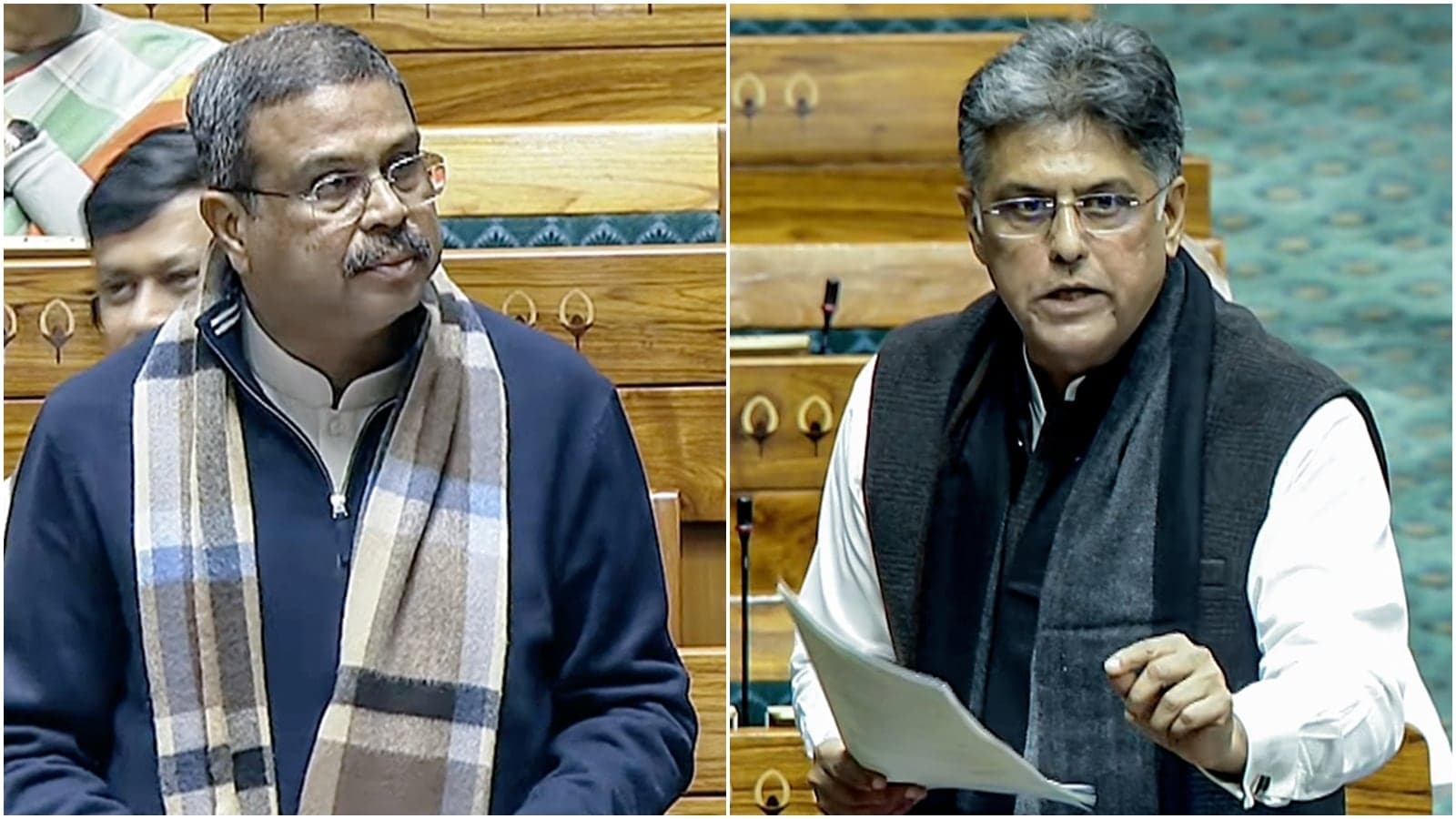
Govt sends Higher Education Regulator Bill to panel amid Opposition pressure.
Summary
The Government has decided to send the proposed Higher Education Regulator Bill to a parliamentary panel, reportedly due to significant opposition criticism. This move is crucial for future reforms in India's higher education sector and its regulatory framework. For competitive exams, understanding the Bill's objectives, key provisions, and the role of the parliamentary panel will be vital for questions on education policy and governance.
Key Points
- 1The core subject of the legislative action is the 'Higher Education Regulator Bill'.
- 2The Government's decision is to send this Bill to a parliamentary panel for further scrutiny.
- 3The move comes 'Amid Opp fire', indicating significant criticism from opposition parties.
- 4The Bill aims to introduce regulatory reforms in the higher education sector in India.
- 5Specific details regarding the Bill's provisions, the designated parliamentary panel, and the responsible Ministry will be critical for future exam questions.
In-Depth Analysis
The decision by the Indian government to send the proposed Higher Education Regulator Bill to a parliamentary panel, amidst significant opposition criticism, marks a pivotal moment in the ongoing efforts to reform India's vast and complex higher education sector. This move underscores the democratic process of legislative scrutiny and the importance of consensus-building on crucial policy matters.
**Background Context and the Need for Reform:**
India's higher education system is one of the largest in the world, catering to millions of students. However, it has long been plagued by challenges such as fragmented regulation, varying quality standards, insufficient research output, and a lack of global competitiveness. Currently, bodies like the University Grants Commission (UGC) established under the UGC Act, 1956, and the All India Council for Technical Education (AICTE) established under the AICTE Act, 1987, govern different aspects of higher education, leading to overlapping jurisdictions and regulatory ambiguities. The National Education Policy (NEP) 2020, a landmark policy document, explicitly recognized these issues and recommended the establishment of a single overarching regulator for higher education, the Higher Education Commission of India (HECI), to replace the existing multiple regulators. The HECI was envisioned to have four independent verticals: the National Higher Education Regulatory Council (NHERC) for regulation, the National Accreditation Council (NAC) for accreditation, the Higher Education Grants Council (HEGC) for funding, and the General Education Council (GEC) for standard-setting.
**What Happened:**
The government, specifically the Ministry of Education, introduced or was preparing to introduce the Higher Education Regulator Bill, which is likely designed to implement the NEP 2020's vision of a unified regulatory body. However, facing strong opposition from various political parties, which likely raised concerns about the centralization of power, potential erosion of institutional autonomy, and federalism issues (as education is a Concurrent List subject), the government decided to refer the Bill to a parliamentary standing committee. This is a common parliamentary practice where Bills are sent for detailed examination, public input, and expert consultation before being brought back to Parliament for debate and voting.
**Key Stakeholders Involved:**
* **Government (Ministry of Education):** The primary proponent, aiming to streamline regulation, enhance quality, and implement the NEP 2020 reforms. Their interest lies in creating a more efficient and effective regulatory framework.
* **Opposition Parties:** Critical stakeholders who raised concerns, likely regarding the implications for state autonomy, the potential for over-centralization of power, and the impact on the diverse higher education landscape. Their role is to ensure democratic accountability and thorough legislative scrutiny.
* **University Grants Commission (UGC) & All India Council for Technical Education (AICTE):** The existing regulatory bodies whose functions are likely to be subsumed or significantly altered by the new legislation. Their future roles and the transition process are key considerations.
* **State Governments:** As education falls under the Concurrent List (Entry 25 of List III, Seventh Schedule, added by the 42nd Amendment Act, 1976), states have a significant stake. Any central legislation must ideally factor in state concerns and maintain the spirit of cooperative federalism.
* **Higher Education Institutions (HEIs):** Universities, colleges, and technical institutions will be directly affected by new regulations, accreditation norms, and funding mechanisms. Their autonomy, governance structures, and academic freedom are often central to such debates.
* **Students and Faculty:** Ultimately, the quality and accessibility of education, research opportunities, and academic environment will impact them directly.
**Significance for India:**
This legislative initiative holds immense significance for India's future. A robust and reformed higher education sector is critical for leveraging India's demographic dividend, fostering innovation, and enhancing its global competitiveness. Improved quality and research output from Indian universities can attract foreign investment, talent, and collaborations, contributing significantly to the nation's economic growth. Furthermore, a streamlined regulatory framework could reduce bureaucratic hurdles, promote transparency, and curb malpractices, leading to better governance in education. The Bill's success or failure will shape how India's human capital is developed and utilized in the 21st century.
**Historical Context and Constitutional Provisions:**
The idea of a single higher education regulator is not new. Previous attempts, such as the Higher Education and Research Bill, 2011, also aimed at creating a unified body, but did not succeed. The current push is strongly aligned with the recommendations of NEP 2020. Constitutionally, Article 246 outlines the distribution of legislative powers between the Union and States, with education being a concurrent subject. This implies that while the Centre can legislate, states also have powers, making broad consensus vital. The role of parliamentary committees, like the Department-Related Standing Committees, is crucial in this process. These committees provide a forum for detailed scrutiny, expert consultation, and building political consensus, acting as mini-parliaments.
**Future Implications:**
The parliamentary panel's review will be critical. It may recommend significant amendments to the Bill, addressing concerns about federalism, institutional autonomy, and the scope of the new regulator's powers. The outcome will determine the structure of higher education governance for decades to come. If passed effectively, the Bill could lead to a more coherent, quality-focused, and research-driven higher education system in India, aligning with global best practices. However, if the concerns of stakeholders, particularly states and opposition parties, are not adequately addressed, the implementation could face resistance, potentially hindering the intended reforms and impacting the autonomy of state universities. The process will test India's commitment to cooperative federalism and effective legislative deliberation.
Exam Tips
This topic falls under UPSC GS Paper II (Polity, Governance, Social Justice - Education) and GS Paper III (Economy - Human Resource Development). For State PSCs and SSC, it's relevant for General Awareness, Indian Polity, and Current Affairs sections.
When studying, focus on the rationale behind the reform (problems with existing system), the proposed structure of the new regulator (e.g., HECI and its verticals as per NEP 2020), the constitutional provisions related to education (Concurrent List, Article 246), and the role of parliamentary committees in legislative scrutiny. Understand the 'why' behind the government's decision to send it to a panel.
Common question patterns include: 'Discuss the challenges faced by India's higher education sector and how the proposed Higher Education Regulator Bill aims to address them.' 'Examine the significance of parliamentary committees in the legislative process, with reference to the Higher Education Regulator Bill.' 'Analyze the implications of a unified higher education regulator on federalism in India.' 'Compare the objectives of the proposed HECI with the existing roles of UGC and AICTE.'