



Relevant for Exams
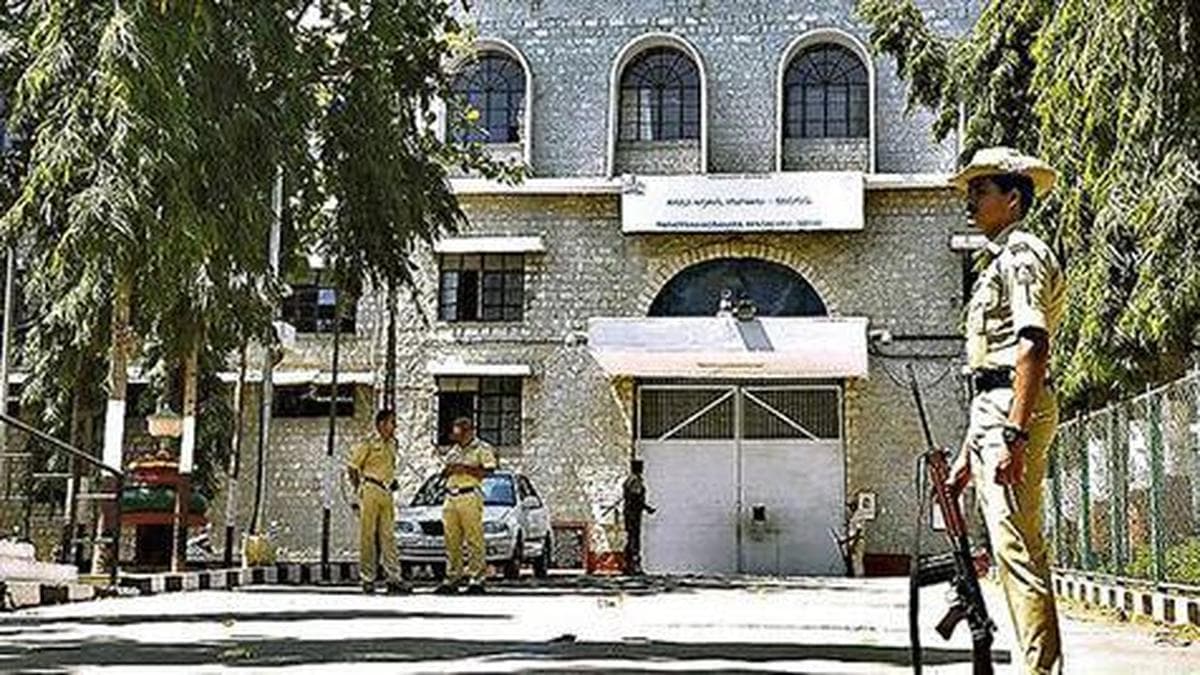
Alok Kumar inspects Parappana Agrahara Central Prison, vows to fix issues, highlighting prison reform focus.
Summary
Alok Kumar conducted an inspection of Parappana Agrahara Central Prison, pledging to address identified issues. This event highlights the ongoing focus on prison administration, inmate welfare, and the need for reforms within correctional facilities. While specific details of the inspection or issues are unavailable from the provided content, such visits are crucial for ensuring adherence to legal standards and improving prison conditions, making it relevant for governance and social justice topics in exams.
Key Points
- 1Official Alok Kumar conducted an inspection of Parappana Agrahara Central Prison.
- 2Parappana Agrahara Central Prison is a significant correctional facility located in Bengaluru, Karnataka.
- 3The primary objective of the inspection was to identify and resolve existing issues within the prison system.
- 4This event underscores the administrative focus on improving prison conditions and inmate welfare.
- 5Inspections by senior officials are critical for ensuring compliance with legal standards and promoting prison reforms.
In-Depth Analysis
The inspection of Parappana Agrahara Central Prison by an official like Alok Kumar, while seemingly a routine administrative event, holds profound significance for India's criminal justice system, governance, and human rights framework. It underscores the critical need for constant vigilance and reform within correctional facilities, which are often the forgotten corners of our societal structure.
**Background Context: The State of Indian Prisons**
Indian prisons have historically struggled with a myriad of challenges. Rooted in the colonial-era Prisons Act of 1894, the system was primarily designed for punitive detention rather than reformation. Decades after independence, despite constitutional mandates and judicial pronouncements, many prisons continue to grapple with severe issues. Overcrowding is perhaps the most pervasive problem; according to the National Crime Records Bureau (NCRB) 'Prison Statistics India 2021' report, the average occupancy rate in Indian prisons was 130.2%, with some states far exceeding this. This leads to poor sanitation, inadequate medical facilities, increased violence, and a breakdown of rehabilitation efforts. Understaffing, lack of proper training for prison personnel, and insufficient budgetary allocations further exacerbate these issues. High numbers of undertrial prisoners, who constitute a significant majority (around 77% as per NCRB 2021) of the prison population, also strain resources and highlight systemic delays in the judicial process.
**What Happened (Generalizing from the context):**
An inspection by a senior official like Alok Kumar typically involves a comprehensive review of prison operations. This would include assessing the living conditions of inmates (barracks, sanitation, food quality), the availability and quality of medical services, the implementation of rehabilitation and vocational training programs, the grievance redressal mechanisms for prisoners, and the overall security protocols. Such visits aim to identify specific deficiencies, assess compliance with existing rules and manuals (like the Model Prison Manual, 2016), and gather direct feedback from both inmates and staff. The pledge to 'fix issues' suggests an acknowledgment of existing problems and a commitment to address them, ranging from infrastructure upgrades to procedural reforms.
**Key Stakeholders Involved:**
Several entities play crucial roles in prison administration and reform. **Prison Administration** itself, led by the Director General of Prisons, Jail Superintendents, and wardens, is directly responsible for day-to-day management. The **State Government's Home Department** holds the primary policy-making and funding authority, as prisons fall under the 'State List' (Entry 4 of List II, Seventh Schedule) of the Constitution. The **Judiciary**, particularly the Supreme Court and various High Courts, acts as a vigilant guardian, issuing landmark judgments and directives to ensure humane treatment and uphold prisoners' rights (e.g., *Sunil Batra v. Delhi Administration, 1978*). The **National Human Rights Commission (NHRC)** and State Human Rights Commissions, established under the Protection of Human Rights Act, 1993, have the mandate to inspect prisons and investigate human rights violations. **Civil Society Organizations (CSOs) and NGOs** often advocate for prison reforms, provide legal aid, and run rehabilitation programs. Most importantly, the **Inmates** themselves are the primary subjects and beneficiaries of any reform efforts.
**Why This Matters for India:**
This inspection matters deeply for India's commitment to the rule of law and social justice. Firstly, it reiterates the principle that even those incarcerated retain their fundamental human rights, especially the right to life and personal liberty enshrined in **Article 21** of the Constitution, which the Supreme Court has expanded to include the right to live with dignity. Secondly, effective prison administration is vital for **public safety**; well-managed prisons contribute to lower recidivism rates through effective rehabilitation, thereby reducing future crime. Thirdly, it is a matter of **governance and accountability**. Regular inspections ensure transparency and prevent abuses of power within correctional facilities. Finally, addressing prison issues links directly to broader **social justice** goals, as marginalized communities are disproportionately represented in prison populations. Improving conditions and rehabilitation can break cycles of poverty and crime.
**Historical Context and Constitutional Provisions:**
While the Prisons Act, 1894, remains the foundational law, its punitive nature has been challenged by a more reformative approach advocated by various committees, such as the Mulla Committee (1980-83) and the Justice Amitava Roy Committee (2018-19), which recommended comprehensive reforms including modernization and de-congesting prisons. The **Model Prison Manual, 2016**, developed by the Ministry of Home Affairs, aims to provide a standardized, humane, and progressive framework for prison management, covering aspects from inmate welfare to staff training. Beyond Article 21, **Article 22** safeguards the rights of arrested persons, including the right to be produced before a magistrate and not be detained without sufficient cause. **Article 39A** mandates the state to provide free legal aid, a crucial provision for undertrial prisoners who often lack resources.
**Future Implications:**
Such inspections often serve as catalysts for change. The immediate implications could include specific policy directives to address identified issues, allocation of funds for infrastructure improvements (e.g., better medical facilities, increased capacity), enhanced training for prison staff, and stricter implementation of rehabilitation programs. In the long term, these efforts contribute to a more humane and effective criminal justice system, potentially leading to a reduction in undertrial populations through faster trials, greater use of alternatives to incarceration (like probation under the **Probation of Offenders Act, 1958**), and improved reintegration of former inmates into society. The focus on prison reform also aligns with India's international human rights obligations and commitments, pushing for a justice system that is not just punitive but also restorative and rehabilitative.
Exam Tips
This topic primarily falls under GS-II Syllabus: Governance (Government Policies and Interventions, Accountability) and Social Justice (Welfare Schemes, Issues relating to development and management of Social Sector/Services relating to Health, Education, Human Resources).
Study related topics like Human Rights in India, Criminal Justice System Reforms (e.g., Malimath Committee), Judicial Activism (especially concerning prisoners' rights), Police Reforms, and the role of constitutional bodies like NHRC. Understand the difference between punitive and reformative justice.
Common question patterns include direct questions on the challenges faced by Indian prisons and suggested reforms; questions on the constitutional and legal provisions related to prisoners' rights (e.g., Article 21, 39A, Prisons Act, Model Prison Manual); and essay questions on the need for a humane correctional system in a democratic society.