



Relevant for Exams
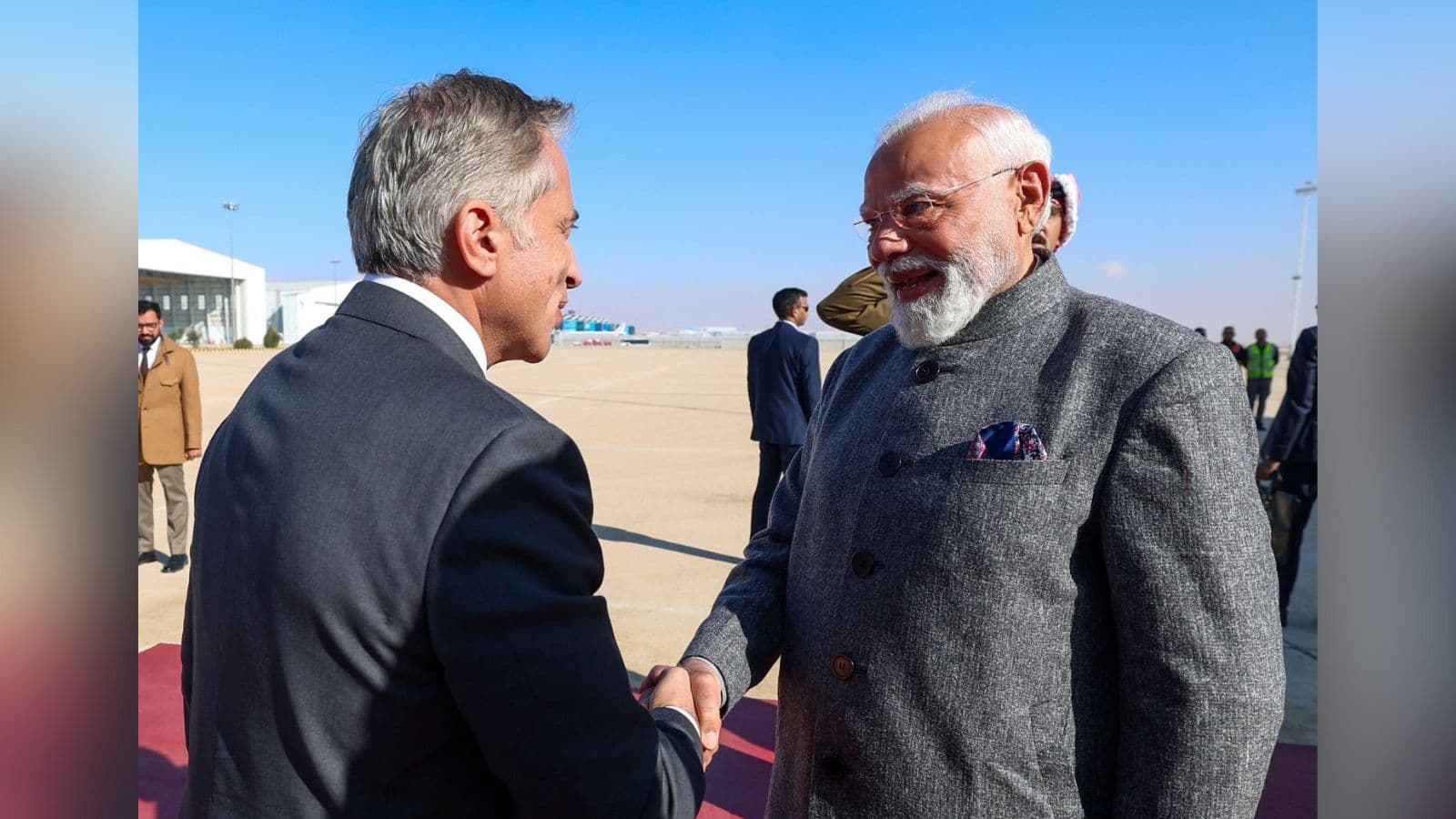
PM Modi visits Jordan to boost bilateral linkages, strengthening India's diplomatic presence in the Middle East.
Summary
Prime Minister Modi undertook an official visit to Jordan, signaling India's commitment to strengthening bilateral ties with the nation. This high-level diplomatic engagement aims to foster cooperation and boost linkages across various sectors. For competitive exams, this highlights the importance of India's foreign policy, especially its relations with Middle Eastern countries, and the significance of high-profile international visits.
Key Points
- 1Indian Prime Minister Narendra Modi conducted an official visit.
- 2The host nation for the Prime Minister's visit was Jordan.
- 3The primary stated objective of the visit was to boost bilateral linkages.
- 4The visit represents a high-level diplomatic engagement between India and Jordan.
- 5This engagement is significant for India's foreign policy in the Middle East region.
In-Depth Analysis
Prime Minister Narendra Modi's official visit to Jordan, as indicated by the title 'Visit will boost bilateral linkages', underscores India's proactive and evolving foreign policy, particularly its engagement with the strategically vital Middle East region. This high-level diplomatic interaction is not an isolated event but rather a continuation of India's 'Act West' policy, which seeks to deepen ties with West Asian and North African countries across various sectors.
**Background Context and Historical Ties:**
India and Jordan share a long-standing relationship rooted in historical and cultural exchanges. Jordan, officially the Hashemite Kingdom of Jordan, holds significant geopolitical importance due to its location at the crossroads of Asia, Africa, and Europe, bordering nations like Saudi Arabia, Iraq, Syria, Israel, and Palestine. This makes it a crucial player in regional stability and a key interlocutor in the complex West Asian political landscape. Historically, India’s foreign policy, influenced by its Non-Aligned Movement (NAM) principles, maintained strong relations with Arab nations, often advocating for the Palestinian cause. This historical goodwill forms a foundational layer for contemporary engagements. In recent decades, India's burgeoning energy needs and the presence of a large Indian diaspora in the Gulf region have further necessitated a robust and pragmatic approach to its West Asia policy, moving beyond purely ideological considerations to encompass economic and strategic interests.
**What Happened and Key Stakeholders:**
While specific details of the visit's outcomes are not provided in the prompt, a Prime Ministerial visit inherently signifies a high-level dialogue aimed at strengthening bilateral cooperation. The primary stated objective, 'to boost bilateral linkages,' typically involves discussions across a spectrum of areas: trade and investment, defence and security cooperation, cultural exchanges, and regional issues. Key stakeholders involved include the Indian Prime Minister and the Ministry of External Affairs (MEA), representing India's foreign policy establishment. On the Jordanian side, King Abdullah II and his government would be the primary counterparts. Beyond the immediate bilateral players, regional actors like Saudi Arabia, UAE, and even the Palestinian Authority and Israel are indirectly stakeholders, given Jordan's central role in regional dynamics and its peace treaties with both. India's growing engagement with Jordan also signals its broader interest in contributing to regional stability and diversifying its partnerships in the Middle East.
**Significance for India:**
This visit holds multi-faceted significance for India. Economically, Jordan can serve as a gateway for Indian businesses to other markets in the Levant and North Africa. Enhanced trade and investment opportunities, particularly in sectors like IT, pharmaceuticals, infrastructure, and renewable energy, are likely outcomes. From a strategic perspective, Jordan is a moderate voice in the Arab world and a key partner in counter-terrorism efforts. Cooperation on security matters is crucial for India, especially given the shared challenges of radicalization and cross-border terrorism. Politically, strengthening ties with Jordan helps India diversify its diplomatic footprint in the region, reducing over-reliance on a few countries and enhancing its influence in a critical geopolitical zone. Furthermore, Jordan's significant role in the Israel-Palestine peace process makes it an important partner for India, which seeks a balanced approach to the conflict. People-to-people linkages, including tourism and cultural exchanges, also receive a boost, fostering goodwill and understanding.
**Constitutional Provisions and Broader Themes:**
India's engagement with Jordan and other nations is guided by **Article 51 of the Constitution**, which directs the State to 'endeavour to promote international peace and security; maintain just and honourable relations between nations; foster respect for international law and treaty obligations... and encourage settlement of international disputes by arbitration.' This visit aligns perfectly with these directive principles, aiming to build peaceful and cooperative relations. The broader theme here is India's 'Act West' policy, an extension of its 'Look East' policy, which emphasizes active engagement with West Asian countries not just for energy security but also for trade, investment, and strategic partnerships. This reflects a more confident and assertive Indian foreign policy, moving towards becoming a net security provider and a significant global player.
**Future Implications:**
The visit is expected to lay the groundwork for deeper and broader cooperation. We can anticipate increased bilateral trade volumes, more frequent high-level exchanges, and possibly joint projects in key sectors. Enhanced intelligence sharing and defence cooperation could also be on the agenda, strengthening both nations' security apparatuses. Furthermore, India’s stronger ties with Jordan could provide it with a more nuanced understanding and potentially a greater role in regional peace initiatives, especially concerning the Israeli-Palestinian conflict. This engagement signifies India's commitment to building comprehensive partnerships in its extended neighbourhood, crucial for its own economic growth, energy security, and regional influence in the coming years.
Exam Tips
**UPSC Civil Services (GS-II - International Relations):** Focus on India's 'Act West' policy, its objectives, and key partners. Understand the geopolitical significance of Jordan and the broader Middle East for India's energy security and diaspora. Questions often involve analyzing India's foreign policy shifts and the impact of bilateral visits.
**SSC CGL/CHSL & State PSCs (General Awareness - Current Affairs/Geography):** Be aware of the location of Jordan, its bordering countries, and its capital. Know the name of its head of state (King Abdullah II). Expect direct questions on the purpose of such high-level visits and the countries involved. Map-based questions on the Middle East region are also common.
**Banking/Railway/Defence Exams (General Awareness - Current Affairs):** Memorize the names of the leaders, the countries involved, and the general purpose of the visit (e.g., 'boosting bilateral linkages'). Be prepared for questions on India's relations with key countries in the Middle East and any significant agreements signed during such visits (if announced).
**Related Topics to Study:** Delve into the history of India-Middle East relations, the Non-Aligned Movement's role, and the evolution of India's foreign policy post-liberalization. Understand the dynamics of the Israel-Palestine conflict and Jordan's position within it. Analyze the economic drivers behind India's engagement with the region, particularly energy imports and remittances.
**Common Question Patterns:** Expect questions like 'Which of the following articles of the Indian Constitution relates to the promotion of international peace and security?', 'What is India's 'Act West' policy primarily concerned with?', or 'Name the capital of Jordan/countries bordering Jordan.' For descriptive exams, be ready to analyze the strategic importance of India's relationship with Middle Eastern countries.