



Relevant for Exams
VB G Ram G Bill to alter rural job guarantee; specific changes unavailable due to missing content.
Summary
The article title indicates a 'VB G Ram G Bill' proposing 5 key changes to India's rural job guarantee framework, a critical government scheme like MGNREGA. However, the article content is unavailable, preventing a detailed analysis of these specific changes, their implications, or the extraction of precise exam-relevant facts for competitive exam preparation.
Key Points
- 1The article pertains to a proposed legislative measure named the 'VB G Ram G Bill'.
- 2This bill is intended to introduce '5 key changes' within India's rural job guarantee framework.
- 3The 'rural job guarantee framework' is a significant government policy, typically referring to schemes such as MGNREGA.
- 4Specific details regarding the nature and scope of these 5 changes are not available in the provided article content.
- 5Due to the absence of content, precise facts, dates, or constitutional provisions related to the bill cannot be extracted.
In-Depth Analysis
The article title, "5 key changes VB G Ram G Bill introduces in the rural job guarantee framework," signals a significant legislative development concerning India's pivotal rural employment scheme. While the specific content of the 'VB G Ram G Bill' and its five proposed changes are not available, the very notion of modifying the rural job guarantee framework is highly pertinent for competitive exam aspirants. This framework predominantly refers to the Mahatma Gandhi National Rural Employment Guarantee Act (MGNREGA), 2005, which is a cornerstone of India's social security and rural development strategy.
**Background Context and Historical Evolution:**
India has a long history of implementing employment generation and poverty alleviation programs, dating back to the 1960s and 70s. Schemes like the Rural Manpower Programme (1960-61), Crash Scheme for Rural Employment (1971), Food for Work Programme (1977), and later the Jawahar Rozgar Yojana (JRY, 1989) and Employment Assurance Scheme (EAS, 1993) paved the way. These programs aimed to provide temporary employment and create rural infrastructure. However, they often suffered from issues like leakage, lack of transparency, and inadequate reach. The push for a rights-based approach to development culminated in the enactment of MGNREGA on August 25, 2005. The Act was initially launched in 200 districts and subsequently extended to all rural districts of India from April 1, 2008. It marked a paradigm shift by transforming employment generation from a welfare scheme into a legal entitlement, embodying the spirit of the 'Right to Work'.
**What MGNREGA Entails (The Framework Being Changed):**
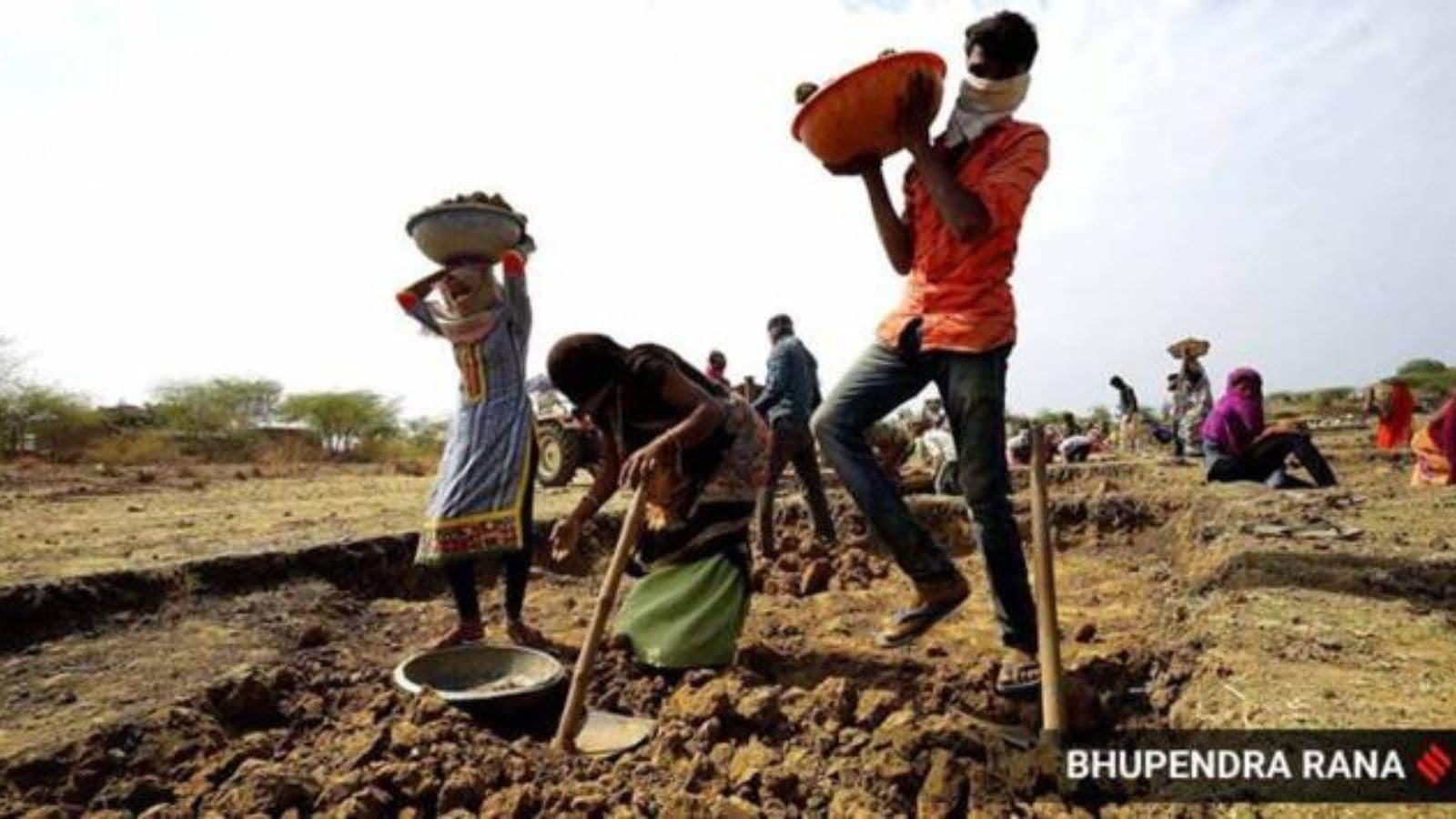
MGNREGA aims to enhance livelihood security in rural areas by providing at least 100 days of guaranteed wage employment in a financial year to every household whose adult members volunteer to do unskilled manual work. Key features include: a legal right to work, demand-driven nature (work must be provided within 15 days of application, failing which unemployment allowance is due), payment of wages within 15 days, mandated one-third participation of women, and a focus on creating durable assets like water conservation structures, irrigation canals, and rural roads. The scheme also emphasizes transparency and accountability through social audits and proactive disclosure of information.
**Key Stakeholders Involved:**
Any changes to this framework would involve several key stakeholders. The **Central Government**, primarily the Ministry of Rural Development, is the nodal ministry responsible for policy formulation, fund allocation, and overall monitoring. The **Ministry of Finance** plays a crucial role in budget allocation. **State Governments** are responsible for implementation, fund utilization, and ensuring compliance with the Act. **Panchayati Raj Institutions (PRIs)**, particularly Gram Panchayats and Gram Sabhas, are central to the scheme's decentralized implementation, including identifying works, issuing job cards, and monitoring execution. **Rural workers/beneficiaries** are the direct recipients, and their rights and welfare are paramount. **Civil society organizations and activists** often play a vital role in advocating for workers' rights, ensuring transparency, and conducting social audits. Finally, **economists and policy think tanks** provide evaluations and recommendations for reforms.
**Why This Matters for India (Significance):**
MGNREGA is more than just an employment scheme; it's a vital social safety net and a tool for rural transformation. It significantly contributes to **poverty alleviation** by providing direct income support, especially during lean agricultural seasons or economic downturns (as seen during the COVID-19 pandemic). It fosters **rural development** by creating durable assets, improving natural resource management, and enhancing agricultural productivity. The mandatory one-third participation of women has been instrumental in **women's empowerment**, providing them with financial independence and enhancing their bargaining power within households and communities. It promotes **social justice** by ensuring employment opportunities for marginalized sections, including Scheduled Castes, Scheduled Tribes, and other vulnerable groups. Furthermore, it strengthens **decentralization** by empowering PRIs in planning and implementation, aligning with Article 40 of the Constitution which mandates the organization of village panchayats.
**Constitutional Provisions and Broader Themes:**
The spirit of MGNREGA is deeply rooted in the **Directive Principles of State Policy (DPSP)**. Article 39(a) directs the State to secure for its citizens the right to an adequate means of livelihood, and Article 41 mandates the State to make effective provision for securing the right to work, to education, and to public assistance in cases of unemployment, old age, sickness, and disablement. While MGNREGA is a statutory right enacted by Parliament, it draws its legitimacy and ethical grounding from these constitutional provisions. The scheme also touches upon broader themes of **governance**, **social security**, **inclusive growth**, **federalism** (shared responsibility between Centre and States), and **human rights** (the right to live with dignity, implicitly linked to Article 21 – Right to Life and Personal Liberty).
**Future Implications:**
Given the absence of specific details of the 'VB G Ram G Bill', any changes could have varied implications. If the changes aim to address existing challenges like delays in wage payments, administrative inefficiencies, quality of assets created, or issues of corruption (which have been persistent criticisms), they could significantly improve the scheme's effectiveness and impact. Streamlining processes, leveraging technology for better monitoring, or increasing budget allocations could strengthen the framework. Conversely, if the changes lead to a dilution of the guaranteed employment component, reduced wage rates, or stricter eligibility criteria without adequate justification, they could undermine the scheme's core objectives and adversely affect the rural poor. The future implications will depend on whether the bill strengthens the legal entitlement, improves implementation, or introduces restrictive measures, ultimately impacting India's commitment to inclusive growth and social welfare.
Exam Tips
This topic primarily falls under GS Paper-II (Governance, Social Justice, Welfare Schemes for Vulnerable Sections) and GS Paper-III (Indian Economy, Agriculture, Rural Development) for UPSC Civil Services Exam. For SSC, Banking, Railway, and State PSCs, it's crucial for General Awareness/Current Affairs and Indian Economy sections.
Study MGNREGA comprehensively: its objectives, key features, implementation mechanism (role of Gram Panchayats, Gram Sabhas), funding pattern (90:10 for wages, 75:25 for material), achievements, challenges (wage delays, corruption, asset quality), and recent reforms/changes. This forms the foundational knowledge.
Common question patterns include direct questions on MGNREGA's features, significance, and constitutional basis. Analytical questions often ask about its effectiveness in poverty alleviation, women empowerment, decentralization, or its role as a safety net during crises. Be prepared to discuss pros and cons, and suggest reforms.
Understand the distinction between fundamental rights and statutory rights. While the 'Right to Work' is a DPSP (Article 41), MGNREGA provides a statutory right to employment. This distinction is often tested.
Relate the scheme to broader economic and social indicators. For instance, how does MGNREGA impact rural consumption, migration patterns, and agricultural labor availability? This helps in answering application-based questions.