


Relevant for Exams
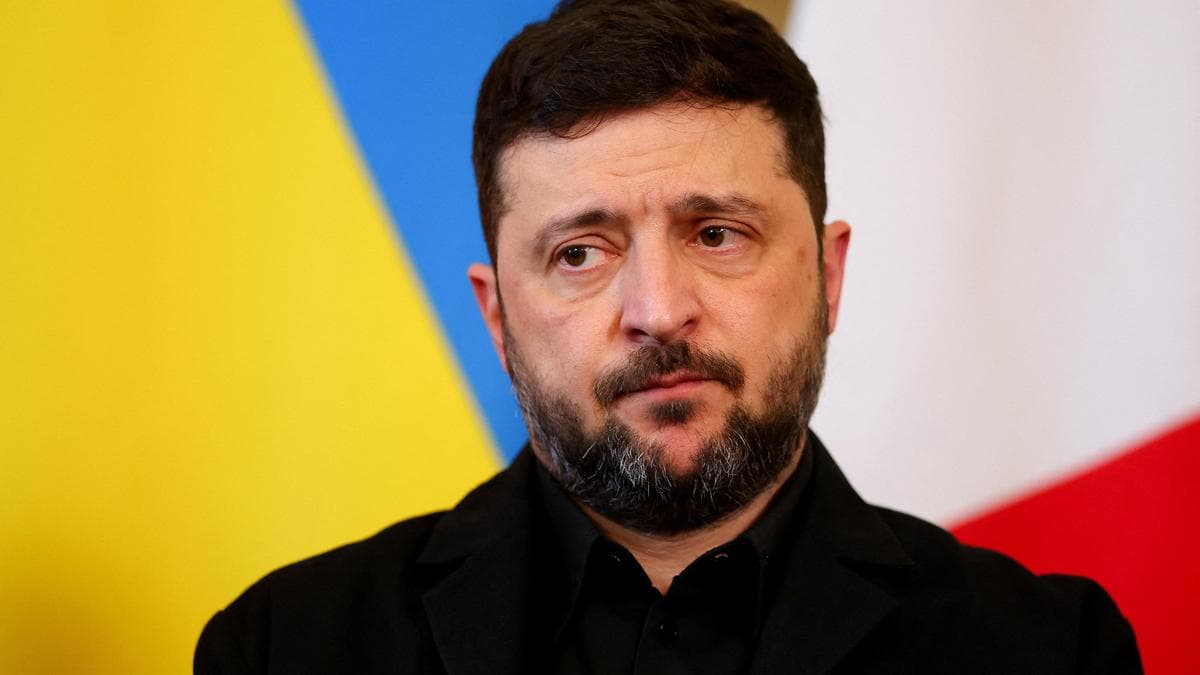
Zelenskyy offers to drop NATO bid for security guarantees, rejects ceding territory.
Summary
Ukrainian President Zelenskyy has offered to abandon Ukraine's bid to join NATO, a key demand from Russia, in exchange for robust security guarantees from Western nations. This pivotal move aims to de-escalate the ongoing conflict but comes with a firm rejection of any US push for Ukraine to cede territory. This development is crucial for understanding the evolving geopolitical landscape and potential resolutions to the Russia-Ukraine war for competitive exams.
Key Points
- 1Ukrainian President Zelenskyy offered to drop Ukraine's bid to join the NATO alliance.
- 2The offer is contingent upon receiving security guarantees from Western nations.
- 3These security guarantees are expected to be similar to those provided to existing NATO member states.
- 4Zelenskyy explicitly rejected any pressure from the US to cede Ukrainian territory.
- 5This proposal follows the rejection by the US and some European nations of Ukraine's earlier push for NATO membership.
In-Depth Analysis
The offer by Ukrainian President Volodymyr Zelenskyy to drop Ukraine's bid to join NATO, contingent on receiving robust security guarantees from Western nations, marks a pivotal moment in the ongoing Russia-Ukraine conflict. This development, while seemingly a major concession, also underscores Ukraine's firm resolve to maintain its territorial integrity, rejecting any pressure to cede land.
**Background Context: A Century of Geopolitical Tensions**
To fully grasp the significance, we must delve into the historical context. Ukraine, a former Soviet republic, gained independence in 1991. Its strategic location, bordering both Russia and NATO members, has made it a geopolitical flashpoint. Russia views NATO's eastward expansion, particularly the prospect of Ukraine joining the alliance, as a direct threat to its national security, a sentiment rooted in historical invasions and the desire for a buffer zone. NATO, on the other hand, upholds its 'open-door policy,' asserting the right of sovereign nations to choose their alliances. The 2008 Bucharest Summit communiqué, which stated that Ukraine and Georgia "will become members of NATO," significantly escalated Russian anxieties. This tension boiled over in 2014 with Russia's annexation of Crimea and its support for separatists in the Donbas region, leading to a protracted conflict. The full-scale invasion launched by Russia on February 24, 2022, was framed by Moscow as a response to perceived NATO encroachment and the need to 'demilitarize' and 'denazify' Ukraine.
**Zelenskyy's Strategic Gambit**
President Zelenskyy's offer is a calculated move. For years, Ukraine's aspiration to join NATO was a primary driver of Russian aggression. By offering to abandon this bid, Kyiv addresses one of Moscow's core demands, potentially opening a pathway for de-escalation. However, this concession is not unconditional. Ukraine demands security guarantees from Western nations that are "similar to those offered to the alliance members." This implies a robust collective defense mechanism, akin to NATO's Article 5, where an attack on one is considered an attack on all. Crucially, Zelenskyy's firm rejection of any US push to cede Ukrainian territory highlights that while Kyiv is willing to compromise on its alliance status, its sovereignty and territorial integrity remain non-negotiable. This stance reflects the immense human and material cost Ukraine has paid in defending its land.
**Key Stakeholders and Their Motivations**
* **Ukraine:** Its primary motivation is survival, sovereignty, and security. It seeks to end the war, reclaim its territory, and prevent future Russian aggression through credible security assurances. The offer to drop NATO membership is a pragmatic concession for peace and security. However, it is a difficult choice, as NATO membership was seen as the ultimate security guarantee. Zelenskyy's rejection of territorial cession reflects the national consensus to fight for every inch of Ukrainian land.
* **Russia:** Its objectives include preventing NATO expansion, demilitarizing Ukraine, and securing its geopolitical interests. Ukraine's abandonment of its NATO bid would be a significant victory for Russia, potentially allowing it to claim success in one of its stated war aims. However, Russia's broader demands, including territorial gains and a 'neutral' Ukraine, remain complex.
* **NATO/United States/European Nations:** These stakeholders are committed to supporting Ukraine's sovereignty and deterring Russian aggression without directly engaging in a war with Russia. While they have provided extensive military and financial aid, direct NATO membership for Ukraine has been a contentious issue, primarily due to the risk of triggering a direct conflict with a nuclear-armed Russia. The idea of alternative security guarantees allows them to support Ukraine's defense without invoking Article 5 directly, yet still providing a strong deterrent against future aggression. The US's alleged push for territorial cession, if true, suggests a desire to find a quick resolution, but it clashes with Ukraine's national interests.
**Significance for India: Navigating a Multipolar World**
This development holds significant implications for India, a nation that maintains a delicate balance in its foreign policy. India's stance on the Russia-Ukraine conflict has been characterized by strategic autonomy, calling for an immediate cessation of hostilities, respect for international law, and the territorial integrity and sovereignty of all states (a principle that implicitly supports Ukraine). India has abstained from UN resolutions condemning Russia, reflecting its deep historical defense ties with Moscow and its need for diversified energy sources.
Economically, the conflict has impacted global commodity prices, particularly crude oil, natural gas, and fertilizers, directly affecting India's import bill and inflation. A potential de-escalation could stabilize these markets, benefiting India's economy. Geopolitically, the conflict has accelerated the formation of new alliances and challenged the existing international order, forcing India to reassess its strategic partnerships. India's commitment to **Article 51 of the Constitution**, which directs the state to promote international peace and security, maintain just and honourable relations between nations, foster respect for international law, and encourage settlement of international disputes by arbitration, guides its approach. The principle of strategic autonomy, while not a constitutional article, is a cornerstone of India's foreign policy, allowing it to act independently in its national interest without being tied to any single bloc. This crisis reinforces the necessity for India to diversify its defense procurement and energy sources, reducing dependence on any single country.
**Future Implications: A Precarious Path to Peace**
Zelenskyy's offer opens a narrow window for potential peace negotiations, but significant hurdles remain. The nature of the security guarantees, the enforcement mechanism, and Russia's willingness to accept Ukraine's non-negotiable territorial integrity will be critical. Any peace deal would fundamentally reshape the European security architecture and set precedents for future international conflicts. The long-term implications include potential shifts in global power dynamics, the future role of international organizations like the UN, and the ongoing debate about the efficacy of collective security arrangements in a multipolar world. For India, the outcome will influence its strategic calculus, trade relations, and its efforts to project its influence on the global stage as a responsible and independent power.
Exam Tips
This topic falls under GS Paper 2 (International Relations) for UPSC Civil Services Exam. For SSC, Banking, Railway, and State PSC exams, it's crucial for Current Affairs and General Awareness sections.
Study related topics like the history of NATO, the Cold War, the concept of collective security vs. strategic autonomy, the role of the UN in conflict resolution, and the geopolitical significance of Eastern Europe. Understand the difference between NATO's Article 5 and the security guarantees Ukraine is seeking.
Common question patterns include analytical questions on India's foreign policy challenges amidst global conflicts, the impact of geopolitical events on the Indian economy, the role of international organizations, and the historical causes and future implications of major international disputes. Be prepared to discuss the motivations of various stakeholders.
Focus on specific dates like Russia's annexation of Crimea (2014) and the full-scale invasion (February 24, 2022), as well as constitutional articles like Article 51 of the Indian Constitution, which underpins India's foreign policy.
Practice essay writing on topics such as 'Strategic Autonomy in a Multipolar World: India's Dilemma' or 'The Russia-Ukraine Conflict and its Impact on Global Order'.
Related Topics to Study
Full Article
Zelenskyy said that since the U.S. and some European nations had rejected Ukraine's push to join NATO, Kyiv expects the West to offer a set of guarantees similar to those offered to the alliance members