



Relevant for Exams
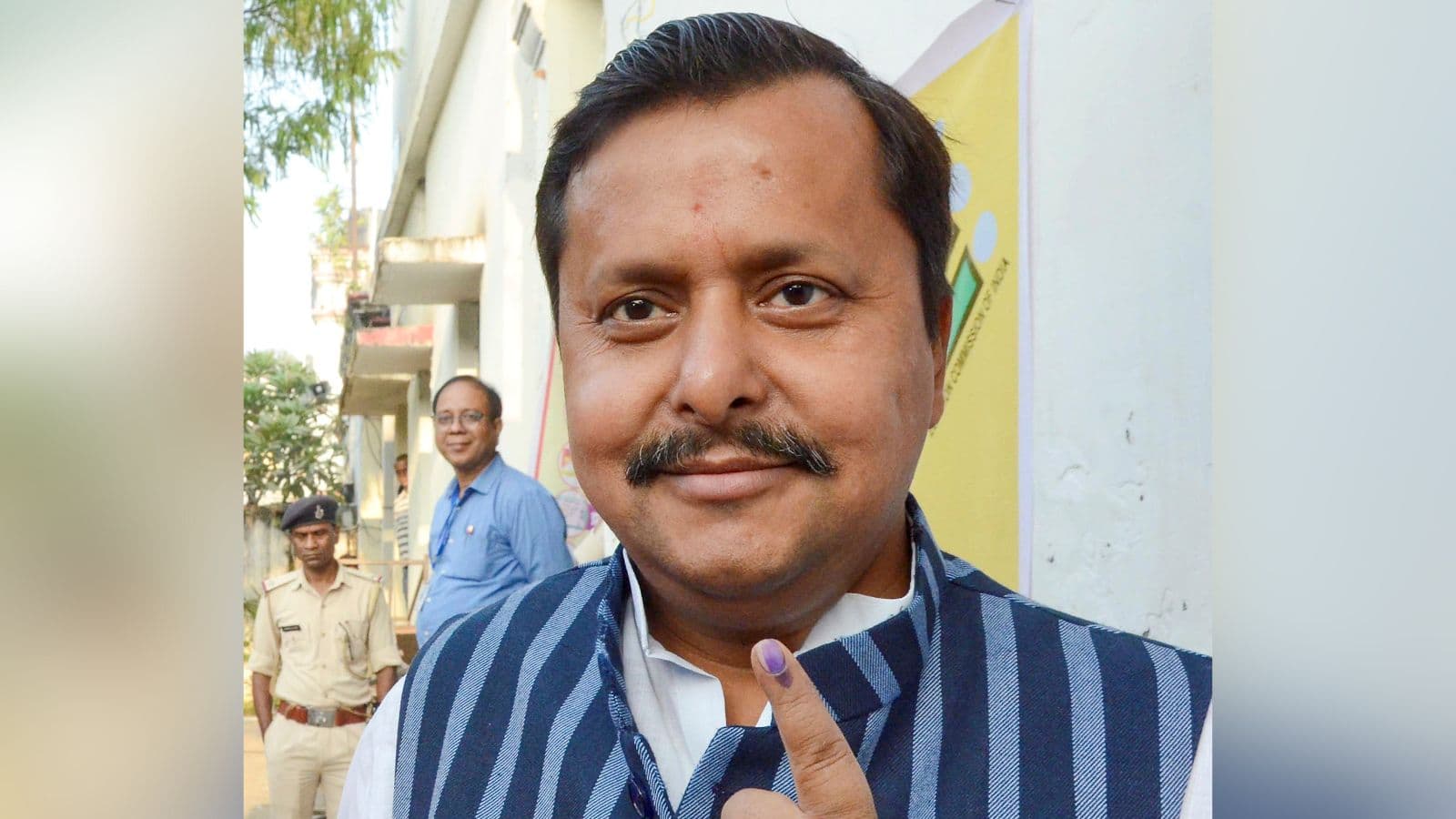
Bihar Minister Nitin Nabin appointed BJP Working President, signaling generational shift.
Summary
Bihar Minister Nitin Nabin has been appointed as the next working president of the Bharatiya Janata Party (BJP). This significant organizational change indicates a 'generational shift' within the party's leadership, aiming to bring in new faces and perspectives. For competitive exams, this is a relevant political appointment, particularly for state-level examinations and general awareness sections, highlighting changes in major political party structures.
Key Points
- 1Nitin Nabin, a current Minister in the Bihar state government, has been appointed as the new working president of the Bharatiya Janata Party (BJP).
- 2This appointment signifies a strategic 'generational shift' within the BJP's organizational leadership.
- 3The specific new role assigned to Nitin Nabin is that of the working president of the BJP.
- 4Nitin Nabin holds a ministerial portfolio in the state of Bihar.
- 5The appointment was made by the Bharatiya Janata Party (BJP), a major national political party.
In-Depth Analysis
The appointment of Nitin Nabin as the working president of the Bharatiya Janata Party (BJP) in Bihar marks a significant organizational restructuring and signals a strategic 'generational shift' within one of India's dominant political forces. This move, while seemingly internal, has broader implications for the party's future trajectory, its electoral strategies, and the evolving political landscape of Bihar and, by extension, India.
To understand the significance, it's crucial to grasp the **background context**. The BJP, since its rise to power at the Centre in 2014, has consistently focused on strengthening its organizational base at the state level. Bihar, a politically crucial state with 40 Lok Sabha seats and a history of complex caste-based politics, has been a challenging but rewarding arena for the BJP. For years, the party played a junior partner role to Nitish Kumar's Janata Dal (United) within the National Democratic Alliance (NDA). However, over the last decade, the BJP has steadily expanded its footprint, aiming for a more dominant position. This often necessitates bringing in fresh faces, particularly those who can connect with a younger demographic and embody the party's future vision. The concept of a 'generational shift' is not new in Indian politics; major parties frequently undertake such exercises to revitalize their cadres, address anti-incumbency, and prepare for long-term leadership succession.
**What happened** is that Nitin Nabin, currently a minister in the Bihar state government, has been elevated to the role of working president for the BJP in the state. This is distinct from the state president, who is typically the primary organizational head. A 'working president' often assists the main president, oversees day-to-day operations, and can be groomed for higher responsibilities. Nabin, a relatively younger leader, fits the bill for a 'generational shift', indicating the party's intent to promote leaders who have grown within its ranks and have a contemporary appeal.
The **key stakeholders** involved in this decision include the top brass of the BJP's central leadership, who ultimately approve such significant appointments, and the existing state leadership of the Bihar BJP. Nitin Nabin himself is a crucial stakeholder, as his performance in this new role will be closely watched. The broader electorate of Bihar is also a stakeholder, as these changes influence the party's public image and campaign strategies. For the BJP, this move is about strengthening its internal democracy and ensuring a smooth transition of power and responsibilities to capable leaders.
**Why this matters for India** extends beyond Bihar's borders. Firstly, it reflects the BJP's meticulous long-term planning for state and national elections. By fostering a new generation of leaders, the party is investing in its future, ensuring a continuous supply of talent and fresh perspectives. This could be a template for leadership development in other states. Secondly, it highlights the importance of youth leadership in contemporary Indian politics. With a significant portion of India's population being young, political parties are increasingly keen to project younger, dynamic leaders who can resonate with this demographic. Thirdly, it speaks to the internal dynamics of a major national party – how it manages succession, integrates new talent, and maintains organizational coherence while adapting to changing political realities. This strategic shift could potentially influence the NDA alliance dynamics in Bihar, as a stronger, more independently led BJP unit might assert itself more forcefully.
While direct **constitutional articles** governing internal party appointments are absent, the broader framework of India's democracy is relevant. Article 19(1)(c) of the Indian Constitution guarantees the freedom to form associations, which implicitly covers political parties. The Representation of the People Act, 1951, mandates political parties to register with the Election Commission of India (ECI) and adhere to certain democratic norms, although the ECI's powers regarding internal party democracy are limited. The ECI, under its powers to regulate elections, does monitor party constitutions and their adherence to democratic principles, but specific appointments like a 'working president' are internal party matters. This move also connects to the broader theme of **federalism**, as strong state units are vital for national parties to effectively govern and represent diverse regional interests.
The **future implications** are manifold. This appointment could energize the BJP cadre in Bihar, providing a renewed sense of purpose and direction. It might lead to a more aggressive and independent posture for the BJP within the NDA alliance, particularly if the party aims to emerge as the single largest party in the state in future elections. It also sets a precedent for other states, where similar 'generational shifts' might be contemplated to bring younger leaders to the forefront. The success of Nitin Nabin in this role will likely dictate how quickly and widely this strategy is replicated across the nation. Ultimately, this move is a calculated step by the BJP to future-proof its leadership and maintain its political dominance in the long run.
Exam Tips
This topic falls under the 'Indian Polity and Governance' section of the UPSC Civil Services Exam (Prelims & Mains GS-II) and State PSCs. For SSC, Banking, Railway, and Defence exams, it's relevant for 'Current Affairs' and 'General Awareness' sections.
Study the organizational structure of major political parties in India (BJP, INC, regional parties), understanding roles like National President, State President, Working President, etc. Also, research the criteria for party recognition by the Election Commission of India.
Pay attention to the concept of 'generational shift' in political leadership – its causes, implications, and historical examples in India. Questions might be analytical, asking about the impact of such shifts on party dynamics or electoral outcomes.
Familiarize yourself with the political landscape of Bihar, including major political parties, key leaders, and the history of alliances (e.g., NDA, Mahagathbandhan). This provides essential context for state-specific appointments.
Common question patterns include direct questions about who was appointed to which position, questions about the significance of such appointments for party strategy, or questions testing knowledge of the constitutional and legal framework governing political parties in India (e.g., Representation of the People Act).