



Relevant for Exams
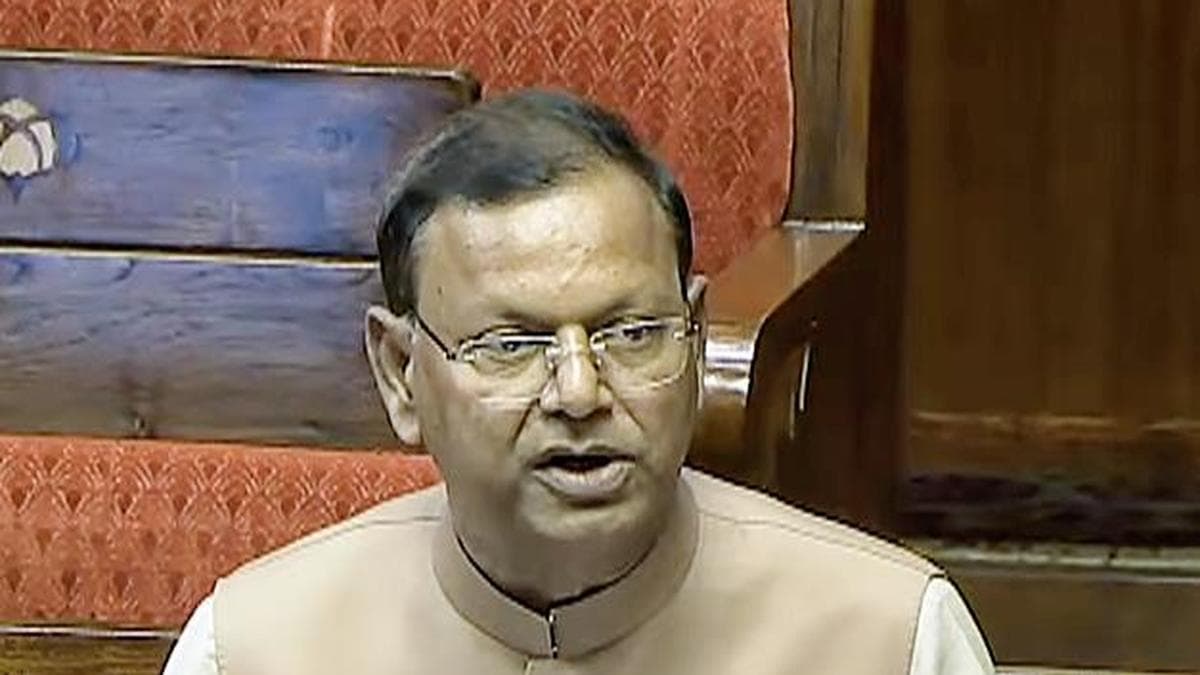
Union MoS Finance Pankaj Chaudhary appointed new Uttar Pradesh BJP Chief.
Summary
Union Minister of State for Finance, Pankaj Chaudhary, has been appointed as the new Uttar Pradesh BJP Chief. He was the sole candidate to file a nomination on December 13, 2025. This appointment is a significant political development, strengthening the party's leadership in the electorally crucial state of Uttar Pradesh and is important for competitive exams focusing on political appointments and state-level party structures.
Key Points
- 1Pankaj Chaudhary has been appointed as the new President of the Uttar Pradesh unit of the Bharatiya Janata Party (BJP).
- 2Prior to this appointment, Pankaj Chaudhary held the position of Union Minister of State for Finance.
- 3He filed his nomination for the post of U.P. BJP Chief on Saturday, December 13, 2025.
- 4Pankaj Chaudhary was the sole candidate in the fray for the position of U.P. BJP Chief.
- 5The appointment signifies a key leadership change in the BJP's state unit in Uttar Pradesh, a politically vital state.
In-Depth Analysis
The appointment of Pankaj Chaudhary as the new Uttar Pradesh (U.P.) BJP Chief on December 13, 2025, marks a significant strategic move by the Bharatiya Janata Party, underscoring the paramount importance of Uttar Pradesh in India's political landscape. This development is not merely an internal party reshuffle but a calculated step with far-reaching implications for both state and national politics.
**Background Context and What Happened:**
Uttar Pradesh, with its 80 Lok Sabha seats, is electorally the most crucial state in India. Its political pulse often dictates the national mood, making strong state leadership indispensable for any national party aiming for power at the Centre. The BJP has enjoyed significant dominance in U.P. since the 2014 Lok Sabha elections and the 2017 Assembly elections, a trend it successfully continued in 2019 and 2022. Maintaining this stronghold requires continuous organizational strengthening and strategic leadership changes. Pankaj Chaudhary, previously the Union Minister of State for Finance, filed his nomination as the sole candidate for the U.P. BJP Chief post, ensuring his unanimous selection. This process typically reflects the central leadership's clear choice, aiming to project unity and decisive action within the state unit.
**Key Stakeholders Involved:**
1. **BJP Central Leadership:** Comprising figures like Prime Minister Narendra Modi, Union Home Minister Amit Shah, and BJP President J.P. Nadda, this group is the primary decision-maker. Their choice reflects a broader strategic vision for the party's future in U.P. and nationally.
2. **Pankaj Chaudhary:** As the new chief, he becomes the pivotal figure responsible for the party's organizational structure, grassroots mobilization, electoral strategy, and coordination with the state government. His background as a Union Minister and a prominent leader from the OBC community (specifically, an Ahir/Yadav leader) positions him uniquely.
3. **Uttar Pradesh BJP Cadre and Leaders:** This vast network of party workers and district-level leaders will be crucial in implementing the new chief's directives and ensuring the party's message reaches the electorate.
4. **Uttar Pradesh Electorate:** Ultimately, the success of this appointment will be measured by its impact on the voters' perception and their electoral choices in future elections.
**Why This Matters for India and Historical Context:**
Uttar Pradesh's political dynamics profoundly influence national politics. A strong BJP in U.P. is critical for its national electoral prospects in the Lok Sabha. Historically, the BJP's resurgence in U.P. in the 1990s, followed by a period of decline and then a spectacular comeback since 2014, demonstrates the state's volatile yet decisive nature. The appointment of an OBC leader like Pankaj Chaudhary is highly significant. The OBC community forms a substantial portion of U.P.'s population, and their support is vital for electoral success. Chaudhary's Ahir/Yadav lineage is particularly noteworthy, as this community has traditionally been a strong vote bank for the Samajwadi Party. By elevating a Yadav leader, the BJP aims to further penetrate this crucial demographic, potentially diversifying its support base and weakening the opposition's traditional strongholds. This move aligns with the BJP's broader strategy of consolidating Hindu votes while also making overtures to various caste groups.
**Future Implications:**
This appointment is a clear signal of the BJP's preparations for the upcoming electoral cycles. The immediate focus will likely be on strengthening the party organization at the booth level, addressing local grievances, and preparing for the 2027 U.P. Assembly elections. A successful performance in 2027 will be a critical precursor to the 2029 Lok Sabha elections, where U.P.'s contribution of seats will be indispensable for the BJP to form the government at the Centre. Chaudhary's leadership will be tested in managing internal party dynamics, especially factionalism, and effectively countering the opposition's narratives and alliances. His ability to connect with diverse caste groups, particularly the OBCs, will be key to expanding the BJP's electoral footprint. The appointment also signifies the BJP's emphasis on youth and fresh leadership, balancing experience with new energy.
**Related Constitutional Articles, Acts, or Policies:**
While the appointment of a state party chief is an internal organizational matter, it operates within the larger democratic framework enshrined in the Indian Constitution. The **Representation of the People Act, 1951**, governs the conduct of elections and the registration and recognition of political parties by the Election Commission of India. Political parties, though not explicitly mentioned in the original Constitution, are indispensable for the functioning of India's multi-party parliamentary democracy. Their internal structures and leadership changes, while not constitutionally mandated, indirectly uphold the principles of democratic governance and representation. Article 324, which vests the superintendence, direction, and control of elections in the Election Commission, relies on political parties as primary actors in the electoral process. Furthermore, the appointment reflects the practical application of **federalism**, where national parties maintain strong state units to effectively engage with state-level politics and governance, ensuring a coordinated approach between the state and central leadership. The strategic choice of an OBC leader also touches upon the constitutional objective of promoting social justice and representation for backward classes, albeit through political party strategy rather than direct constitutional mandate.
Exam Tips
This topic falls under 'Indian Polity and Governance' (GS Paper II for UPSC, General Awareness for SSC/Banking/Railways, State PSCs). Focus on the roles and functions of political parties and their state units.
Study related topics such as the electoral significance of Uttar Pradesh, major political parties in India, caste-based politics and its impact on elections, and the structure of party organizations (national vs. state level).
Expect factual questions (e.g., 'Who is the current U.P. BJP Chief?'), analytical questions on the significance of such appointments for upcoming elections, and questions linking caste dynamics to political leadership changes.
Related Topics to Study
Full Article
Mr. Chaudhary filed his nomination for the post on Saturday (December 13, 2025) and was the sole candidate in the fray