



Relevant for Exams
21 workers dead in Arunachal gorge; 2 arrested in Assam for illegal labor supply.
Summary
Twenty-one workers died after falling into a 200-metre gorge near Chaglagam in Arunachal Pradesh's Anjaw district, with 20 bodies recovered by rescue teams. Two individuals were subsequently arrested in Assam for their involvement in illegally supplying labour to the state. This tragic incident highlights critical issues of worker safety, illegal migration, and law enforcement challenges, making it relevant for competitive exams focusing on geography, social issues, and current affairs.
Key Points
- 1A total of 21 workers died in an incident in Arunachal Pradesh.
- 2Rescue teams recovered 20 bodies from a 200-metre gorge.
- 3The incident occurred near Chaglagam in Arunachal Pradesh’s Anjaw district.
- 4Two persons were arrested in Assam for illegally supplying labour.
- 5The workers reportedly fell into a 200-metre deep gorge.
In-Depth Analysis
The tragic death of 21 workers in a 200-meter gorge near Chaglagam in Arunachal Pradesh's Anjaw district, coupled with the subsequent arrests in Assam for illegal labor supply, casts a harsh light on the precarious existence of India's migrant workforce. This incident is not merely a localized tragedy but a stark reminder of systemic vulnerabilities within the informal labor sector, the challenges of inter-state migration, and the critical need for robust enforcement of labor laws.
The background to such incidents often lies in the vast economic disparities across India. Workers from less developed regions, driven by poverty and lack of local opportunities, migrate to areas with perceived employment prospects, often in construction, agriculture, or infrastructure projects. Arunachal Pradesh, a frontier state with challenging terrain, frequently sees demand for labor in road construction and other developmental activities. Many of these projects are undertaken in remote areas, making oversight difficult. The 'illegal supply' of labor indicates a network of informal contractors or agents who recruit workers, often without proper documentation, safety training, or adherence to legal employment protocols, promising better wages but delivering exploitation and risk.
What precisely happened in Anjaw district was a catastrophic accident where 21 workers fell into a deep gorge. While the immediate cause of the fall is under investigation, the fact that 20 bodies were recovered points to a lack of adequate safety measures at the worksite. The subsequent arrests in Assam highlight the inter-state dimension of this problem, where unscrupulous agents operate across state borders, recruiting vulnerable individuals and transporting them to work sites without proper legal frameworks or employer accountability.
Key stakeholders in this tragedy include, first and foremost, the deceased workers and their families, who bear the ultimate cost. These individuals, often from socio-economically disadvantaged backgrounds, are deprived of their right to life and dignified work. Secondly, the labor contractors or 'middlemen' who illegally supplied the labor are critical stakeholders, as their actions directly led to the workers being in a vulnerable situation. The employers or project owners, whether government agencies or private companies, who engaged this illegally supplied workforce, also bear significant responsibility for ensuring safe working conditions and legal compliance. The State Governments of Arunachal Pradesh and Assam are crucial for investigation, law enforcement, and implementing worker protection policies. Finally, civil society organizations and media play a role in advocating for justice and highlighting these systemic issues.
This incident matters profoundly for India. It underscores the ongoing crisis of migrant labor, a topic that gained significant attention during the COVID-19 lockdowns. It exposes the deep-seated issues within the informal economy, which employs a significant portion of India's workforce but often operates outside the purview of formal labor protections. The lack of social security, minimum wages, and safe working conditions for these workers is a national shame. It also highlights the challenges of governance in remote and geographically difficult regions, where enforcement mechanisms may be weak. Furthermore, the 'illegal supply' aspect touches upon potential elements of human trafficking and forced labor, which are grave violations of human rights and constitutional principles.
Historically, India has a long tradition of internal migration. The challenges faced by migrant workers led to the enactment of the Interstate Migrant Workmen (Regulation of Employment and Conditions of Service) Act, 1979. This Act aimed to regulate the employment of inter-state migrant workmen and provide for their conditions of service. However, its implementation has often been weak, particularly in the informal sector. The recent consolidation of various labor laws into four new Labor Codes, including the Code on Occupational Safety, Health and Working Conditions, 2020 (OSHWC Code), seeks to address some of these gaps, aiming for universal coverage of workers under safety, health, and working condition regulations.
From a constitutional perspective, this incident invokes several crucial articles. Article 23 prohibits traffic in human beings and forced labor, directly relevant to the 'illegal supply' of labor. Article 24 prohibits the employment of children below 14 years in hazardous occupations. While this incident involved adults, it reflects the broader constitutional commitment to protecting vulnerable populations. The Directive Principles of State Policy (DPSP) are also highly pertinent: Article 39(a) mandates that the state direct its policy towards securing adequate means of livelihood for all citizens; Article 41 recognizes the right to work; Article 42 directs the state to make provisions for just and humane conditions of work; and Article 43 calls for a living wage and conditions of work ensuring a decent standard of life. The failure to protect these workers represents a failure to uphold these constitutional ideals.
The future implications are significant. This tragedy could spur renewed efforts for stricter enforcement of labor laws, particularly the OSHWC Code, 2020. There might be increased scrutiny on labor contractors and a push for mandatory registration of migrant workers to create a national database, enabling better tracking, social security, and grievance redressal mechanisms. State governments will need to enhance inter-state coordination to curb illegal labor recruitment. Furthermore, there's a need for greater awareness campaigns among workers about their rights and legal avenues for employment. Ultimately, this incident serves as a grim reminder that economic development must not come at the cost of human lives and dignity, necessitating a more humane and regulated approach to labor practices across India.
Exam Tips
This topic falls under GS Paper I (Geography of Northeast India, Social Issues related to migration), GS Paper II (Indian Constitution - DPSP, Fundamental Rights; Governance - Labor Laws, Social Justice, Welfare Schemes), and GS Paper III (Indian Economy - Labor Sector, Informal Economy).
Study the Interstate Migrant Workmen (Regulation of Employment and Conditions of Service) Act, 1979, and the new Code on Occupational Safety, Health and Working Conditions, 2020, in detail. Understand their provisions, aims, and challenges in implementation.
Be prepared for questions on the challenges faced by migrant workers in India, the role of the informal sector, constitutional provisions related to labor rights (Articles 23, 24, and relevant DPSPs), and policy recommendations for ensuring worker safety and social security. Case study-based questions are common.
Understand the geographical context of Arunachal Pradesh, its development challenges, and why it attracts migrant labor. This helps in providing a holistic answer.
Related Topics to Study
Full Article
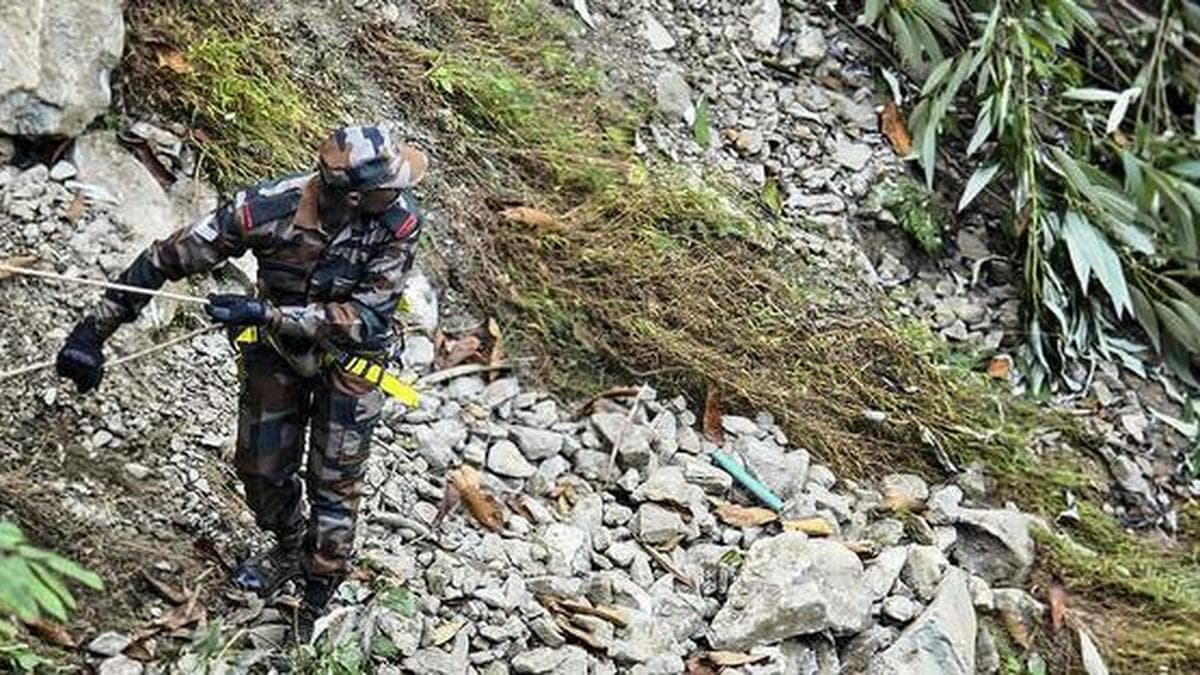
Rescue teams have recovered 20 bodies from a 200-metre gorge near Chaglagam in Arunachal Pradesh’s Anjaw district, while two persons were arrested for illegally supplying labour to the State