



Relevant for Exams
Tiruchi and Madurai lead Tamil Nadu's August tourism, attracting over 23 lakh and 21 lakh tourists.
Summary
Tiruchi district secured the top position in Tamil Nadu's tourism sector for August, attracting 23.09 lakh tourists. Madurai also proved a significant draw with 21.65 lakh visitors, particularly appealing to foreign travellers. This data highlights the key role of these districts in state tourism, offering valuable insights into regional economic performance and serving as specific facts for general knowledge sections in competitive exams.
Key Points
- 1Tiruchi district attracted 23.09 lakh tourists in August.
- 2Tiruchi was the top tourist destination in Tamil Nadu for August.
- 3Madurai attracted 21.65 lakh tourists in August.
- 4Madurai remains a top draw specifically for foreign travellers.
- 5The tourist data pertains to the state of Tamil Nadu.
In-Depth Analysis
The recent data indicating Tiruchi district as the top tourist destination in Tamil Nadu for August, attracting 23.09 lakh visitors, with Madurai closely following at 21.65 lakh and being a particular favourite among foreign travellers, provides a significant snapshot of India's vibrant domestic and international tourism landscape. This success story from Tamil Nadu, a state renowned for its rich cultural heritage and ancient temples, underscores the critical role tourism plays in regional economic development and national identity.
Tamil Nadu has historically been a crucible of Dravidian culture, boasting a lineage of magnificent dynasties like the Cholas, Pandyas, Pallavas, and Nayaks, who left behind an unparalleled architectural and artistic legacy. Cities like Tiruchi (Tiruchirappalli) and Madurai are not just urban centres but living museums. Tiruchi, strategically located on the banks of the Kaveri River, is famous for the Srirangam Ranganathaswamy Temple, one of the largest functioning Hindu temples in the world, and the iconic Rockfort Temple, a marvel of ancient rock-cut architecture. Madurai, often called the 'Athens of the East', is home to the magnificent Meenakshi Amman Temple, a masterpiece of Dravidian architecture and a bustling spiritual hub that draws millions annually. These sites, coupled with a rich tradition of classical music, dance, and cuisine, form the backbone of the state's tourism appeal.
The high tourist numbers in Tiruchi and Madurai are significant for several reasons. Economically, tourism is a major driver of growth, contributing to the Gross Domestic Product (GDP) and generating substantial employment opportunities across various sectors, including hospitality, transportation, handicrafts, and local services. For India, a country with a vast young population, the job creation potential of tourism is immense. The influx of foreign travellers to Madurai also highlights India's 'soft power' – its ability to attract global attention through its cultural and historical allure, fostering cross-cultural understanding and strengthening international relations. Regionally, increased tourism leads to better infrastructure development, improved local amenities, and a boost to local economies, often benefiting marginalized communities involved in tourism-related services.
Several key stakeholders are instrumental in this success. The **Tamil Nadu Tourism Department** plays a pivotal role in promoting the state's attractions, developing infrastructure, and formulating policies. At the national level, the **Ministry of Tourism, Government of India**, frames national policies, provides financial assistance through schemes like 'Swadesh Darshan' (for integrated development of tourist circuits) and 'PRASAD' (Pilgrimage Rejuvenation and Spiritual, Heritage Augmentation Drive), and undertakes global marketing campaigns like 'Incredible India'. Local administrations, including municipal corporations and district collectors, are responsible for maintaining public facilities, ensuring cleanliness, and managing local law and order, which are crucial for a positive tourist experience. The private sector, comprising hotels, resorts, tour operators, and transport providers, forms the commercial backbone, while local communities benefit directly from increased economic activity and often act as informal ambassadors of their regions.
From a constitutional perspective, tourism primarily falls under the purview of the states, as per the **Seventh Schedule** of the Indian Constitution. While 'tourism' is not explicitly listed, entries related to 'public health and sanitation', 'communications' (roads), and 'industries' in the **State List (List II)** empower state governments to legislate and implement policies concerning tourism infrastructure and services. The **Concurrent List (List III)**, particularly 'economic and social planning' (Entry 20), allows both the Centre and states to collaborate on broader tourism development strategies. The Central government's role, often facilitated through **Article 282** (grants for public purposes), involves providing financial aid and expertise to states for major tourism projects, ensuring a coordinated national approach.
The future implications of such robust tourism performance are manifold. Firstly, there is a need for sustainable tourism practices to preserve the ecological and cultural integrity of these destinations, preventing over-tourism and ensuring benefits for future generations. This aligns with global calls for responsible tourism. Secondly, continued investment in infrastructure—roads, connectivity, digital services, and hospitality—is vital to handle increasing tourist footfall. Thirdly, leveraging digital platforms for promotion and ensuring a seamless travel experience through technology will be crucial. Finally, skill development programs in the hospitality sector can empower local youth and enhance service quality. These trends suggest a future where tourism is not just an economic activity but a tool for cultural preservation, community empowerment, and projecting India's rich heritage on the global stage, further solidifying its position as a preferred tourist destination.
Exam Tips
**General Studies - Indian Geography & Culture / Economy:** This topic falls under the 'Geography of India' (especially cultural/tourism geography), 'Indian Economy' (contribution of services sector, employment generation), and 'Indian Culture and Heritage' sections. Be prepared for questions on major tourist destinations, their historical significance, and their economic impact.
**Related Topics for Comprehensive Study:** Link this to broader themes like 'Government Schemes for Tourism' (e.g., Swadesh Darshan, PRASAD), 'Sustainable Tourism Practices', 'Infrastructure Development in India', and 'Cultural Heritage Sites of India' (especially UNESCO sites). Understand the role of both central and state governments.
**Common Question Patterns:** Expect questions like 'Which state/city leads in domestic/foreign tourist arrivals and why?' (factual/analytical), 'Discuss the economic significance of tourism in India' (essay/descriptive), or 'Analyze the role of government policies in promoting tourism' (policy-oriented). Multiple-choice questions might test specific facts about major tourist sites or schemes.
**Focus on Policy & Constitutional Aspects:** Remember to study the relevant entries in the Seventh Schedule (State List, Concurrent List) concerning tourism and related infrastructure. Also, be aware of the objectives and impact of major central government schemes and policies related to tourism.
Related Topics to Study
Full Article
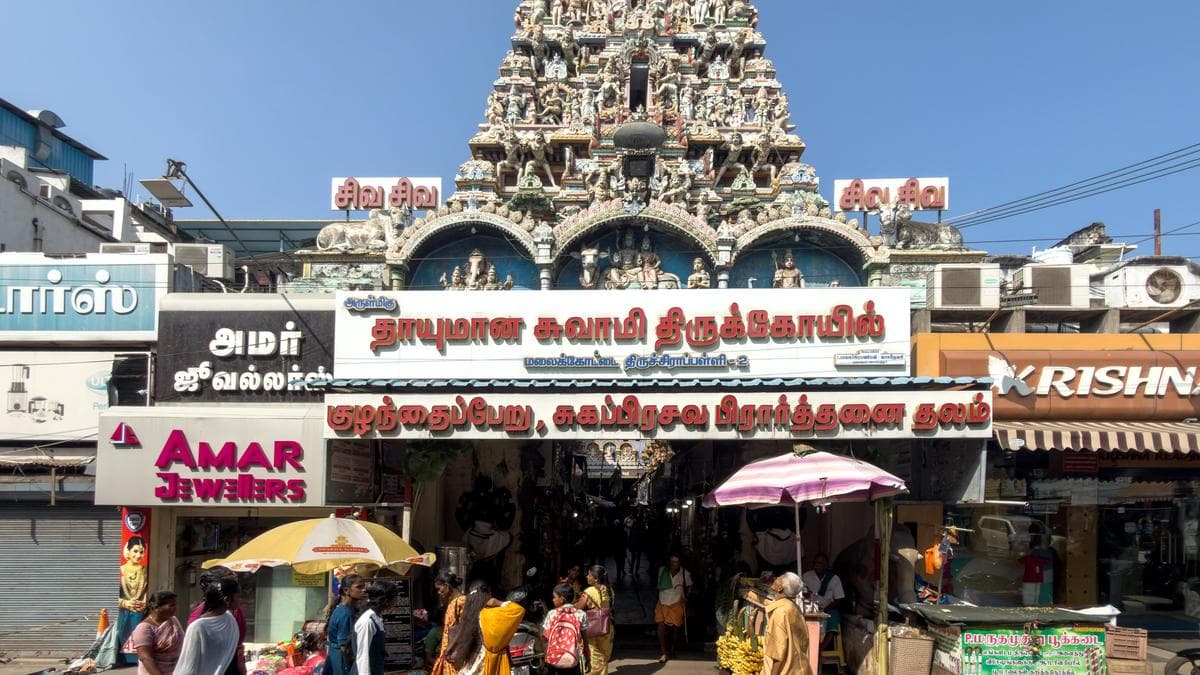
Tiruchi district occupied top slot by attracting 23.09 lakh tourists in August while Madurai, which drew 21.65 tourists, remains a top draw with foreign travellers