



Relevant for Exams
KTR warns Congress against attacks on BRS workers after alleged killing; regional political tension rises.
Summary
KTR, a prominent leader of the BRS party, issued a stern warning to the Congress party, threatening retaliation if alleged attacks on BRS workers do not cease. This statement followed KTR's visit to the family of a BRS worker reportedly killed in an attack attributed to Congressmen. The incident highlights escalating political tensions and law and order concerns, primarily relevant for state-level political analysis rather than major national competitive exam topics.
Key Points
- 1KTR, a leader of the BRS party, issued a warning statement.
- 2The warning was specifically directed towards the Congress party.
- 3The context for the warning was the alleged killing of a BRS party worker.
- 4KTR, along with other party leaders, visited the bereaved family of the deceased worker.
- 5The incident signifies heightened political rivalry between the BRS and Congress parties.
In-Depth Analysis
The recent warning issued by K. T. Rama Rao (KTR) of the Bharat Rashtra Samithi (BRS) to the Congress party, threatening retaliation over alleged attacks on BRS workers, including a fatality, underscores the escalating political tensions in Telangana. This incident, while specific to a state, offers a critical lens through which to examine broader themes of political rivalry, democratic health, and law and order in India. It is particularly relevant for state-level competitive exams (State PSCs) as it highlights the ground realities of state politics.
**Background Context: A Shifting Political Landscape**
Telangana's political landscape has undergone a significant transformation. For nearly a decade since its formation in 2014, the state was dominated by the Telangana Rashtra Samithi (TRS), later rebranded as BRS, under the leadership of K. Chandrashekar Rao (KCR). The BRS spearheaded the statehood movement and subsequently enjoyed considerable electoral success. However, the fortunes shifted dramatically in the December 2023 state assembly elections, where the Indian National Congress staged a remarkable comeback, securing a clear majority and forming the government. This electoral defeat was a major setback for the BRS, relegating it to the principal opposition role. The transition of power from a long-reigning party to a resurgent opposition often brings with it heightened political competition, accusations, and sometimes, violence, as the former ruling party struggles to adjust to its new role and the new government seeks to consolidate its power.
**What Happened: An Allegation and a Warning**
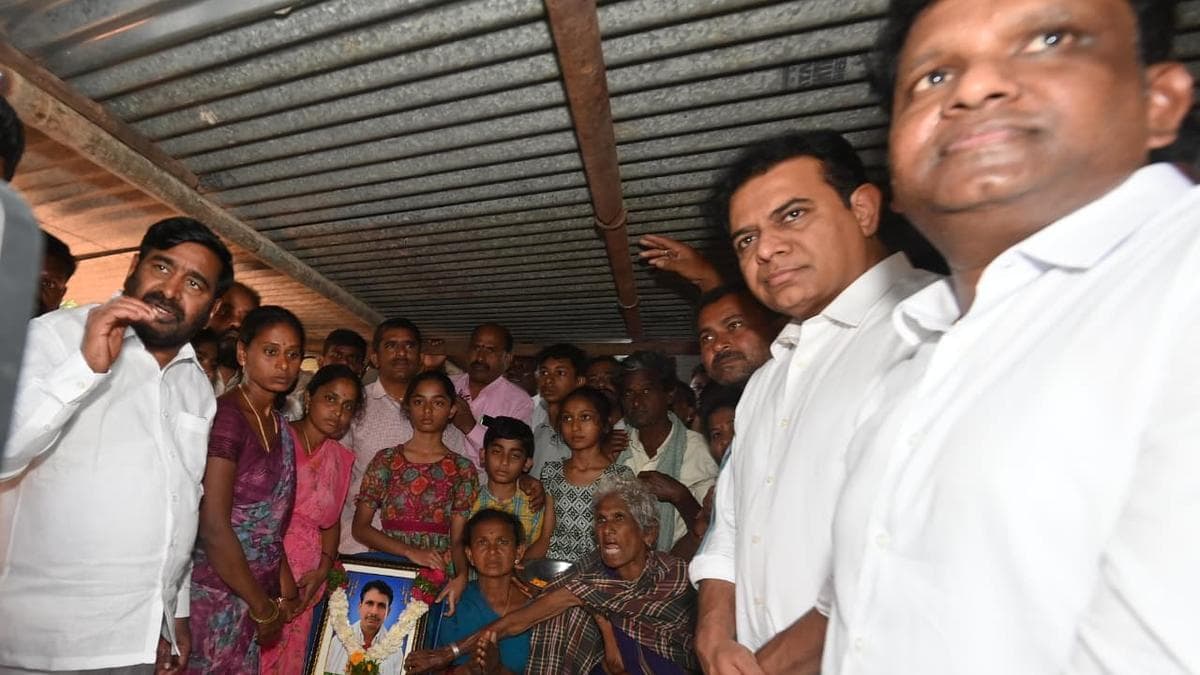
KTR's statement came after his visit to the family of a BRS worker reportedly killed in an attack allegedly perpetrated by Congressmen. This visit, accompanied by other party leaders, served multiple purposes: to express solidarity, to energize the party cadre, and to issue a strong message to the ruling party. The warning of "retaliation" is particularly concerning as it hints at a cycle of violence, rather than recourse to legal and democratic channels. Such pronouncements, even if symbolic, can inflame passions and further destabilize the political environment.
**Key Stakeholders Involved**
1. **Bharat Rashtra Samithi (BRS):** As the former ruling party and now the primary opposition, the BRS is attempting to retain its relevance and cadre morale. KTR, as a prominent leader, is instrumental in this effort. Their actions reflect the challenges of adapting to an opposition role after years in power.
2. **Indian National Congress (INC):** The newly formed government in Telangana. They bear the primary responsibility for maintaining law and order and ensuring that political competition does not devolve into violence. Allegations against their workers put them on the defensive and challenge their governance.
3. **The Deceased BRS Worker's Family:** The immediate victims of the alleged violence, whose plight often gets politicized in such scenarios.
4. **State Police and Law Enforcement Agencies:** Crucial for investigating the allegations, ensuring justice, and preventing further violence. Their impartiality and effectiveness are paramount for upholding the rule of law.
5. **The Electorate/Citizens of Telangana:** Ultimately affected by political instability and violence, which can disrupt daily life, deter investment, and undermine public trust in democratic institutions.
**Why This Matters for India: Democratic Health and Rule of Law**
This incident, though localized, highlights critical issues for India's democratic fabric. Political violence, whether during or after elections, undermines the fundamental principles of democracy: free and fair competition, peaceful transfer of power, and the right to dissent. When political parties resort to or threaten violence, it erodes public faith in institutions and the democratic process itself. It also poses a severe challenge to the state's ability to maintain law and order, a primary function of any government. The ability of an opposition party to function without fear of violence, and the ruling party's commitment to ensuring a safe political environment, are indicators of a healthy democracy. Furthermore, such incidents can distract from crucial governance issues like economic development and social welfare, diverting focus towards political vendettas.
**Historical Context and Future Implications**
Political violence is not a new phenomenon in India, with numerous instances reported across states, often intensifying during election cycles or periods of significant political shifts. Historically, strong regional rivalries have sometimes manifested in physical clashes, especially in states with deeply entrenched political bases. The challenge for Telangana's new Congress government will be to establish its authority while upholding law and order, ensuring that justice is served in the alleged killing, and preventing a cycle of retribution. For the BRS, the test lies in effectively playing the role of a constructive opposition, leveraging democratic avenues for protest and critique rather than resorting to or threatening extra-legal means. Failure to address such incidents promptly and impartially could lead to further polarization, instability, and a breakdown of trust between political actors and the public.
**Related Constitutional Articles, Acts, and Policies**
Several constitutional provisions and legal frameworks are relevant here:
* **Article 21 (Right to Life and Personal Liberty):** Guarantees the fundamental right to life, which includes protection from unlawful violence. The alleged killing directly infringes upon this right.
* **Article 19(1)(a) (Freedom of Speech and Expression):** While KTR has the right to express his views, this freedom is subject to reasonable restrictions, including those related to public order and incitement to violence. Threats of retaliation could fall under such restrictions.
* **Indian Penal Code (IPC):** Sections related to murder (Section 302), voluntarily causing hurt (Sections 323, 325), criminal intimidation (Section 506), and rioting (Section 147, 148) would be applicable if the allegations are proven.
* **Representation of the People Act, 1951:** Deals with the conduct of elections and electoral offenses, though this incident occurred post-election, the spirit of fair play and prevention of political violence is central to this act.
* **Model Code of Conduct (MCC):** While primarily applicable during elections, the spirit of the MCC, which promotes ethical political conduct and discourages communal or violent rhetoric, remains relevant for maintaining political civility at all times.
* **Article 355 (Duty of the Union to protect States against external aggression and internal disturbance):** In extreme cases of breakdown of law and order, the Union government can intervene, highlighting the ultimate responsibility for peace and order. This is an extreme measure, but the framework exists.
This incident underscores the imperative for political maturity, adherence to the rule of law, and robust law enforcement to ensure that democratic competition remains healthy and non-violent, safeguarding the rights and lives of all citizens.
Exam Tips
This topic falls primarily under 'Indian Polity and Governance' (State Politics, Political Parties, Law & Order, Elections) for UPSC and State PSCs. Pay attention to the role of regional parties and the dynamics of state-level political competition.
Study related topics such as the functioning of political parties (national vs. regional), the role of the opposition, electoral reforms (e.g., Model Code of Conduct), and the administrative machinery for maintaining law and order (State Police, Home Department).
Common question patterns include: analytical questions on the impact of political violence on democracy, the role of law enforcement in maintaining peace, constitutional provisions related to fundamental rights (Article 21, 19), and the responsibilities of political parties in upholding democratic norms. Be prepared for case studies on law and order situations.
Understand the difference between political protest (democratic right) and political violence (illegal activity). Focus on the legal and constitutional remedies available to address such issues.
Related Topics to Study
Full Article
He along with party leaders visit the bereaved family of party worker who was killed in an attack allegedly by Congressmen recently