



Relevant for Exams
Sagarmala identifies 110 projects worth ₹1 lakh crore in A.P.; National Logistics Portal Marine launched.
Summary
The Union Government has identified 110 projects worth ₹1 lakh crore under the Sagarmala program in Andhra Pradesh, signaling significant infrastructure development. Concurrently, the National Logistics Portal Marine has been launched to create a unified platform for all logistics sector stakeholders. These initiatives aim to boost port-led development, enhance logistics efficiency, and contribute to economic growth, making them crucial for competitive exam preparation on government schemes and infrastructure.
Key Points
- 1Under the Sagarmala program, 110 projects have been identified in Andhra Pradesh (A.P.).
- 2The total worth of these 110 projects identified in A.P. is ₹1 lakh crore.
- 3The government has launched the National Logistics Portal Marine.
- 4The National Logistics Portal Marine aims to provide a one-stop platform.
- 5The portal is designed to connect all stakeholders of the logistics sector.
In-Depth Analysis
India, with its vast coastline stretching over 7,500 km and a strategic location in the Indian Ocean, possesses immense potential for maritime trade and economic development. However, for decades, this potential remained largely underutilized, leading to higher logistics costs and slower economic growth compared to global benchmarks. Recognizing this critical gap, the Union Government launched the Sagarmala Programme in March 2015. This ambitious national initiative aims to promote port-led development, transforming India's coastline, ports, and inland waterways into engines of growth.
At its core, Sagarmala envisions enhancing port capacity and efficiency, improving port connectivity through road, rail, inland waterways, and coastal shipping, promoting port-linked industrialization, and developing coastal communities. The programme operates on four key pillars: Port Modernization & New Port Development, Port Connectivity Enhancement, Port-linked Industrialization, and Coastal Community Development. The recent announcement of 110 projects worth ₹1 lakh crore identified in Andhra Pradesh under Sagarmala underscores the significant momentum and commitment towards achieving these objectives.
Andhra Pradesh, with its second-longest coastline among Indian states and existing major ports like Visakhapatnam and Gangavaram, is strategically vital for Sagarmala's success. The identification of such a large number of projects in the state signifies a concerted effort to leverage its geographical advantage for industrial growth, trade facilitation, and employment generation. These projects are likely to encompass a wide range of infrastructure developments, including new port capacities, dedicated rail and road corridors to ports, multi-modal logistics parks, industrial clusters near ports, and initiatives for skilling and livelihood creation for coastal communities.
Complementing the physical infrastructure development, the launch of the National Logistics Portal Marine (NLP-Marine) is a crucial digital initiative. This portal is designed as a one-stop digital platform to connect all stakeholders of the logistics sector, including importers, exporters, shipping lines, port authorities, customs, and various government agencies. Its objective is to streamline processes, reduce paperwork, enhance transparency, and ultimately lower the cost and time involved in logistics operations. By integrating various services and information flows, NLP-Marine aims to improve the 'ease of doing business' and make India's logistics sector more competitive globally.
Key stakeholders involved in these initiatives include the Union Ministry of Ports, Shipping and Waterways, which is the nodal ministry for Sagarmala and NLP-Marine. State governments, particularly Andhra Pradesh in this context, play a pivotal role in land acquisition, project implementation, and providing necessary clearances. Port authorities, such as the Visakhapatnam Port Authority, are direct beneficiaries and implementers of modernization projects. The private sector is a crucial partner, providing capital investment, technological expertise, and operational efficiency for port development, industrial parks, and logistics services. Local communities, especially those residing in coastal areas, are significant stakeholders as their livelihoods and development are directly impacted by these projects.
For India, these developments hold immense significance. Economically, they aim to reduce the logistics cost from the current 13-14% of GDP to closer to global benchmarks (around 8-10%), thereby boosting the competitiveness of Indian goods in international markets. This aligns directly with the 'Make in India' and 'Atmanirbhar Bharat' initiatives. Improved port infrastructure and connectivity will facilitate faster export-import trade, attract foreign direct investment, and create millions of direct and indirect jobs. Socially, the coastal community development component of Sagarmala addresses the welfare of fishing communities and others dependent on the marine ecosystem through skill development, infrastructure provision, and livelihood diversification.
Historically, while India had a strong maritime tradition, post-independence focus largely shifted to road and rail infrastructure. Sagarmala marks a renewed national emphasis on harnessing the potential of its coastline and waterways, reminiscent of ancient maritime trade routes. This aligns with a broader global trend of countries leveraging their maritime assets for economic growth and strategic influence. Furthermore, these initiatives are vital for realizing India's 'Blue Economy' vision, which emphasizes sustainable use of ocean resources for economic growth, improved livelihoods, and ocean ecosystem health.
Constitutional provisions relevant to this sector primarily fall under the Seventh Schedule. "Maritime shipping and navigation" (Entry 25) and "Major ports" (Entry 27) are subjects in the Union List, empowering the Parliament to legislate on them. The "Indian Ports Act, 1908" and the more recent "Major Port Authorities Act, 2021" (which replaced the 1963 Act to provide greater autonomy to major ports) are key legislative frameworks. The National Logistics Policy, 2022, provides an overarching policy framework for integrated logistics development, with Sagarmala and NLP-Marine being critical components. State governments have jurisdiction over minor ports and related infrastructure under the State List and Concurrent List, requiring strong Centre-State cooperation for comprehensive development.
Future implications are profound. Enhanced port capacity and efficient logistics will lead to increased trade volumes, better integration into global supply chains, and a more robust manufacturing sector. The digital integration through NLP-Marine will likely set new benchmarks for efficiency and transparency in logistics. The focus on coastal community development will foster inclusive growth. As India aims to become a USD 5 trillion economy, the maritime sector, propelled by programs like Sagarmala and digital platforms like NLP-Marine, will be a crucial enabler, strengthening India's economic prowess and strategic presence in the Indo-Pacific region.
Exam Tips
This topic falls under GS Paper-III (Economy - Infrastructure, Investment Models) and GS Paper-I (Indian Geography - Ports, Coastal Regions) for UPSC Civil Services. For SSC, Banking, and State PSCs, expect direct questions on the objectives, features, and benefits of Sagarmala and NLP-Marine.
When studying, focus on the 'four pillars' of Sagarmala, its overarching objectives, and the specific role of the National Logistics Portal Marine. Understand the economic benefits (cost reduction, trade boost, employment) and strategic importance of port-led development.
Common question patterns include: 'Discuss the significance of the Sagarmala Programme for India's economic development.' 'How does the National Logistics Portal Marine contribute to improving logistics efficiency in India?' 'Analyze the challenges and opportunities for port-led industrialization in India.' Be prepared to write short notes or elaborate answers.
Relate Sagarmala to other government initiatives like 'Make in India,' 'Atmanirbhar Bharat,' 'National Logistics Policy,' and the broader 'Blue Economy' concept. Understanding these linkages will help in comprehensive answer writing and multiple-choice questions.
Pay attention to specific facts like the launch year (2015) of Sagarmala, the approximate logistics cost in India (13-14% of GDP), and the target for reduction. For Andhra Pradesh specific projects, remember the scale (110 projects, ₹1 lakh crore) as it highlights the program's impact.
Related Topics to Study
Full Article
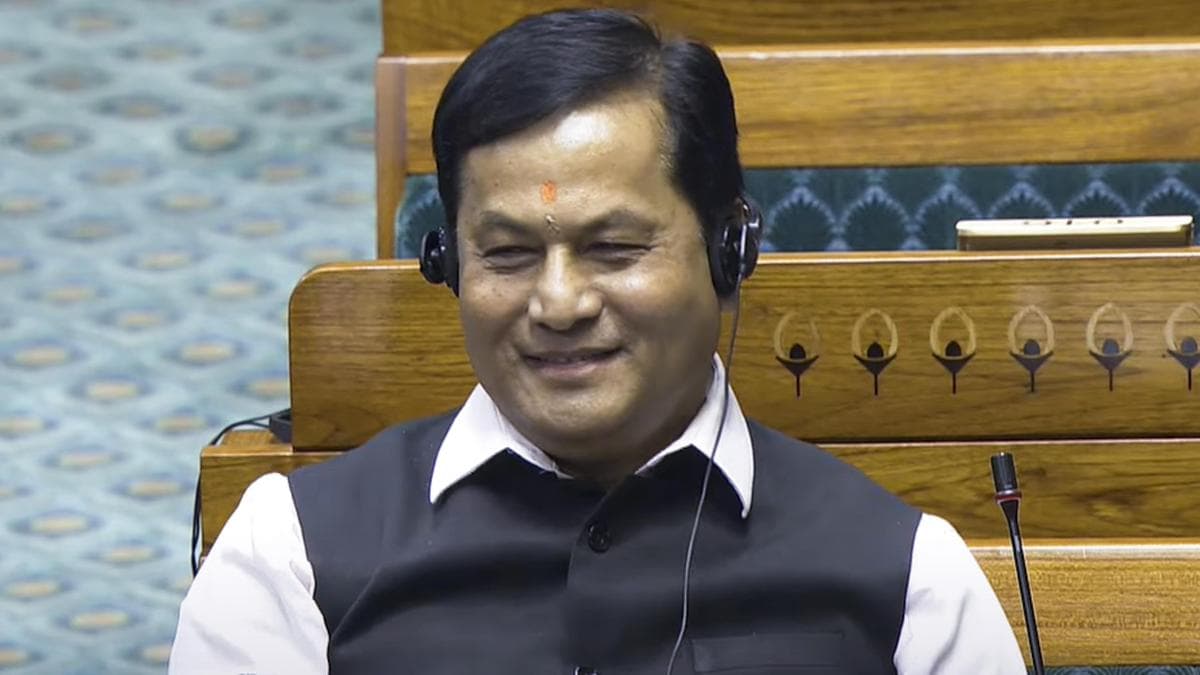
The government has launched National Logistics Portal Marine to provide a one-stop platform aimed at connecting all stakeholders of logistics sector, he says