



Relevant for Exams
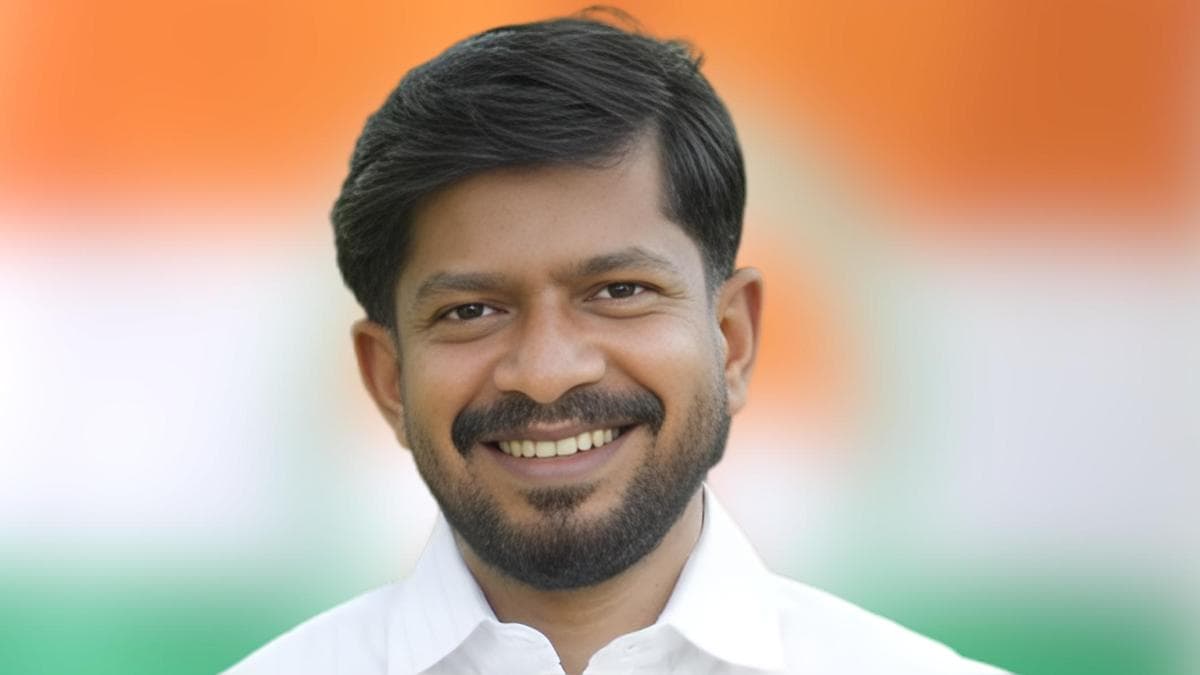
Kerala Youth Congress leader O.J. Janeesh states pension is a right, not LDF charity, criticizing a 'Mani' statement.
Summary
Kerala Youth Congress leader O.J. Janeesh criticized a statement by 'Mani,' asserting that pension is a people's right, not charity from the ruling Left Democratic Front (LDF). Janeesh called the statement unacceptable and demeaning. This highlights ongoing political discourse in Kerala regarding social welfare provisions, but the article lacks specific policy details or broader national implications, limiting its relevance for competitive exams beyond regional politics.
Key Points
- 1O.J. Janeesh, a leader of the Kerala Youth Congress, made the statement.
- 2The core assertion is that 'pension is not LDF’s charity, it is people’s right.'
- 3Janeesh deemed a statement by 'Mani' as unacceptable and demeaning.
- 4The criticism is directed towards the Left Democratic Front (LDF) in Kerala.
- 5The context of this political statement is the state of Kerala.
In-Depth Analysis
The statement by Kerala Youth Congress leader O.J. Janeesh, asserting that pension is a people's right and not charity from the ruling Left Democratic Front (LDF), encapsulates a fundamental debate at the heart of India's welfare state: the nature of social security provisions. This seemingly regional political statement resonates deeply with national discussions on governance, fiscal policy, and the constitutional mandate for social justice.
**Background Context and The Core Debate:**
Kerala has long been lauded for its 'Kerala Model' of development, characterized by high human development indicators despite moderate economic growth. This model is built on robust public services, including extensive social welfare schemes. Successive governments, irrespective of political affiliation (LDF or United Democratic Front - UDF), have prioritized social security, including various pension schemes for the elderly, widows, disabled, and other vulnerable groups. This has fostered an expectation among citizens that such provisions are integral to their well-being. The LDF government, in particular, has often highlighted its commitment to welfare, which makes any statement from its side that suggests pensions are 'charity' rather than an entitlement particularly contentious for the opposition. The Youth Congress leader's criticism, therefore, taps into this deeply ingrained belief in the right to social security, challenging the LDF's rhetoric and positioning.
**What Happened and Key Stakeholders:**
O.J. Janeesh, a leader of the Kerala Youth Congress, publicly criticized a statement made by an LDF leader, 'Mani,' which implied that pensions were a charitable act by the government. Janeesh categorically refuted this, asserting that pensions are a fundamental 'right' of the people. The **Kerala Youth Congress**, as the youth wing of the Indian National Congress (a major opposition party in Kerala), acts as a critical voice, holding the ruling dispensation accountable. Their primary stakeholder is the citizenry, particularly the beneficiaries of these welfare schemes, whose interests they claim to uphold. The **Left Democratic Front (LDF)**, the ruling coalition, is a key stakeholder, facing scrutiny over its policy communication and implementation. Its leaders, like 'Mani', represent the government's stance, which can be interpreted differently by various political actors and the public. Ultimately, the **citizens and pensioners** are the most crucial stakeholders, as they are the recipients of these benefits and the ultimate arbiters through their vote.
**Significance for India and Historical Context:**
This debate extends far beyond Kerala's borders, touching upon the very essence of India's commitment to a welfare state. Historically, India’s journey towards social security has been shaped by its constitutional ideals. The **Directive Principles of State Policy (DPSP)**, enshrined in Part IV of the Constitution, provide the foundational framework. Specifically, **Article 38** mandates the state to secure a social order for the promotion of welfare of the people, striving to minimize inequalities. **Article 39** directs the state to secure adequate means of livelihood, and **Article 41** explicitly states that the state shall, within the limits of its economic capacity and development, make effective provision for securing the right to public assistance in cases of old age, sickness, disablement, and in other cases of undeserved want. These articles legally and morally underpin the provision of pensions and other social security measures, establishing them as a state responsibility rather than an act of benevolence. National programs like the National Social Assistance Programme (NSAP), launched in 1995, which includes the Indira Gandhi National Old Age Pension Scheme (IGNOAPS), are direct manifestations of these constitutional directives. The debate, therefore, is not just political posturing but a reassertion of constitutional principles.
**Future Implications and Broader Themes:**
The discussion around pensions as a 'right' versus 'charity' has significant future implications. Firstly, it impacts the **sustainability and design of welfare schemes**. With India's aging population, the fiscal burden of pensions is set to increase substantially. This necessitates a careful balance between fulfilling constitutional mandates and ensuring fiscal prudence. Political rhetoric that frames pensions as a right can make it harder for governments to reform or scale back schemes, even if financially necessary. Secondly, it influences **fiscal federalism**. State governments bear a significant portion of social welfare spending, leading to debates about resource allocation, central government support, and the autonomy of states in designing their welfare models. Thirdly, it shapes **political discourse and electoral strategies**. Welfare provisions are often key electoral planks, and how parties articulate their commitment to these can sway voters. The Youth Congress's stance aims to protect the dignity of beneficiaries and prevent the ruling party from claiming undue credit for what is seen as a constitutional obligation. This ongoing tension between fiscal realities, constitutional ideals, and electoral politics will continue to define India's approach to social security in the coming decades.
In essence, the Kerala Youth Congress leader's statement is not merely a regional political spat; it is a critical commentary on the philosophy of governance, the interpretation of constitutional duties, and the fundamental relationship between the state and its citizens in a welfare democracy.
Exam Tips
This topic falls under GS Paper II (Polity & Governance: Social Justice, Welfare Schemes, Directive Principles of State Policy) and GS Paper III (Economy: Government Budgeting, Fiscal Policy, Social Sector initiatives).
Study the Directive Principles of State Policy (DPSP), especially Articles 38, 39, 41, 42, and 43. Understand their non-justiciable nature but fundamental importance in governance. Link them to various welfare schemes.
Familiarize yourself with major social security schemes in India, such as the National Social Assistance Programme (NSAP), Atal Pension Yojana (APY), Employees' Provident Fund (EPF), and state-specific pension schemes. Understand their objectives, beneficiaries, and funding mechanisms.
Be prepared for analytical questions on the sustainability of welfare schemes in the face of an aging population and fiscal constraints. Also, questions on the ethical and constitutional dimensions of social security (e.g., 'right' vs. 'dole').
Compare and contrast different models of welfare delivery in India (e.g., Kerala Model, Tamil Nadu's welfare schemes) and their impact on human development indicators and state finances.
Related Topics to Study
Full Article
He calls Mani’s statement unacceptable and demeaning