



Relevant for Exams
Parliament panel recommends UGC recognition for Sonam Wangchuk's HIAL and replication of its model.
Summary
A Parliament panel, led by Congress MP Digvijaya Singh, has recommended that Sonam Wangchuk's Himalayan Institute of Alternatives, Ladakh (HIAL) be granted UGC recognition. The committee also urged the Ministry of Education to study the HIAL model for potential replication across the country. This highlights the growing recognition of alternative education models and their significance for India's educational landscape, making it relevant for policy-related questions in competitive exams.
Key Points
- 1A Parliament panel recommended UGC recognition for the Himalayan Institute of Alternatives, Ladakh (HIAL).
- 2The Parliament panel was headed by Congress MP Digvijaya Singh.
- 3HIAL was founded by innovator and educationist Sonam Wangchuk.
- 4The committee advised the Ministry of Education to closely study the HIAL model.
- 5The recommendation includes considering how the HIAL educational model can be replicated nationwide.
In-Depth Analysis
The recommendation by a Parliament panel to grant University Grants Commission (UGC) recognition to the Himalayan Institute of Alternatives, Ladakh (HIAL), founded by Sonam Wangchuk, and to study its model for potential replication across India, signifies a pivotal moment in India's educational discourse. This development underscores a growing recognition of the need for innovative, practical, and locally relevant educational paradigms to address the evolving challenges of the 21st century.
**Background Context: The Need for Alternative Education**
India's traditional education system, while vast, has often been criticized for its emphasis on rote learning, lack of practical skills, and limited applicability to local contexts, particularly in remote and ecologically sensitive regions. The National Education Policy 2020 (NEP 2020) itself acknowledges these shortcomings, advocating for a holistic, multidisciplinary, and skill-based approach. Against this backdrop, innovators like Sonam Wangchuk have championed alternative models. Wangchuk, renowned for his work in sustainable development and education, previously established the Students' Educational and Cultural Movement of Ladakh (SECMOL), demonstrating the efficacy of hands-on learning and local problem-solving. HIAL, his latest venture, builds on this philosophy, aiming to provide higher education that is relevant to the unique challenges and opportunities of the Himalayan region, focusing on sustainable development, local entrepreneurship, and ecological preservation.
**What Happened: A Parliamentary Endorsement**
The Parliamentary Standing Committee on Education, headed by Congress MP Digvijaya Singh, conducted an assessment of HIAL's work. The committee was deeply impressed by HIAL's unique pedagogical approach and its impact. Consequently, it put forth two significant recommendations: first, that HIAL should be granted UGC recognition, which would legitimize its degrees and programs within the national higher education framework. Second, and perhaps more far-reaching, the committee urged the Ministry of Education to conduct a thorough study of the 'HIAL model' with the explicit goal of understanding how its principles and practices could be replicated in other parts of the country. This formal endorsement from a parliamentary body lends significant weight to the call for educational reform and innovation.
**Key Stakeholders Involved**
At the heart of this development is the **Himalayan Institute of Alternatives, Ladakh (HIAL)**, an institution dedicated to fostering critical thinking, practical skills, and sustainable solutions relevant to the Himalayan environment. Its founder, **Sonam Wangchuk**, is a key visionary. The **Parliamentary Standing Committee on Education**, an oversight body of the Indian Parliament, played the crucial role of assessing and recommending. The **University Grants Commission (UGC)**, established under the UGC Act, 1956, is the statutory body responsible for the coordination, determination, and maintenance of standards of university education in India; its recognition is vital for any higher education institution. Finally, the **Ministry of Education**, the executive arm of the government, is tasked with studying HIAL's model and potentially implementing its replication, thereby shaping national education policy.
**Significance for India and Future Implications**
This recommendation holds immense significance for India. Firstly, it could pave the way for a more diverse and adaptable higher education landscape, moving beyond the one-size-fits-all approach. HIAL's focus on sustainable development, local resource management, and social entrepreneurship aligns perfectly with India's broader goals of achieving Sustainable Development Goals (SDG 4 for Quality Education and SDG 13 for Climate Action) and fostering a self-reliant (Atmanirbhar Bharat) economy. By empowering students with practical skills and an understanding of their local environment, HIAL contributes directly to regional development and reduces brain drain from remote areas. The potential replication of the HIAL model could lead to the establishment of more context-specific educational institutions across India, addressing unique regional challenges, from coastal management to desertification.
Historically, various education commissions in India, such as the Kothari Commission (1964-66), have emphasized the need for vocational and skill-based education. HIAL's model embodies these long-standing ideals, providing a contemporary example of how they can be implemented effectively. Future implications include a potential shift in how the UGC evaluates and recognizes institutions, possibly giving more weight to practical impact and innovative pedagogy. If the HIAL model is successfully replicated, it could decentralize educational excellence and foster a network of institutions deeply rooted in their local ecosystems, providing a robust talent pool for regional development and addressing the employability gap that plagues many graduates from conventional institutions. This aligns strongly with the NEP 2020's vision for multidisciplinary education, skill integration, and promoting local languages and cultures in learning.
**Related Constitutional Articles, Acts, and Policies**
The subject of education falls under the **Concurrent List (List III)** of the **Seventh Schedule** of the Indian Constitution, allowing both the Parliament and state legislatures to make laws. The **University Grants Commission Act, 1956**, is the primary legislation governing the UGC's powers and functions in regulating higher education. While HIAL caters to higher education, the broader spirit of ensuring quality education for all citizens resonates with **Article 21A** of the Constitution, which guarantees the Right to Education for children aged six to fourteen years, emphasizing the state's role in providing education. The **National Education Policy 2020** is the overarching policy framework that seeks to transform India's education system, and initiatives like HIAL perfectly align with its objectives of promoting holistic, multidisciplinary, skill-based, and flexible learning environments. The Ministry of Education's role in this context is guided by these constitutional provisions and policy directives.
Exam Tips
This topic falls under GS Paper II (Indian Polity and Governance, Social Justice - Education) and GS Paper III (Indian Economy - Skill Development, Environment - Sustainable Development) for UPSC Civil Services. For State PSCs, it's relevant for General Studies on governance and social issues.
Study the National Education Policy 2020 (NEP 2020) thoroughly, focusing on its recommendations for higher education, skill development, and multidisciplinary learning. Understand the role and functions of the University Grants Commission (UGC) and Parliamentary Committees.
Common question patterns include: 'Discuss the challenges in India's higher education system and how alternative models like HIAL can provide solutions.' 'Analyze the role of parliamentary committees in policy formulation.' 'Examine the key features of NEP 2020 and its potential impact on skill development.' Expect questions on the constitutional provisions related to education (Concurrent List, Article 21A).
Focus on the 'why' and 'how' – why alternative education is needed, how HIAL's model is unique, and how its replication could benefit India. Link it to broader themes like sustainable development, rural empowerment, and youth employment.
Related Topics to Study
Full Article
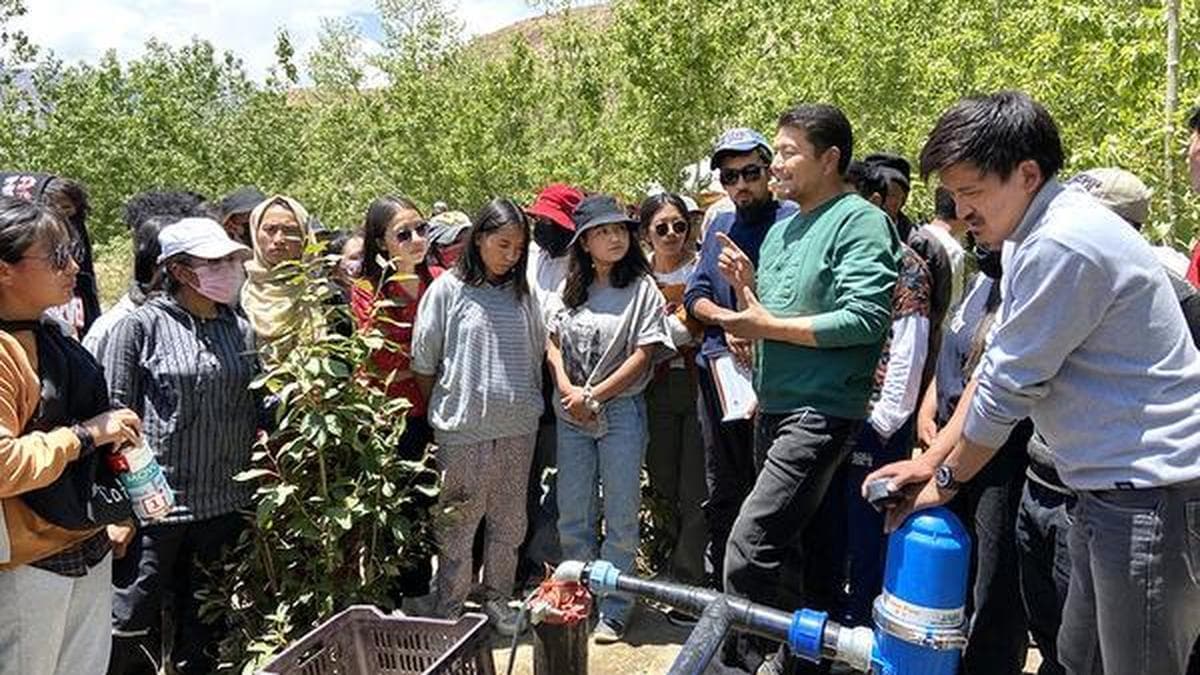
The committee, headed by Congress MP Digvijaya Singh recommended that the Ministry of Education closely study the HIAL model and consider how it can be replicated