


Relevant for Exams
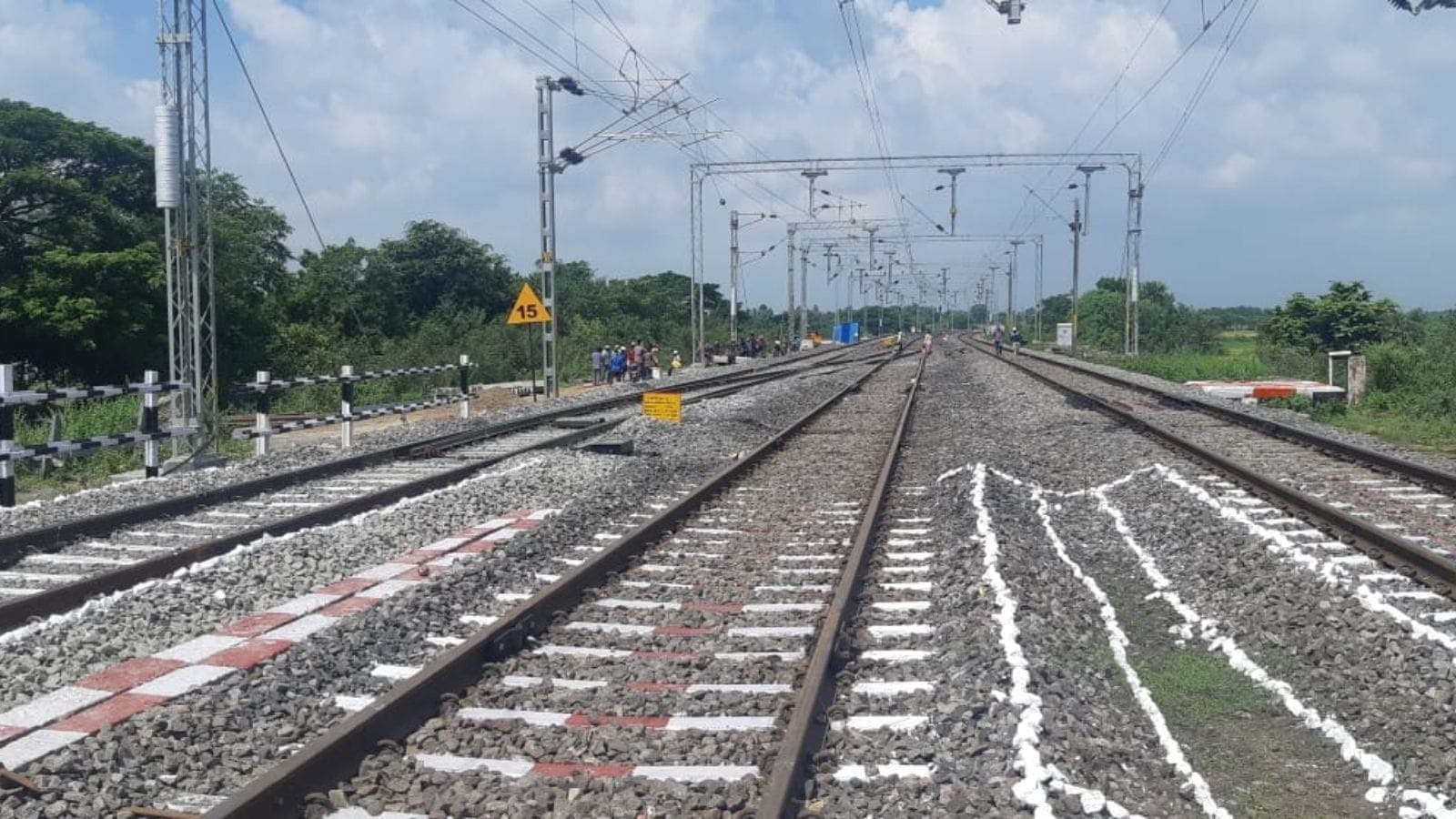
Indian Railways electrifies 99.2% of broad gauge network, nearing net zero carbon emissions target.
Summary
Indian Railways has achieved 99.2% electrification of its broad gauge network, marking a significant milestone in its ambitious journey towards achieving net zero carbon emissions. This move is crucial for sustainable transportation, reducing the railway's carbon footprint, and aligning with India's broader environmental goals. For competitive exams, this highlights governmental infrastructure development, environmental policy, and specific targets related to national transport.
Key Points
- 1Indian Railways has achieved 99.2% electrification of its broad gauge network.
- 2This electrification is a key step towards Indian Railways' target of achieving net zero carbon emissions.
- 3The broad gauge network is the primary focus of this electrification drive by Indian Railways.
- 4The initiative underscores Indian Railways' commitment to sustainable transportation and environmental protection.
- 5This milestone contributes to India's national goals for reducing carbon emissions and promoting green infrastructure.
In-Depth Analysis
The achievement of 99.2% electrification of the broad gauge network by Indian Railways marks a monumental stride in India's journey towards sustainable development and a greener future. This isn't just an engineering feat; it's a strategic move with profound implications for the nation's economy, environment, and global standing. To truly grasp its significance, we must delve into the background, the driving forces, and the ripple effects of this transformation.
Historically, Indian Railways, established during the British Raj in 1853, primarily relied on steam locomotives, later transitioning to diesel. While diesel offered greater efficiency than steam, it remained a significant contributor to greenhouse gas emissions and subjected the railway system to volatile global fuel prices. The idea of electrification isn't new; the first electric train ran in India between Bombay VT and Kurla in 1925. However, the pace was initially slow. Post-independence, electrification gained sporadic momentum, driven by the need to reduce dependence on imported petroleum and enhance operational efficiency. It was in the past decade that the electrification drive saw unprecedented acceleration, with the government setting ambitious targets to electrify the entire broad gauge network. This push aligns with India's broader environmental commitments and infrastructure modernization agenda, aiming to make Indian Railways a 'Net Zero Carbon Emitter' by 2030.
What precisely happened is that Indian Railways has electrified 99.2% of its broad gauge network. The broad gauge, being the backbone of India's railway system, handles the vast majority of passenger and freight traffic. Electrifying this extensive network means that nearly all main lines are now capable of running electric locomotives, significantly reducing the reliance on diesel. This is a crucial pre-condition for achieving the net-zero target, as it allows for the eventual powering of trains using electricity generated from renewable sources, thereby eliminating direct emissions from train operations.
Several key stakeholders have been instrumental in this colossal undertaking. The **Ministry of Railways** and **Indian Railways** itself are at the forefront, responsible for policy formulation, planning, execution, and funding. Public Sector Undertakings (PSUs) like Rail Vikas Nigam Limited (RVNL) and IRCON International Ltd. have played a vital role in the on-ground implementation, project management, and construction of overhead equipment. The **Central Government** has provided the overarching vision and financial support, integrating railway modernization with national development goals such as 'Make in India' and 'Atmanirbhar Bharat' by promoting indigenous manufacturing of components. The **Ministry of Power** and state electricity boards are crucial for ensuring a reliable and adequate power supply to the electrified routes. Ultimately, the **Indian populace** stands as a key beneficiary, enjoying improved services and a cleaner environment.
This milestone holds immense significance for India. Environmentally, it drastically cuts the carbon footprint of one of the world's largest railway networks, contributing directly to India's Nationally Determined Contributions (NDCs) under the Paris Agreement. India has pledged to reduce the emissions intensity of its GDP by 45% by 2030 from 2005 levels and achieve about 50% cumulative electric power installed capacity from non-fossil fuel-based energy resources by 2030. Indian Railways' electrification helps achieve these targets and aligns with the broader national goal of achieving net-zero emissions by 2070. Constitutionally, this initiative resonates with the Directive Principles of State Policy, particularly **Article 48A**, which mandates the State to 'endeavour to protect and improve the environment and to safeguard the forests and wild life of the country.' It also aligns with the Fundamental Duty under **Article 51A(g)**, which states that it shall be the duty of every citizen 'to protect and improve the natural environment.' The **Environment (Protection) Act, 1986**, provides the legislative framework for such environmental protection initiatives.
Economically, electrification leads to substantial savings in fuel costs, reducing India's dependence on crude oil imports and strengthening energy security. Electric locomotives are also more powerful, efficient, and require less maintenance compared to diesel engines, leading to higher average speeds, increased hauling capacity, and better punctuality. This enhances operational efficiency and reduces transit times for both passengers and freight, boosting economic activity. Socially, it means quieter, cleaner, and more reliable train journeys, improving the quality of life for millions of commuters and residents living near railway lines.
The future implications are vast. The remaining 0.8% broad gauge electrification is expected to be completed soon, making Indian Railways one of the largest fully electrified railway networks in the world. The next critical step is to integrate renewable energy sources, such as solar and wind power, into the railway's energy mix, making the electricity used for traction truly green. Indian Railways is already setting up solar power plants on its vacant land. This will solidify its position as a global leader in sustainable transportation, potentially inspiring other nations. Furthermore, this foundation supports the development of future high-speed rail corridors, which inherently rely on electric traction, propelling India's infrastructure into a new era of modernity and efficiency. This ongoing transformation is a testament to India's commitment to balancing rapid development with environmental stewardship, creating a model for sustainable growth on a global scale.
Exam Tips
This topic falls under UPSC GS Paper III (Economy, Infrastructure, Environment & Ecology) and is also relevant for General Awareness sections in SSC, Banking, Railway, and State PSC exams. Focus on factual details like percentages, target years (e.g., Net Zero by 2030 for Railways, 2070 for India), and key initiatives.
Study related topics such as India's Nationally Determined Contributions (NDCs), the National Action Plan on Climate Change (NAPCC), renewable energy targets (especially solar and wind power), and other major infrastructure projects like Bharatmala and Sagarmala Pariyojana. Understand how they interlink.
Expect questions on the significance of electrification (environmental, economic), the constitutional provisions (Article 48A, 51A(g)), the target year for net-zero emissions for Indian Railways, and the benefits of electric traction over diesel. Questions could be factual (MCQ) or analytical (descriptive in mains exams).