



Relevant for Exams
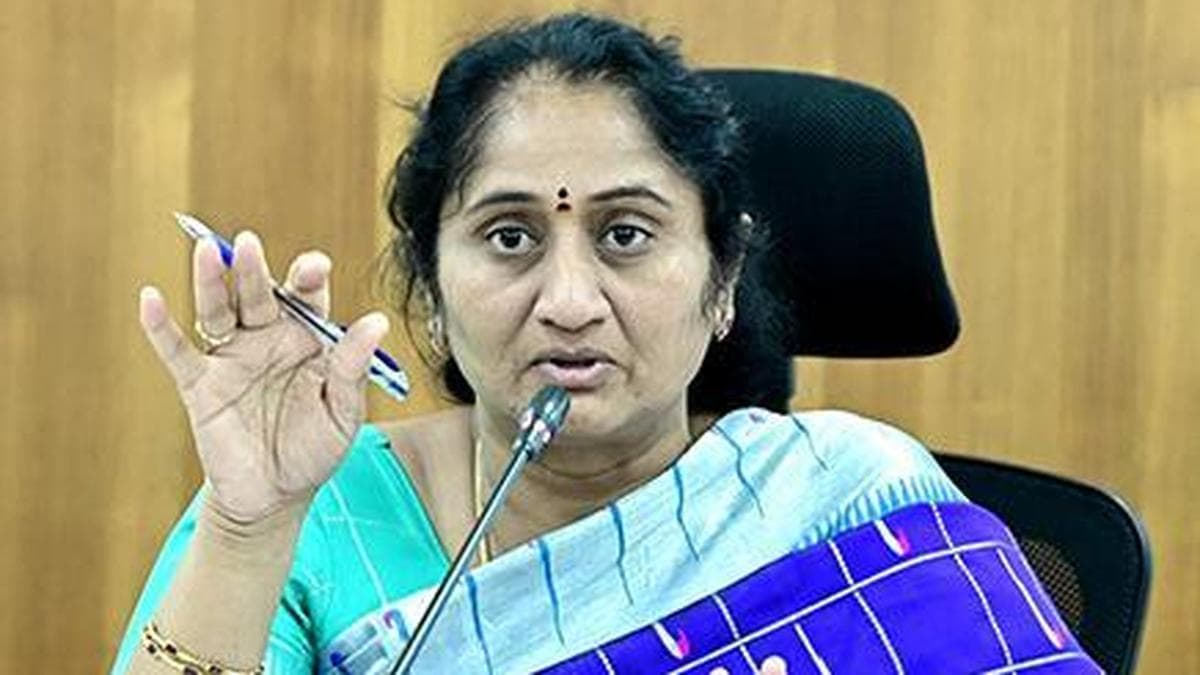
Minister Savitha directs officials for best medical care for injured SC hostel students in Sri Sathya Sai district.
Summary
Minister Savitha directed officials to ensure optimal medical treatment for two Scheduled Caste (SC) hostel students injured in a road accident in Sri Sathya Sai district. This action underscores the state's commitment to student welfare and accountability in public services. The incident highlights administrative oversight and the importance of timely action, relevant for governance and social justice topics, particularly in state-level competitive exams.
Key Points
- 1Minister Savitha issued directives concerning student welfare.
- 2The incident involved two students from a Scheduled Caste (SC) hostel.
- 3The students sustained injuries in a road accident.
- 4The specific location of the accident was Sri Sathya Sai district.
- 5The Minister emphasized that neglect of Social Welfare (SW) hostel students will not be tolerated.
In-Depth Analysis
The directive by Minister Savitha regarding the prompt and optimal medical treatment for two Scheduled Caste (SC) hostel students injured in a road accident in Sri Sathya Sai district is more than just a localized administrative action; it serves as a critical lens through which to examine India's commitment to social justice, welfare governance, and the protection of its most vulnerable citizens. This incident, while specific, encapsulates broader themes of state responsibility, administrative accountability, and the ongoing challenges in delivering welfare services.
**Background Context and Historical Significance:**
India, post-independence, embarked on a path to build a welfare state, actively seeking to uplift historically marginalized communities, particularly Scheduled Castes and Scheduled Tribes, who had faced centuries of discrimination and socio-economic exclusion. The establishment of Social Welfare (SW) hostels across the country was a significant policy intervention aimed at providing residential facilities, nutritious food, and a conducive environment for education to students from these disadvantaged backgrounds. These hostels are crucial for enabling access to education, reducing dropout rates, and fostering social mobility among SC students, many of whom come from remote areas or economically struggling families. The very existence of these hostels reflects the constitutional mandate to ensure equality and opportunity. However, despite their vital role, these institutions often face challenges such as inadequate infrastructure, poor maintenance, funding shortfalls, and, critically, administrative apathy or neglect, which can compromise the safety and well-being of the students they house.
**The Incident and Ministerial Intervention:**
In this particular instance, two SC hostel students in Sri Sathya Sai district suffered injuries in a road accident. Such incidents, unfortunately, are not uncommon, but the ministerial intervention elevates its significance. Minister Savitha's directive for 'best medical treatment' and her explicit statement that 'neglect of SW hostel students will not be tolerated' is a strong signal. It directly addresses the potential for bureaucratic indifference or inaction that often plagues public service delivery, especially in areas concerning marginalized groups. This direct oversight indicates a commitment to accountability and a recognition that the state's welfare machinery must be responsive and effective.
**Key Stakeholders Involved:**
1. **Minister Savitha (State Government Representative):** As a minister, she represents the political will and the state's commitment to upholding the welfare of its citizens, particularly vulnerable sections. Her intervention highlights the executive's role in ensuring policy implementation and accountability.
2. **Social Welfare Department Officials:** These are the primary implementers of welfare schemes, including the management of hostels. Their efficiency, responsiveness, and adherence to protocols directly impact the students' well-being. The Minister's directive is a clear message to this department about their responsibilities.
3. **Scheduled Caste (SC) Students:** They are the direct beneficiaries of welfare schemes and the most vulnerable stakeholders in this incident. Their safety, health, and access to education are at the core of the state's welfare objectives.
4. **Local Administration (Sri Sathya Sai district):** The district-level officials are responsible for immediate action, coordination, and ensuring that directives are carried out effectively on the ground. They are the frontline of governance.
5. **Public and Civil Society:** While not directly involved in the incident, they act as watchdogs, ensuring that the government remains accountable and that welfare provisions are genuinely delivered.
**Significance for India and Constitutional Relevance:**
This incident underscores several critical aspects for India. Firstly, it reiterates the principle of **social justice**, a foundational pillar of the Indian Constitution, enshrined in its Preamble and various Articles. The state's special provisions for SCs are not merely charitable acts but constitutional obligations to rectify historical injustices and ensure substantive equality. **Article 46** of the Directive Principles of State Policy (DPSP) mandates the State to promote with special care the educational and economic interests of the weaker sections of the people, and, in particular, of the Scheduled Castes and the Scheduled Tribes, and to protect them from social injustice and all forms of exploitation. Furthermore, **Article 15(4)** allows the State to make special provisions for the advancement of any socially and educationally backward classes or for the Scheduled Castes and the Scheduled Tribes.
Secondly, it highlights the importance of **good governance and administrative accountability**. The Minister's strong stance sends a message that negligence in public service will not be tolerated, fostering a culture of responsibility among officials. This aligns with broader governance reforms aimed at improving efficiency, transparency, and citizen-centric service delivery. The incident also subtly points to the persistent **implementation gaps** in welfare schemes, where well-intentioned policies often falter at the ground level due to bureaucratic inertia or resource constraints.
**Future Implications:**
This incident and the subsequent ministerial directive could lead to several positive outcomes. It might prompt a more rigorous review of the safety protocols, medical facilities, and overall administration of SW hostels across the state. Officials might become more proactive in their duties, fearing consequences for negligence. It could also empower students and their families to demand better services and accountability. On a broader scale, such interventions reinforce the idea that welfare is not just about policy formulation but about its diligent and humane execution, especially when dealing with the most vulnerable segments of society. It serves as a reminder that the state's commitment to social justice must translate into tangible, responsive action at every level of governance.
In conclusion, the directive from Minister Savitha, while addressing a specific incident, resonates deeply with India's constitutional ethos of social justice and welfare. It is a microcosm reflecting the constant need for vigilance, accountability, and responsive governance to ensure that the benefits of development and constitutional guarantees reach every citizen, particularly those who need them the most.
Exam Tips
This topic primarily falls under 'Social Justice' and 'Governance' in the UPSC GS Paper II syllabus, and similar sections in State PSC exams. Focus on constitutional provisions for vulnerable sections, welfare schemes, and accountability in public administration.
When studying, link this incident to broader themes like the welfare state, affirmative action (reservations, special provisions), and the role of various government departments (e.g., Social Welfare Ministry) in implementing policies. Understand the difference between policy formulation and implementation challenges.
Expect questions on constitutional articles related to Scheduled Castes (e.g., Articles 15(4), 46, 338). Also, be prepared for case study-based questions on administrative ethics, accountability, and the effective delivery of public services to marginalized communities.
Related Topics to Study
Full Article
She directs officials to provide best medical treatment to the two students of SC hostel injured in road accident in Sri Sathya Sai district