

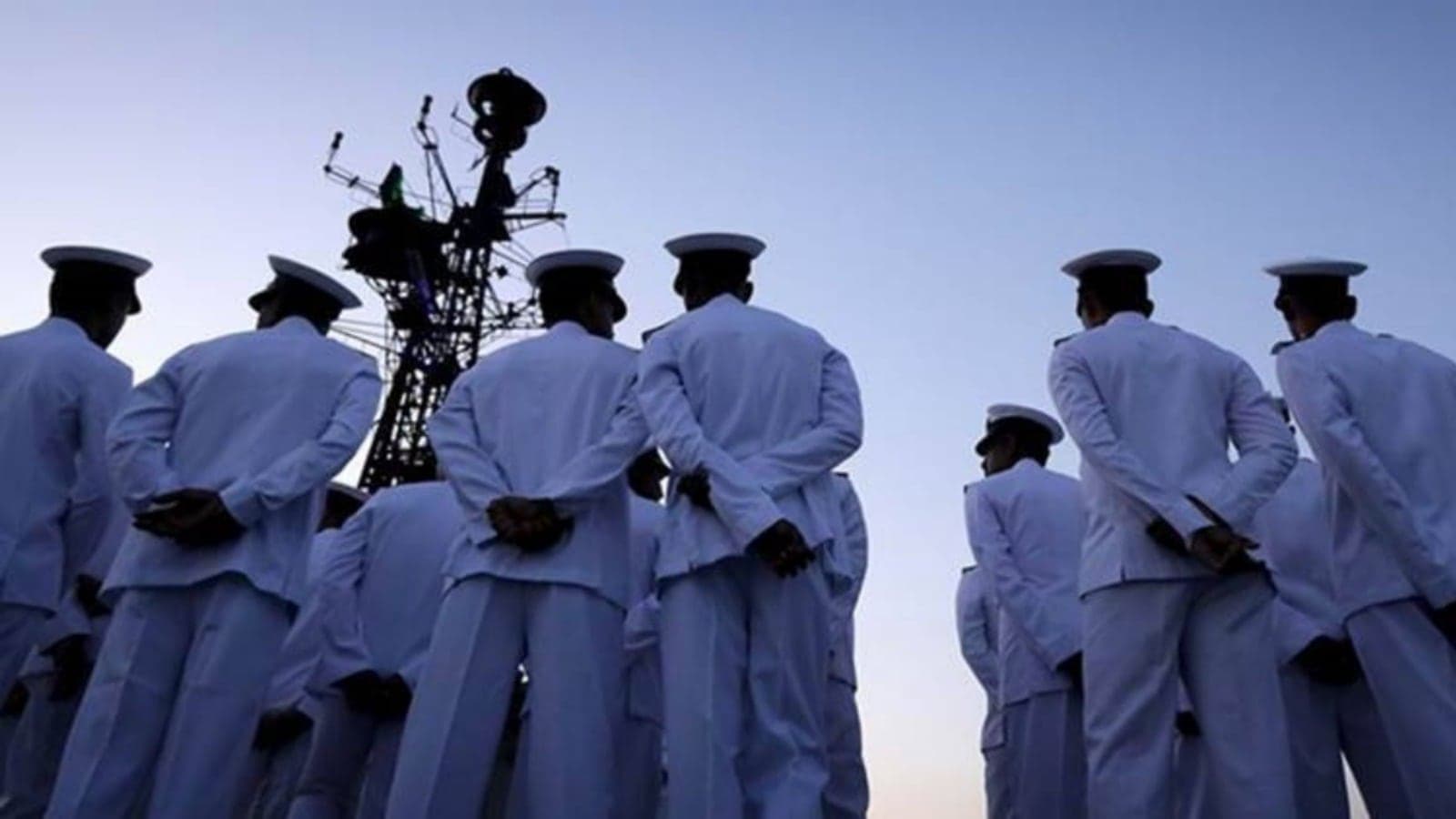


Content unavailable; specific exam facts on Navy's stitched ship project not extractable.
Summary
The provided article content was unavailable, preventing the extraction of specific exam-relevant facts, dates, names, or numbers regarding the Indian Navy's stitched ship project retracing an ancient sea route to Oman. Consequently, a detailed summary and precise key points cannot be generated based on the given input, limiting its utility for competitive exam preparation.
Key Points
- 1No specific facts could be extracted due to the absence of article content.
- 2Information regarding the Indian Navy's stitched ship project is unavailable.
- 3Details on the ancient sea route to Oman were not provided in the input.
- 4Specific dates, names, or numbers relevant to the event are absent.
- 5The full significance for competitive exams cannot be precisely determined without content.
In-Depth Analysis
The news of the Indian Navy's 'stitched ship' preparing to retrace an ancient sea route to Oman is a fascinating blend of history, culture, diplomacy, and strategic foresight. While the specific article content was unavailable, the title itself provides ample scope for a comprehensive analysis relevant to competitive exams, touching upon India's rich maritime heritage, its soft power projection, and its strategic interests in the Indian Ocean Region (IOR).
**Background Context and Historical Significance:**
India boasts a profound maritime history dating back thousands of years. The Harappan civilization, particularly the port city of Lothal (Gujarat) around 2500 BCE, provides archaeological evidence of sophisticated dockyards and extensive trade networks with Mesopotamia and the Persian Gulf. Later empires like the Cholas, Kalingas, and Satavahanas were renowned for their naval prowess and maritime trade, extending India's cultural and economic influence across Southeast Asia and West Asia. The 'stitched ship' tradition, often utilizing coir ropes to join wooden planks instead of iron nails, is an ancient shipbuilding technique that showcases indigenous engineering ingenuity. This method allowed for greater flexibility and resilience in turbulent waters, and its revival underscores a commitment to preserving and celebrating this invaluable heritage. The route to Oman, specifically, highlights ancient trade links, as Oman (historically associated with Magan) was a crucial intermediary in the ancient maritime 'Spice Route' and 'Incense Route' connecting India with the Roman Empire and beyond.
**What This Project Entails:**
This initiative likely involves the construction of a traditional 'stitched ship' by the Indian Navy, possibly in collaboration with the Ministry of Culture, local artisans, and shipbuilding experts. The objective is not merely to build a ship but to embark on an expedition that symbolically retraces historical trade and cultural pathways. This voyage serves multiple purposes: demonstrating the viability of ancient techniques, fostering a deeper understanding of India's maritime past, and strengthening contemporary bilateral relations through cultural diplomacy. The project aligns with India's broader 'Virasat Bhi, Vikas Bhi' (Heritage and Development) philosophy, aiming to integrate historical wisdom with modern progress.
**Key Stakeholders Involved:**
1. **Indian Navy:** The primary executor, showcasing its role beyond defence to include cultural preservation, exploration, and diplomatic outreach. It leverages its logistical and operational capabilities for such expeditions.
2. **Ministry of Culture/Archaeological Survey of India (ASI):** Instrumental in providing historical research, expertise on ancient shipbuilding, and promoting cultural heritage. This project likely stems from their broader mandate to protect and promote India's tangible and intangible heritage.
3. **Local Artisans and Shipbuilders:** The project offers a unique opportunity to revive traditional skills and knowledge that are on the verge of extinction. It empowers local communities and ensures the continuity of these ancient crafts.
4. **Oman:** As the destination country, Oman is a crucial partner. The voyage will strengthen bilateral ties, promoting cultural exchange and historical remembrance between two nations with a shared maritime past.
5. **Ministry of External Affairs (MEA):** Plays a vital role in facilitating diplomatic clearances, coordinating with Omani authorities, and leveraging the expedition as a tool of soft power and public diplomacy.
**Significance for India:**
This initiative holds multifaceted significance for India. Culturally, it is a powerful statement about India's enduring maritime legacy, fostering national pride and educating younger generations about their rich past. Diplomatically, it serves as a potent instrument of 'soft power,' enhancing India's image as a cultural powerhouse and a responsible global actor. By reviving ancient routes, India reinforces its historical and cultural ties with Indian Ocean Littoral States (IOLS), particularly Oman, which is a strategic partner in the Gulf region. Strategically, this project reasserts India's historical presence and legitimate role in the Indian Ocean, aligning with policies like SAGAR (Security And Growth for All in the Region), which emphasizes maritime security and cooperation. Economically, it could spur interest in maritime tourism, research, and the revival of traditional crafts, potentially creating niche markets and employment opportunities. It also promotes the 'Atmanirbhar Bharat' (Self-Reliant India) vision by showcasing indigenous knowledge and capabilities.
**Constitutional Provisions and Policies:**
While no direct constitutional article specifically mandates such projects, several provisions and policies indirectly support it. Article 51 of the Indian Constitution, a Directive Principle of State Policy, encourages the promotion of international peace and security and the maintenance of just and honourable relations between nations, which this cultural diplomacy initiative perfectly embodies. Article 49 mandates the protection of monuments and places and objects of national importance, which can be extended to preserving traditional crafts and historical maritime practices. The government's 'SAGAR' policy, articulated by Prime Minister Narendra Modi, underscores India's proactive role in ensuring peace, stability, and prosperity in the Indian Ocean Region through enhanced security, economic cooperation, and cultural engagement. The 'Act East Policy' also finds resonance here, as India extends its maritime outreach not just eastward but also westward, acknowledging the interconnectedness of its maritime sphere.
**Future Implications:**
This expedition could pave the way for similar cultural and scientific voyages, potentially reviving other ancient sea routes and fostering deeper connections with countries across the IOR. It could lead to increased academic research into ancient Indian navigation, meteorology, and shipbuilding. The success of this project might encourage greater investment in maritime heritage sites like the National Maritime Heritage Complex at Lothal. Furthermore, it reinforces India's position as a 'net security provider' and a cultural leader in the Indian Ocean, strengthening its strategic partnerships and contributing to regional stability and cooperation.
Exam Tips
This topic falls under 'Indian History and Culture' (Ancient & Medieval India - Maritime History, Art & Architecture, Traditional Crafts), 'International Relations' (India-Oman relations, Indian Ocean geopolitics, Cultural Diplomacy), and 'Science & Technology' (Indigenous Technology, Traditional Knowledge Systems) in the UPSC Civil Services Syllabus. For state PSCs, expect factual questions on ancient ports, trade routes, or India's current foreign policy initiatives.
When studying, connect this event to broader themes like India's Soft Power, the 'Atmanirbhar Bharat' initiative (revival of indigenous skills), and India's 'SAGAR' policy in the Indian Ocean Region. Understand the historical context of India's maritime trade with West Asia and Southeast Asia.
Common question patterns could include: (Prelims) Identifying ancient Indian ports, features of traditional shipbuilding (e.g., 'stitched ships'), historical trade routes, or key aspects of India-Oman relations. (Mains) Analyzing the significance of such cultural initiatives for India's foreign policy and strategic objectives, or discussing the importance of preserving traditional knowledge and heritage in modern India.