



Relevant for Exams
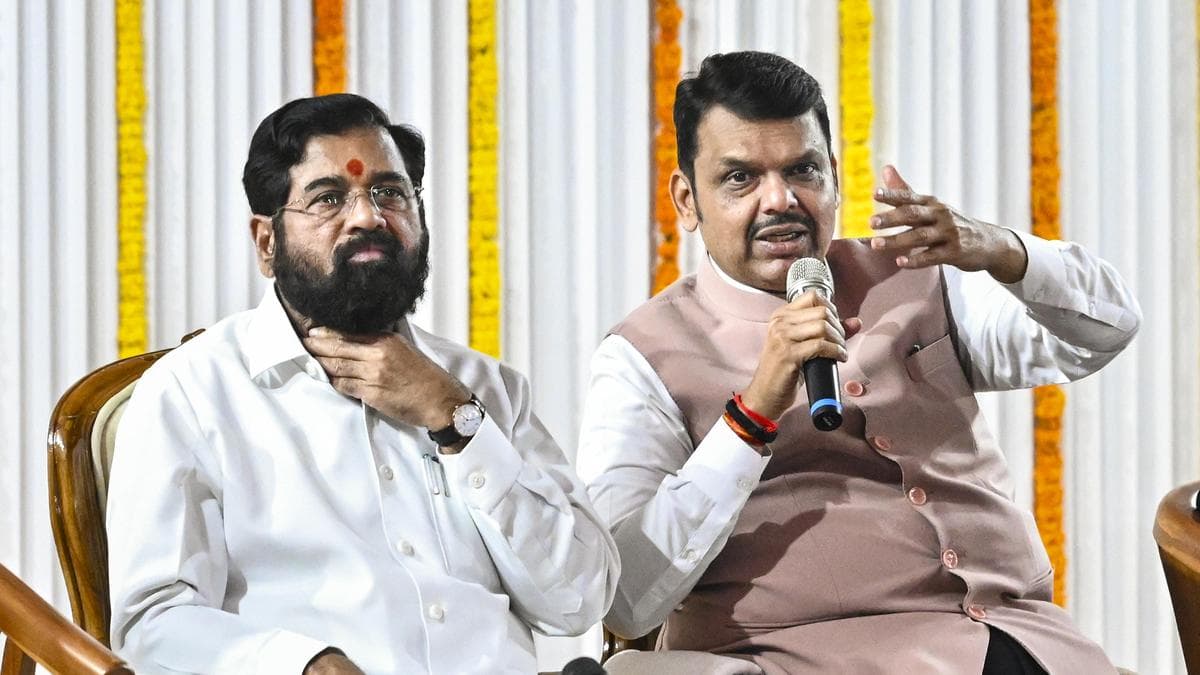
Maharashtra CM Shinde, Dy CM Fadnavis visit Hedgewar memorial; NCP's Ajit Pawar skips, revealing coalition dynamics.
Summary
Maharashtra Chief Minister Eknath Shinde and Deputy CM Devendra Fadnavis paid tributes at Dr. K.B. Hedgewar's memorial. Notably, NCP legislators, including Deputy Chief Minister Ajit Pawar, who are part of the ruling Mahayuti coalition, skipped the visit. This event highlights the internal ideological dynamics and political alignments within Maharashtra's ruling alliance, which is significant for understanding state politics and the historical figures associated with national organizations like the RSS for competitive exams.
Key Points
- 1Maharashtra Chief Minister Eknath Shinde and Deputy CM Devendra Fadnavis paid tributes at Dr. K.B. Hedgewar's memorial.
- 2Dr. Keshav Baliram Hedgewar was the founder of the Rashtriya Swayamsevak Sangh (RSS).
- 3NCP legislators, including Deputy Chief Minister Ajit Pawar, skipped the visit to Hedgewar's memorial.
- 4The NCP faction led by Ajit Pawar is a constituent of Maharashtra's ruling 'Mahayuti' coalition.
- 5The incident underscores the nuanced political alignments and potential ideological differences within the ruling alliance in Maharashtra.
In-Depth Analysis
The recent event in Maharashtra, where Chief Minister Eknath Shinde and Deputy CM Devendra Fadnavis paid tributes at the memorial of Dr. Keshav Baliram Hedgewar, the founder of the Rashtriya Swayamsevak Sangh (RSS), while Deputy CM Ajit Pawar and other Nationalist Congress Party (NCP) legislators skipped the visit, offers a fascinating glimpse into the complex ideological tapestry and political realignments within India's coalition politics. For competitive exam aspirants, understanding this event goes beyond mere news; it delves into historical ideologies, contemporary political strategies, and the delicate balance of power.
To truly grasp the significance, we must first establish the background context. Dr. K.B. Hedgewar founded the RSS in 1925 in Nagpur, Maharashtra, with the primary aim of organizing the Hindu community for its cultural and spiritual rejuvenation, which later evolved into a broader socio-political force advocating for Hindutva. The RSS has been the ideological fountainhead for numerous organizations, including the Bharatiya Janata Party (BJP), and its influence on Indian politics, particularly in shaping the nationalist discourse, is undeniable. On the other hand, the NCP, founded by Sharad Pawar, traditionally represents a more secular, centrist-left ideology, with a strong base among farmers and various social groups in Maharashtra. The current ruling 'Mahayuti' coalition in Maharashtra is an alliance of the BJP, Eknath Shinde's faction of Shiv Sena, and Ajit Pawar's faction of the NCP. This coalition itself is a product of significant political upheavals in the state, including the split within the Shiv Sena in 2022 and the subsequent split within the NCP in 2023, leading to Ajit Pawar joining the government.
The event itself saw CM Eknath Shinde and DCM Devendra Fadnavis, both representing parties (Shiv Sena and BJP, respectively) with strong ideological ties to Hindutva and the RSS, paying homage to its founder. This act is a symbolic affirmation of their ideological lineage and commitment. The conspicuous absence of Ajit Pawar and his NCP faction, however, is not merely a scheduling conflict; it is a clear political statement. It underscores the inherent ideological differences within the Mahayuti alliance. While the BJP and Shinde-led Shiv Sena find common ground in their Hindutva politics, the NCP (Ajit Pawar faction), despite being a part of the government, cannot openly associate with an organization like the RSS without alienating its traditional voter base and contradicting its foundational secular principles. This highlights the transactional nature of some coalition politics, where power-sharing often overrides ideological congruence.
Key stakeholders involved include Chief Minister Eknath Shinde, whose Shiv Sena faction seeks to establish its Hindutva credentials; Deputy Chief Minister Devendra Fadnavis, representing the BJP, which owes its ideological roots to the RSS; and Deputy Chief Minister Ajit Pawar, leading the NCP faction that chose to ally for power but must maintain a distinct ideological identity. Dr. K.B. Hedgewar, though a historical figure, remains a potent symbol for the RSS and its affiliates, making his memorial a site of ideological significance. The RSS itself, as the overarching ideological mentor, is a silent but powerful stakeholder, its principles influencing the actions of its political adherents.
This incident matters for India because it showcases the enduring tension between different ideological streams within the country's democratic framework. India, as enshrined in the Preamble of its Constitution, is a 'Sovereign Socialist Secular Democratic Republic.' The RSS's vision of a 'Hindu Rashtra' (Hindu Nation) is often seen as being in tension with the constitutional principle of secularism. The NCP's decision to skip the event, therefore, is an attempt to uphold its secular image, even while being in an alliance with parties ideologically aligned with Hindutva. This dynamic impacts the narrative of governance, social harmony, and the future direction of Indian politics. It also demonstrates how regional parties, even when aligning with national parties, try to preserve their unique identities and appeal to their specific electorates.
Historically, the RSS, founded in 1925, played a significant role in the nationalist movement, though its methods and objectives differed from the Indian National Congress. Post-independence, it has been instrumental in shaping the right-wing political landscape, eventually leading to the rise of the BJP. Coalition politics in India, especially since the late 1980s, has often seen disparate ideological partners coming together for political expediency, leading to such visible ideological compromises or assertions. The Maharashtra situation is a microcosm of this broader national trend.
Looking at future implications, this incident could signal potential fault lines within the Mahayuti coalition. While the alliance may hold for electoral gains, such ideological divergences can create friction in policy-making, especially on issues touching upon cultural, social, or religious matters. It could also influence voter perception, particularly among minority communities or those who value secular governance, potentially impacting upcoming Lok Sabha and State Assembly elections. For the Ajit Pawar faction, maintaining this delicate balance between power and ideological distinctiveness will be crucial for its long-term survival and growth. For the BJP and Shiv Sena, it's an opportunity to reinforce their core ideological message.
From a constitutional perspective, while there's no direct article governing such political gestures, the incident touches upon the spirit of the Preamble, particularly the ideal of 'Secularism.' Political parties, though free to form and propagate their ideologies under Article 19(1)(c) (freedom to form associations), operate within a constitutional framework that envisions a secular state. The balancing act by the NCP reflects the challenges of adhering to constitutional ideals while navigating the realities of coalition politics in a diverse democracy.
Exam Tips
**Indian Polity & Governance (UPSC GS Paper II, State PSC):** Understand the dynamics of coalition governments, ideological alignments and realignments of political parties, and the role of regional parties. Questions often test knowledge of constitutional provisions related to political parties and governance structures.
**Modern Indian History & Post-Independence Consolidation (UPSC GS Paper I, SSC CGL):** Study the origins and ideology of socio-political organizations like the RSS (founded 1925, Nagpur) and their impact on India's political landscape. Be prepared for questions on key figures, their contributions, and the evolution of political ideologies.
**Current Affairs & State-Specific Knowledge (All Exams):** Keep track of major political developments in states, especially the formation and functioning of state-level coalitions. Understand the key political parties in Maharashtra (BJP, Shiv Sena, NCP) and their historical and current leaders. Questions can be factual (e.g., founders, dates) or analytical (e.g., implications of political events).
Related Topics to Study
Full Article
NCP legislators, including Deputy Chief Minister Ajit Pawar, who are also part of the ruling Mahayuti coalition in the State, skipped the visit