



Relevant for Exams
BSWML deploys night marshals to combat late-night waste dumping, focusing on urban sanitation.
Summary
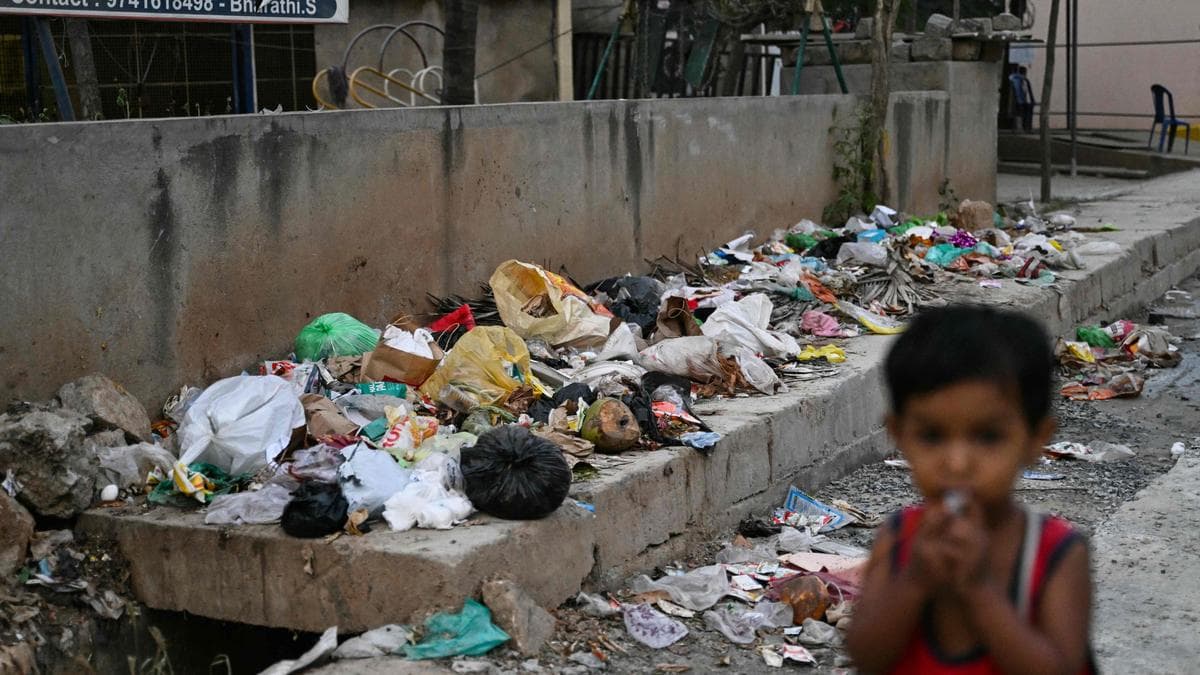
A civic body, identified as BSWML, has reportedly deployed marshals for night patrols to specifically address and prevent late-night waste dumping. This initiative highlights efforts by local administrations to enhance urban sanitation and enforce waste management regulations. It underscores the challenges faced in maintaining cleanliness and the strategies employed for environmental governance.
Key Points
- 1BSWML (likely a municipal or waste management body) has reportedly initiated new enforcement measures.
- 2The core action involves deploying specialized marshals for patrol duties.
- 3These patrols are specifically conducted during night hours to monitor activities.
- 4The primary target of the initiative is to curb instances of late-night waste dumping.
- 5The move reflects local administrative efforts to improve urban waste management and civic cleanliness.
In-Depth Analysis
India's burgeoning urban centers face a perennial challenge in managing the ever-increasing volume of waste generated daily. This challenge is exacerbated by inadequate infrastructure, insufficient public awareness, and often, a lack of stringent enforcement. The news about BSWML deploying marshals for night patrols to curb late-night waste dumping underscores a proactive step by a local civic body to address these persistent issues, particularly the illicit disposal of waste under the cover of darkness.
**Background Context:** Urbanization in India has been rapid and often unplanned, leading to significant pressure on civic amenities, especially waste management systems. Cities generate millions of tons of municipal solid waste annually, and efficient collection, segregation, and disposal remain critical hurdles. Despite national initiatives like the Swachh Bharat Abhiyan (SBA), launched on October 2, 2014, with a strong focus on cleanliness and sanitation, illegal waste dumping, particularly during late hours, continues to plague many urban areas. This practice not only defaces public spaces but also poses serious public health risks and environmental hazards. The lack of visible enforcement during night hours often emboldens individuals and commercial entities to dump waste indiscriminately, bypassing official channels and contributing to unhygienic conditions.
**What Happened:** BSWML, likely an urban local body or a dedicated waste management company operating under a municipal corporation (e.g., Bangalore Solid Waste Management Limited, given the common acronym and issues in major cities), has reportedly initiated new enforcement measures. The core action involves deploying specialized marshals for patrol duties specifically during night hours. The primary objective of these patrols is to monitor and prevent instances of late-night waste dumping. This initiative represents a targeted approach to a specific aspect of the larger waste management problem, focusing on deterrence and immediate intervention during periods when illegal activities are more prevalent.
**Key Stakeholders Involved:** The primary stakeholder is **BSWML** itself, representing the local administration responsible for urban sanitation and waste management. Their initiative directly impacts **citizens and residents**, who are both potential offenders (illegal dumpers) and ultimate beneficiaries (cleaner environment, improved public health). The **marshals** are frontline enforcers, crucial for the on-ground implementation of the policy. The **State Government** provides the overarching policy framework, financial support, and regulatory oversight for urban local bodies. At a national level, the **Ministry of Housing and Urban Affairs (MoHUA)** plays a significant role through programs like Swachh Bharat Abhiyan, setting national targets and providing guidelines for urban sanitation.
**Why This Matters for India:** This initiative holds significant importance for India on multiple fronts. From a **public health** perspective, curbing illegal dumping reduces breeding grounds for vectors like mosquitoes and rodents, thereby mitigating the spread of diseases such as dengue, malaria, and cholera. Environmentally, it helps prevent soil and water contamination, preserves urban biodiversity, and improves air quality. Socially, cleaner cities enhance the quality of life for residents, foster civic pride, and contribute to a positive urban image, which can boost tourism and local economies. Economically, effective waste management reduces the costs associated with disease treatment and large-scale cleanup operations. Furthermore, such enforcement actions demonstrate a commitment to good **governance** and the rule of law, signaling that environmental regulations will be taken seriously. This aligns directly with the goals of the Swachh Bharat Abhiyan, which aims for a 'Clean India'.
**Historical Context:** India's journey in waste management has evolved significantly. Post-independence, the focus was largely on basic collection and disposal. The 1990s saw growing environmental awareness. A landmark moment was the Municipal Solid Wastes (Management and Handling) Rules, 2000, which provided the first comprehensive legal framework. This was superseded by the more robust Solid Waste Management Rules, 2016, which emphasized segregation at source, processing, and scientific disposal. However, enforcement has always been a weak link. Initiatives like the deployment of marshals reflect a shift towards more direct and proactive enforcement, moving beyond just policy formulation.
**Future Implications:** The success of BSWML's initiative could serve as a model for other urban local bodies across India. Future implications include potentially cleaner cities, better public health outcomes, and a more responsible citizenry. However, sustained success will depend on continued funding, adequate manpower, public cooperation through awareness campaigns, and technological integration (e.g., CCTV surveillance, GPS tracking for marshals, citizen reporting apps). This move could also pave the way for stricter penalties for offenders and encourage a shift towards a more circular economy approach to waste, where waste is viewed as a resource rather than merely something to be discarded. Challenges like political will, bureaucratic inertia, and the vast scale of waste generation will remain critical factors determining the long-term impact.
**Related Constitutional Articles, Acts, or Policies:** The **Constitution of India** does not explicitly mention waste management but provides the framework for local governance and public health. **Article 243W** in Part IXA (The Municipalities) empowers Municipalities with such powers and authority as may be necessary to enable them to function as institutions of self-government, including responsibilities related to urban planning and public health. **Entry 6** of the State List (List II) in the Seventh Schedule deals with 'Public health and sanitation; hospitals and dispensaries', placing the primary responsibility on state governments, which then delegate to local bodies. The **Solid Waste Management Rules, 2016**, notified under the **Environmental Protection Act, 1986**, are the cornerstone of waste management policy in India. These rules mandate segregation at source, processing, and scientific disposal. The **National Green Tribunal Act, 2010**, empowers the NGT to hear cases related to environmental protection and often issues directives concerning waste management, holding civic bodies accountable for non-compliance. Finally, the **Swachh Bharat Abhiyan (Urban)** is the national flagship program driving urban sanitation efforts.
Exam Tips
This topic falls under GS Paper II (Governance, Urban Development, Social Justice) and GS Paper III (Environment & Ecology, Economic Development) for UPSC Civil Services Exam and similar sections in State PSC exams. Focus on the role of Urban Local Bodies (ULBs) and various government initiatives.
Study related topics such as Swachh Bharat Abhiyan (objectives, achievements, challenges), Solid Waste Management Rules 2016 (key provisions, responsibilities), Smart Cities Mission (integration of waste management), and the functions & finances of Municipal Corporations (Part IXA of the Constitution).
Expect questions on challenges of urban waste management, governmental policies to address them, the role of technology in waste management, public-private partnerships, and the impact of improper waste disposal on public health and environment. Case studies on successful waste management models are also common.