



Relevant for Exams
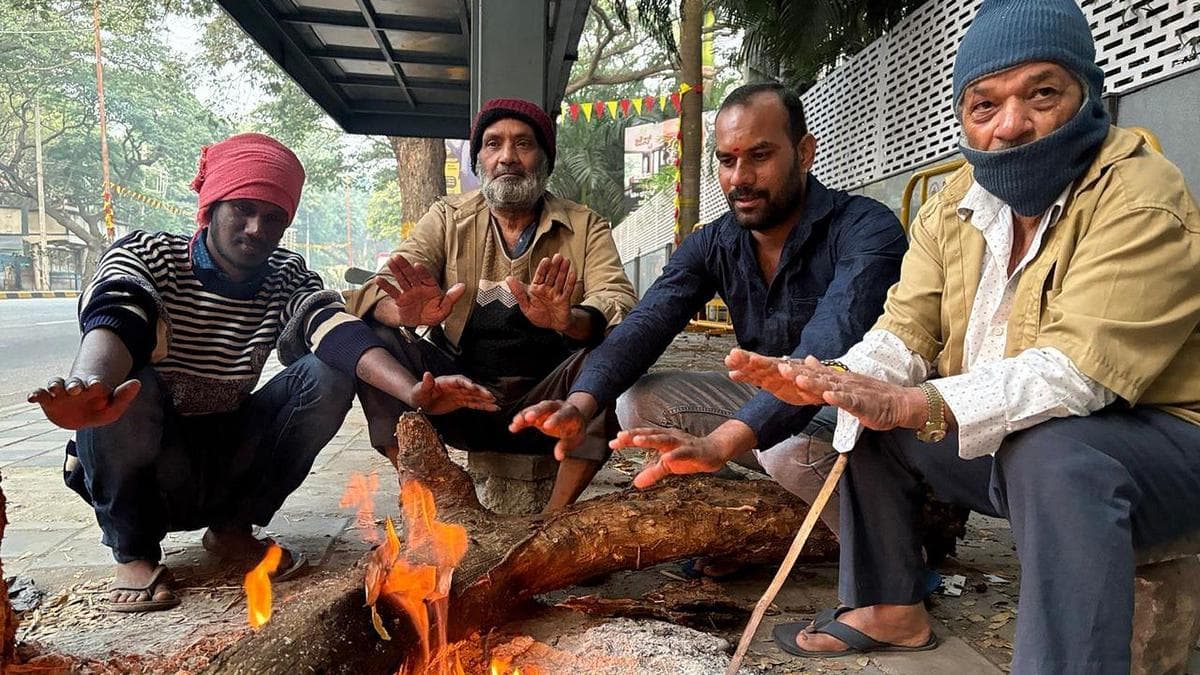
La Niña, Siberian cold air, and local physics combined to cause Karnataka's winter chill.
Summary
The article's title indicates that Karnataka's winter chill was influenced by a combination of global climate phenomena, specifically La Niña, and regional atmospheric conditions. Cold, dry air originating from Siberia, along with local physical factors, contributed to the observed weather. This highlights the interplay of global and local elements in regional climate, crucial for geography and environmental studies in competitive exams.
Key Points
- 1Global climate phenomenon identified: La Niña.
- 2External atmospheric influence: Cold, dry air originating from Siberia.
- 3Local contributing factor: Specific local physics.
- 4Indian state affected by winter chill: Karnataka.
- 5Observed weather condition: Significant winter chill.
In-Depth Analysis
The observed winter chill in Karnataka, as indicated by the article's title, serves as a compelling case study illustrating the complex interplay of global climate phenomena and regional atmospheric dynamics. This event highlights how distant climatic drivers, like La Niña, can combine with far-reaching atmospheric influences, such as cold air from Siberia, and localized geographical factors to produce specific weather conditions in an Indian state. Understanding such phenomena is critical for competitive exam aspirants, as it integrates concepts from physical geography, climatology, environmental science, and disaster management.
**Background Context: The Global and Regional Drivers**
At the heart of this phenomenon is La Niña, a periodic climate pattern that occurs in the Pacific Ocean. It is the 'cold phase' of the El Niño-Southern Oscillation (ENSO), characterized by cooler-than-average sea surface temperatures across the equatorial Pacific. La Niña typically influences global weather patterns, including those in India. While El Niño is often associated with weaker monsoons and warmer winters in India, La Niña generally brings stronger monsoons and, sometimes, colder winters due to altered atmospheric circulation patterns. During a La Niña event, the Walker Circulation intensifies, affecting the global distribution of pressure and wind systems. This can lead to a southward shift of the jet stream in the Northern Hemisphere, potentially facilitating the southward movement of cold air masses.
The second major factor is the 'cold, dry air from Siberia.' Siberia is one of the coldest regions on Earth, acting as a source region for extremely cold continental air masses. The movement of this cold air towards India is often mediated by upper-level atmospheric features, particularly the Subtropical Westerly Jet Stream and associated weather systems like 'Western Disturbances.' Western Disturbances are extratropical storms originating in the Mediterranean region that bring sudden winter rain and snow to the northwestern parts of the Indian subcontinent. While primarily associated with precipitation, they also facilitate the advection of cold air from higher latitudes, including Siberian air, into the Indian landmass. The presence of a strong high-pressure system over Siberia can push cold air southward, and if the jet stream configuration is favorable, this cold air can penetrate deeper into India.
Finally, 'local physics' refers to the specific geographical and atmospheric conditions unique to Karnataka that amplify or modify the impact of these larger-scale phenomena. This could include factors such as radiative cooling under clear skies (common when dry Siberian air is present), the topography of the Deccan Plateau, the absence of cloud cover allowing heat to escape rapidly, or even specific wind patterns channeled by local landforms. Karnataka's plateau region, for instance, can experience significant diurnal temperature variations, and cold air drainage into valleys can exacerbate night-time chilling.
**What Happened and Key Stakeholders**
In essence, the winter chill in Karnataka was a result of a synergy: a global La Niña event setting up a conducive atmospheric environment, the advection of intensely cold and dry air from Siberia (likely transported or influenced by Western Disturbances and jet stream dynamics), and local geographical and atmospheric conditions in Karnataka that enhanced the cooling effect. The combination led to lower-than-average temperatures across the state.
Key stakeholders in such weather events include the **Indian Meteorological Department (IMD)**, which is crucial for monitoring, forecasting, and disseminating weather advisories. Their timely predictions help prepare the public and various sectors. **Farmers** are directly impacted, as extreme cold can damage standing crops (especially horticulture, coffee, and spices in Karnataka), affect livestock, and increase energy costs for heating or irrigation. The **general public** faces health risks, such as hypothermia, respiratory illnesses, and increased energy consumption for heating. **State Disaster Management Authorities (SDMAs)**, operating under the Disaster Management Act, 2005, are responsible for preparedness and response to such natural hazards, including issuing alerts and providing relief. Local government bodies also play a role in implementing these measures.
**Significance for India and Future Implications**
For India, understanding these climate interactions is paramount for several reasons. Firstly, **agriculture**, a backbone of the Indian economy, is highly susceptible to temperature anomalies. Karnataka is a significant producer of coffee, spices, and various horticultural crops, all vulnerable to frost or prolonged cold. Secondly, **public health** is a major concern, particularly for vulnerable populations like the elderly, homeless, and children. Increased energy demand during cold spells can strain power grids and raise economic costs. Thirdly, this event underscores the need for robust **climate change adaptation strategies**. While La Niña is a natural cycle, climate change can potentially modify the frequency and intensity of such extreme events, making accurate forecasting and proactive measures even more critical. India's **National Action Plan on Climate Change (NAPCC)**, launched in 2008, emphasizes the importance of strategic knowledge for climate change adaptation and mitigation, including better climate modeling and early warning systems.
Historically, India has always been sensitive to global climate patterns. The ENSO cycle, for example, has long been studied for its influence on the Indian monsoon, which directly impacts agricultural output and water security. The increasing frequency of extreme weather events, whether heatwaves, droughts, or cold waves, points towards a future where climate resilience will be a defining characteristic of national development.
Future implications include the continued investment in advanced meteorological infrastructure, climate research, and early warning systems. Developing climate-resilient agricultural practices, improving public health infrastructure to handle weather-related emergencies, and ensuring energy security during peak demand periods will be crucial. Policy-wise, the **Disaster Management Act, 2005**, provides the legal framework for managing such events, emphasizing preparedness, mitigation, response, and recovery. The 7th Schedule of the Indian Constitution places subjects like 'Public health and sanitation' (Entry 6) and 'Agriculture' (Entry 14) under the State List, highlighting the states' primary responsibility in managing the direct impacts of such weather events on their citizens and economy. Environmental protection, a Concurrent List subject (Entry 17B), also becomes relevant as climate change adaptation measures fall under its ambit.
In conclusion, Karnataka's winter chill is not an isolated weather event but a manifestation of complex interactions between global climate drivers and regional atmospheric and geographical factors. It serves as a potent reminder for India to strengthen its climate resilience, improve forecasting capabilities, and develop comprehensive adaptation strategies to protect its diverse population and economy from the vagaries of a changing climate.
Exam Tips
This topic falls under the 'Physical Geography' and 'Environment & Ecology' sections of the UPSC Civil Services Exam (Prelims & Mains GS Paper I and III), and similar sections in State PSC, SSC, and Railway exams. Focus on understanding global climate phenomena (ENSO, Jet Streams, Western Disturbances) and their impact on Indian weather.
Study related topics such as the Indian Monsoon mechanism, types of air masses, factors affecting temperature distribution (latitude, altitude, distance from sea, ocean currents, winds), and the concept of climate change and its regional manifestations. Connect these concepts to form a holistic understanding.
Common question patterns include: definition-based questions (e.g., 'What is La Niña and how does it differ from El Niño?'), cause-and-effect questions (e.g., 'Discuss the impact of La Niña on Indian winter weather.'), geographical reasoning questions (e.g., 'Explain how cold air from Siberia can affect peninsular India.'), and policy-oriented questions related to disaster management and climate change adaptation.