



Relevant for Exams
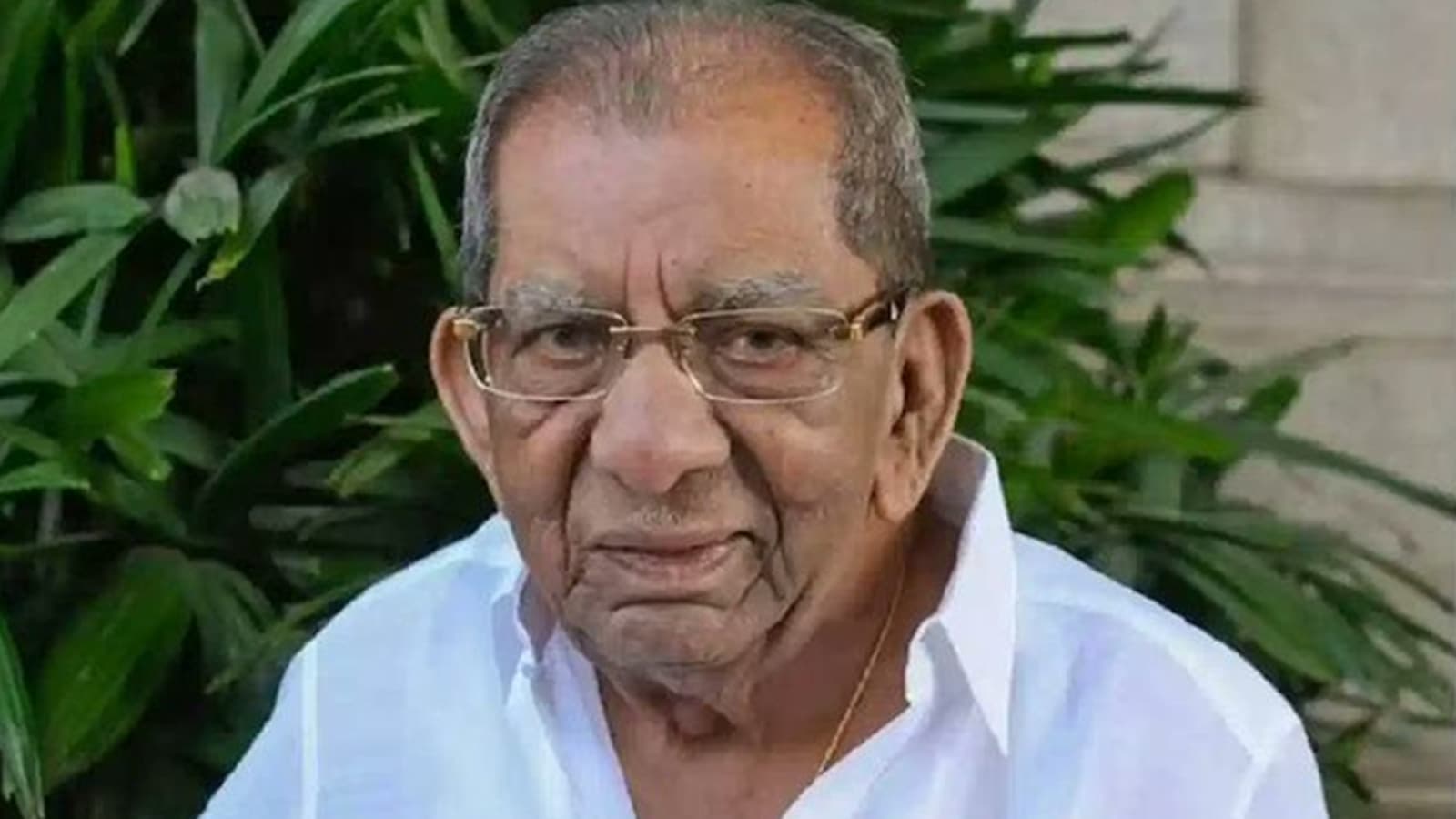
Karnataka's oldest MLA, veteran Congress leader, dies at 94.
Summary
Karnataka's oldest sitting MLA and a veteran Congress leader has passed away at the age of 94. This event marks the end of a long political career in the state. While specific details are unavailable, such obituaries of prominent state-level political figures are relevant for State PSC and general awareness sections of competitive exams, particularly concerning state politics and history.
Key Points
- 1The deceased was identified as Karnataka’s oldest sitting Member of Legislative Assembly (MLA).
- 2The veteran leader was affiliated with the Indian National Congress party.
- 3The individual passed away at the age of 94 years.
- 4The event occurred in the Indian state of Karnataka.
- 5The news falls under the obituary category, marking the end of a long political tenure.
In-Depth Analysis
The demise of Karnataka's oldest sitting Member of Legislative Assembly (MLA) and a veteran leader from the Indian National Congress at the age of 94 marks a significant moment in the state's political landscape. While the specific identity of the individual is not provided, such events are critical for understanding the dynamics of state politics, political succession, and the functioning of democratic institutions in India. This particular event underscores the passing of a generation of politicians who often shaped post-independence political narratives and contributed to the legislative framework of their respective states.
**Background Context and What Happened:**
India's political system, particularly at the state level, has historically been characterized by the presence of long-serving veteran leaders. These individuals often command significant influence, built over decades of public service, electoral victories, and deep grassroots connections. Their extensive experience provides institutional memory and continuity within legislative bodies. The passing of Karnataka's oldest MLA signifies the end of a political era for that specific constituency and for the Congress party in the state. Such leaders often started their careers in a vastly different political climate, witnessing and participating in the evolution of Indian democracy from its nascent stages to its current complex form. Their longevity in public office reflects a unique blend of political acumen, public trust, and often, a deep understanding of local issues.
**Key Stakeholders Involved:**
Several key stakeholders are impacted by such an event. Firstly, the **deceased MLA** himself, whose political legacy and contributions are now subject to historical assessment. Secondly, the **Indian National Congress party** loses a senior voice, an experienced legislator, and potentially a key figure in regional party dynamics. The absence of a veteran can create a void in leadership, mentorship, and strategic counsel within the party. Thirdly, the **Karnataka State Legislative Assembly** loses an experienced member, impacting the collective institutional memory and legislative expertise. Fourthly, the **constituency** represented by the late MLA is directly affected, as it loses its direct representative, necessitating a by-election. Finally, the **Election Commission of India (ECI)** becomes a crucial stakeholder, responsible for conducting a fair and timely by-election to fill the vacant seat, ensuring continuous democratic representation for the people.
**Why This Matters for India:**
This event holds significant implications for India's democratic fabric. It highlights the natural cycle of political succession, where older generations make way for newer ones. The loss of a veteran can lead to shifts in party leadership, internal power dynamics, and even policy directions. For the specific constituency, it triggers a **by-election**, which is not merely about filling a vacant seat but often serves as a mini-referendum on the performance of the ruling party or the popularity of the opposition. The outcome of by-elections can influence morale, resource allocation, and future electoral strategies of political parties. Furthermore, the presence of long-serving MLAs often ensures a degree of stability and continuity in governance, as they bring a historical perspective to legislative debates and policy formulation. Their departure can sometimes lead to a loss of institutional knowledge, affecting legislative efficiency and the quality of debate.
**Historical Context and Future Implications:**
Historically, many Indian states, including Karnataka, have seen periods of dominance by single parties, often the Indian National Congress, especially in the decades following independence. This allowed leaders to build long careers and establish strong regional bases. Karnataka, formed in 1956, has a rich political history with several prominent leaders contributing to its growth. The passing of a veteran Congress leader is a reminder of this political lineage. Looking ahead, the immediate future implication is the conduct of a by-election. According to **Article 190(3)(a)** of the Indian Constitution, a seat becomes vacant upon the death of an MLA. The **Representation of the People Act, 1951**, particularly **Sections 149-151A**, governs the conduct of by-elections, mandating that the ECI fill a casual vacancy within six months from the date of its occurrence, provided the remainder of the term is not less than one year. This by-election will be a crucial test for both the ruling party in Karnataka and the Congress, potentially indicating public sentiment and setting the stage for future general elections. It will also open up opportunities for new faces or younger leaders within the Congress to emerge and contest for the seat, contributing to the evolution of political leadership in the state.
**Related Constitutional Articles, Acts, or Policies:**
* **Article 168-212 (State Legislature):** These articles outline the constitution, duration, officers, conduct of business, powers, privileges, and legislative procedures of State Legislatures. The role of an MLA falls directly under these provisions.
* **Article 172:** Deals with the duration of State Legislatures, typically five years, after which elections are held. The continuous presence of an MLA for a long tenure highlights the stability of this system.
* **Article 190(3)(a):** Specifically states that if a member of a House of the Legislature of a State dies, his seat shall thereupon become vacant. This is the constitutional basis for triggering a by-election.
* **Article 324:** Vests the superintendence, direction, and control of elections, including by-elections, in the Election Commission of India.
* **Representation of the People Act, 1951:** This comprehensive parliamentary act lays down the detailed procedure for the conduct of elections, qualifications and disqualifications for membership, administrative machinery for elections, and provisions for by-elections. Sections related to casual vacancies are particularly relevant here.
Exam Tips
This topic primarily falls under the 'Indian Polity and Governance' section of the UPSC Civil Services Exam (Prelims and Mains GS-II), State PSCs, and General Awareness for SSC/Railway exams. Focus on the structure and functioning of State Legislatures.
Study related topics such as the powers and functions of the Election Commission of India (ECI), the process of by-elections (constitutional and statutory provisions), and the vacation of seats in legislative bodies. Understand the difference between general elections and by-elections.
Common question patterns include direct questions on relevant constitutional articles (e.g., Article 190, Article 324), the role of the ECI, the process for filling vacant legislative seats, and the significance of by-elections in political analysis. Be prepared for questions on the composition and tenure of State Legislative Assemblies.
For State PSC exams, specific details about prominent political figures, their constituencies, and their contributions to the state's political history might be asked, though less likely if the name is not provided in the source material itself.
Understand the role of political parties, especially national parties like the Indian National Congress, in state politics and how the loss of a veteran leader can impact party dynamics and electoral strategies.