



Relevant for Exams
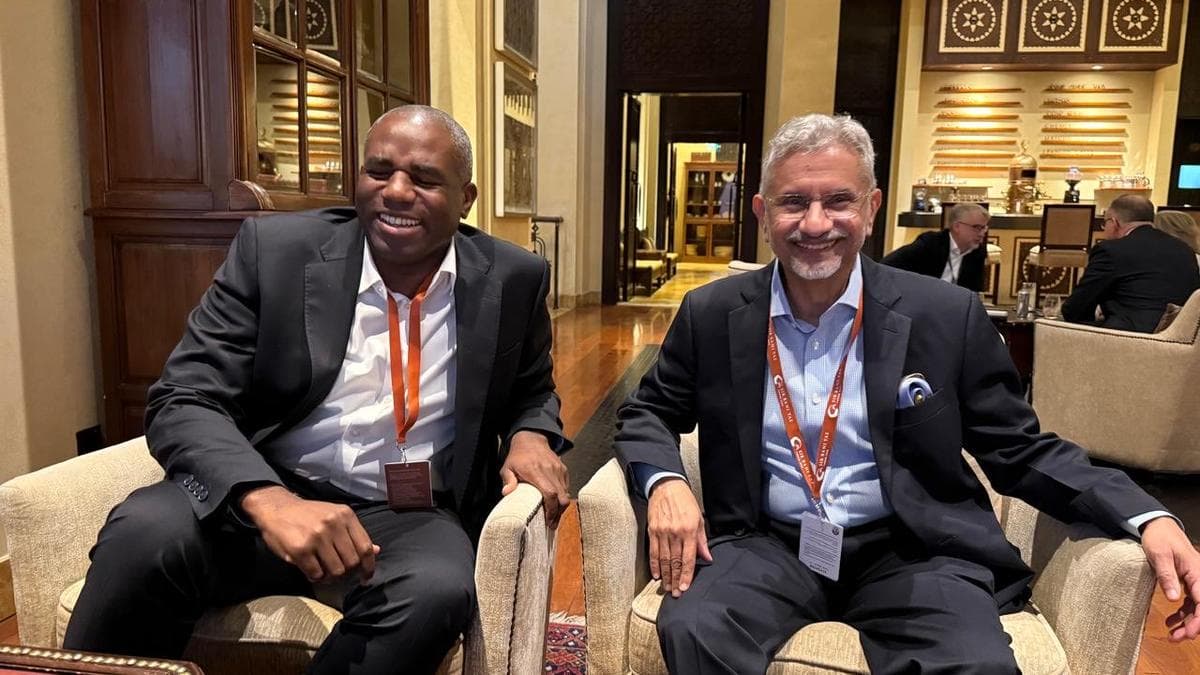
EAM Jaishankar meets European, UK, Egyptian counterparts at Sir Bani Yas Forum 2025 in Abu Dhabi.
Summary
External Affairs Minister Jaishankar attended the three-day Sir Bani Yas Forum 2025 in Abu Dhabi, U.A.E., concluding on December 14, 2025. During the summit, he engaged in crucial meetings with his European, U.K., and Egyptian counterparts, fostering diplomatic ties and discussing regional and global issues. This highlights India's active role in international diplomacy and its strategic engagement with key partners, which is significant for understanding India's foreign policy for competitive exams.
Key Points
- 1India's External Affairs Minister Jaishankar attended the Sir Bani Yas Forum 2025.
- 2The forum was held in Abu Dhabi, the capital of the U.A.E.
- 3The Sir Bani Yas Forum 2025 was a three-day event.
- 4It concluded on Sunday, December 14, 2025.
- 5Minister Jaishankar met with his European, U.K., and Egyptian counterparts during the summit.
In-Depth Analysis
The attendance of India's External Affairs Minister, S. Jaishankar, at the Sir Bani Yas Forum 2025 in Abu Dhabi, UAE, and his subsequent high-level meetings, underscores India's dynamic and expanding diplomatic footprint on the global stage. This event, concluding on December 14, 2025, serves as a crucial snapshot of India's proactive engagement in shaping regional and international discourse.
**Background Context and What Happened:**
The Sir Bani Yas Forum, hosted by the UAE Ministry of Foreign Affairs and International Cooperation, is an annual high-level retreat designed to bring together influential policymakers, thought leaders, and experts from around the world. Its primary objective is to facilitate candid, off-the-record discussions on pressing international security and foreign policy challenges. India's consistent participation reflects its growing stature and commitment to contributing to global stability. EAM Jaishankar's presence at the three-day forum in Abu Dhabi, the capital of the UAE, was significant. During this period, he engaged in bilateral meetings with his counterparts from Europe, the United Kingdom, and Egypt, indicating a broad spectrum of India's strategic interests and partnerships.
**Key Stakeholders Involved:**
Several key stakeholders are evident in this diplomatic exercise. **India**, represented by its External Affairs Minister, is a primary stakeholder, actively pursuing its foreign policy objectives. The **United Arab Emirates (UAE)**, as the host nation, solidifies its role as a regional diplomatic hub and a crucial partner for India, especially in energy security, trade, and investment. The **European Union (EU)**, a major economic and political bloc, represents a critical partner for India in areas like trade, technology, climate action, and multilateral cooperation. The **United Kingdom (UK)**, with its historical ties and ongoing Free Trade Agreement (FTA) negotiations with India, remains a vital strategic partner. **Egypt**, a significant player in the Arab world and Africa, offers avenues for enhanced cooperation in trade, defence, and regional stability. The **Sir Bani Yas Forum** itself is a crucial platform, fostering dialogue and understanding among these diverse actors.
**Significance for India:**
This engagement holds immense significance for India across multiple dimensions. Diplomatically, it showcases India's commitment to multilateralism and its willingness to engage with diverse partners to address global challenges. Economically, discussions with the EU and UK likely touched upon trade, investment, and supply chain resilience, vital for India's economic growth. The ongoing FTA talks with the UK, for instance, are a key focus. With the UAE, India's relationship is a Comprehensive Strategic Partnership, encompassing energy, trade, investment, and the welfare of a large Indian diaspora. Meeting the Egyptian counterpart opens avenues for strengthening the India-Egypt strategic partnership, especially in the context of India's 'Look West' policy and its engagement with the African continent. Geopolitically, India's presence at such forums reinforces its role as a responsible global actor and a voice for the Global South, contributing to a multipolar world order. This aligns with India's broader foreign policy objectives of promoting peace, stability, and inclusive growth.
**Historical Context and Future Implications:**
Historically, India's foreign policy has evolved from the Non-Aligned Movement (NAM) to a more pragmatic, multi-aligned approach. This current strategy emphasizes strategic autonomy while fostering strong bilateral and multilateral partnerships. The engagement at the Sir Bani Yas Forum is a testament to this evolution, where India actively seeks to shape global narratives and build consensus on critical issues rather than merely reacting to them. Looking ahead, such high-level interactions are crucial for deepening bilateral ties, exploring new areas of cooperation, and addressing shared challenges like climate change, terrorism, and economic volatility. The discussions held could lay the groundwork for future agreements, joint initiatives, and coordinated efforts on international platforms. India's sustained diplomatic outreach reinforces its aspiration to be a leading power, contributing to global good and safeguarding its national interests.
**Related Constitutional Articles, Acts, or Policies:**
The foundational principle guiding India's foreign policy is enshrined in **Article 51 of the Indian Constitution**. It states that the State shall endeavour to:
* Promote international peace and security;
* Maintain just and honourable relations between nations;
* Foster respect for international law and treaty obligations in the dealings of organised peoples with one another; and
* Encourage settlement of international disputes by arbitration.
India's participation in forums like the Sir Bani Yas Forum and its proactive diplomatic engagements directly align with these constitutional directives. Furthermore, this event reflects India's broader foreign policy doctrines such as 'Neighbourhood First', 'Act East', 'Look West', and its growing engagement with the Gulf Cooperation Council (GCC) countries and the I2U2 grouping (India, Israel, UAE, USA), all aimed at securing India's strategic and economic interests through robust international relations.
Exam Tips
This topic falls under 'International Relations' (GS-II for UPSC, and Current Affairs for SSC, Banking, Railway, State-PSC exams). Focus on India's foreign policy objectives, key bilateral relations (India-UAE, India-EU, India-UK, India-Egypt), and major international forums.
Prepare questions on the purpose and significance of the Sir Bani Yas Forum, the host country (UAE), and the specific countries whose counterparts EAM Jaishankar met. Understand the strategic importance of the UAE as a partner for India.
Be ready for analytical questions on India's 'multi-alignment' foreign policy, its growing role in global diplomacy, and how engagements like this contribute to India's economic and geopolitical interests. Link it to constitutional provisions like Article 51.
Study the recent developments in India's relations with the EU and UK, especially regarding trade agreements (e.g., India-UK FTA), and India's increasing engagement with the Middle East and North Africa (MENA) region.
Related Topics to Study
Full Article
The Minister was in the U.A.E. capital Abu Dhabi to attend the three-day Sir Bani Yas Forum 2025, which concluded on Sunday (December 14, 2025)