


Relevant for Exams
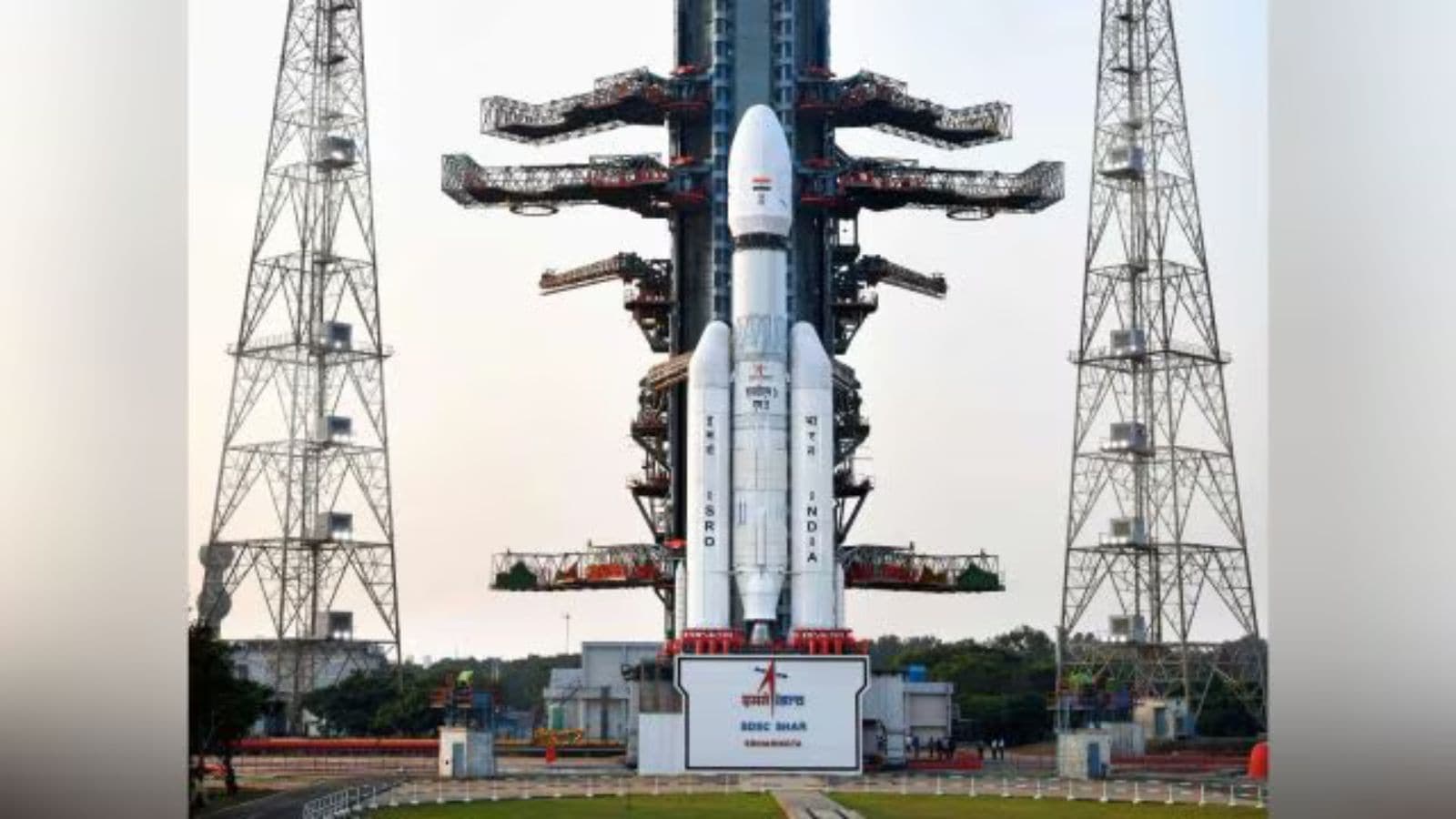
ISRO plans 7 launches, including uncrewed Gaganyaan mission, by March 2026.
Summary
ISRO has announced plans for seven upcoming launches, notably including an uncrewed Gaganyaan mission targeted for completion by March 2026. This development is crucial for India's ambitious human spaceflight program, marking a significant step towards sending Indian astronauts into space. For competitive exams, this highlights India's progress in space technology and national strategic capabilities.
Key Points
- 1ISRO has scheduled a total of 7 launches in its immediate future roadmap.
- 2One of the key upcoming missions is an uncrewed flight of the Gaganyaan spacecraft.
- 3The uncrewed Gaganyaan mission is specifically targeted for launch by March 2026.
- 4Gaganyaan represents India's first indigenous human spaceflight program.
- 5The Indian Space Research Organisation (ISRO) is the national space agency responsible for these launches.
In-Depth Analysis
India's space journey, spearheaded by the Indian Space Research Organisation (ISRO), has been a remarkable saga of indigenous innovation and strategic foresight. From its humble beginnings with the launch of Aryabhata in 1975, ISRO has evolved into a global leader, renowned for its cost-effective and reliable space missions. The recent announcement by ISRO regarding seven upcoming launches, prominently featuring an uncrewed Gaganyaan mission targeted for March 2026, marks another significant milestone in this journey, particularly for India's ambitious human spaceflight program.
The genesis of the Gaganyaan mission can be traced back to Prime Minister Narendra Modi's Independence Day address in 2018, where he declared India's intention to send astronauts into space by 2022, coinciding with the 75th year of India's independence. While the COVID-19 pandemic caused some delays, the commitment to this ambitious project remains unwavering. The Gaganyaan program aims to demonstrate India's capability to send humans to low Earth orbit (LEO) on an Indian launch vehicle and bring them back safely to Earth. This is not merely a technological feat but a powerful statement of national self-reliance and scientific prowess.
The upcoming uncrewed Gaganyaan mission, designated as a critical test flight, is designed to validate the various systems and technologies essential for human spaceflight. This includes the Gaganyaan Orbital Module, the launch vehicle (GSLV Mk-III, now designated LVM3), life support systems, crew escape systems, and re-entry and recovery procedures. These uncrewed missions, often referred to as 'test flights' or 'demonstration missions,' are crucial for identifying and mitigating risks before putting human lives on board. The successful completion of this uncrewed flight by March 2026 will pave the way for a subsequent crewed mission, which aims to send Indian astronauts (Vyomnauts) into space.
Key stakeholders in this monumental endeavor include ISRO, the primary agency responsible for the design, development, and execution of the mission. The Department of Space, which functions directly under the Prime Minister's Office, provides the overarching policy and administrative framework. Beyond these governmental bodies, a vast ecosystem of private industries, academic institutions, and national research laboratories are actively collaborating. For instance, various Indian private companies are involved in manufacturing components, integrating systems, and developing ground infrastructure, fostering a robust domestic space industry. International collaborations have also played a role, with countries like Russia providing astronaut training and France offering medical support and expertise in space medicine, though the core technology remains indigenous.
This mission holds immense significance for India on multiple fronts. Technologically, it elevates India to an elite club of nations capable of independent human spaceflight, currently limited to the USA, Russia, and China. This demonstrates India's advanced capabilities in complex areas like propulsion, materials science, life support, and re-entry technology. Economically, the program stimulates innovation, creates high-tech jobs, and encourages the growth of ancillary industries, aligning with the 'Make in India' initiative. The spin-off technologies developed for Gaganyaan can have diverse applications in fields like healthcare, advanced materials, and public safety. Strategically, it enhances India's soft power and national prestige on the global stage, reinforcing its position as a responsible and capable spacefaring nation. Socially, it inspires a new generation of scientists, engineers, and innovators, fostering a scientific temper and encouraging STEM education among youth.
While there isn't a direct constitutional article specifically for space programs, the subject matter falls under the Union List (Seventh Schedule, Article 246), which grants the Union government exclusive legislative powers over areas of national importance, including scientific and technological research. More pertinently, the **Indian Space Policy 2023** is a landmark document that aims to liberalize the space sector, encourage private sector participation, and delineate the roles of ISRO, IN-SPACe (Indian National Space Promotion and Authorization Centre), and NSIL (NewSpace India Limited). This policy provides the framework for such ambitious missions and integrates private players into India's space ecosystem. The proposed **Space Activities Bill**, though yet to be enacted, aims to further regulate and promote private sector involvement in space activities.
The future implications of Gaganyaan are profound. A successful crewed mission will open doors for more ambitious space exploration, potentially including a permanent Indian presence in low Earth orbit, deeper lunar missions, or even interplanetary travel. It could also accelerate the development of space tourism and commercial space ventures within India. The experience gained from Gaganyaan will be invaluable for future endeavors, positioning India as a key player in the evolving global space economy and scientific exploration. This move is not just about sending humans to space; it's about cementing India's place as a frontrunner in the 21st-century space race, driving innovation, and shaping the future of humanity's presence beyond Earth.
Exam Tips
This topic falls under the 'Science & Technology' section of the UPSC Civil Services Exam (GS Paper III), SSC CGL General Awareness, Banking Exams General Awareness, and various State PSCs. Focus on current developments in space technology and India's achievements.
Study related topics such as the history of ISRO, major ISRO missions (Chandrayaan series, Mangalyaan, Aditya-L1), different launch vehicles (PSLV, GSLV, SSLV), and India's Space Policy 2023. Understand the roles of IN-SPACe and NSIL.
Common question patterns include factual questions (e.g., 'When is the uncrewed Gaganyaan mission targeted?', 'What is the launch vehicle for Gaganyaan?'), conceptual questions (e.g., 'What is the significance of India's human spaceflight program?'), and policy-based questions (e.g., 'How does the Indian Space Policy 2023 promote private sector participation?').
Pay attention to the specific dates and targets mentioned (e.g., March 2026 for the uncrewed mission) and the 'firsts' associated with the mission (e.g., India's first indigenous human spaceflight program).