


Relevant for Exams
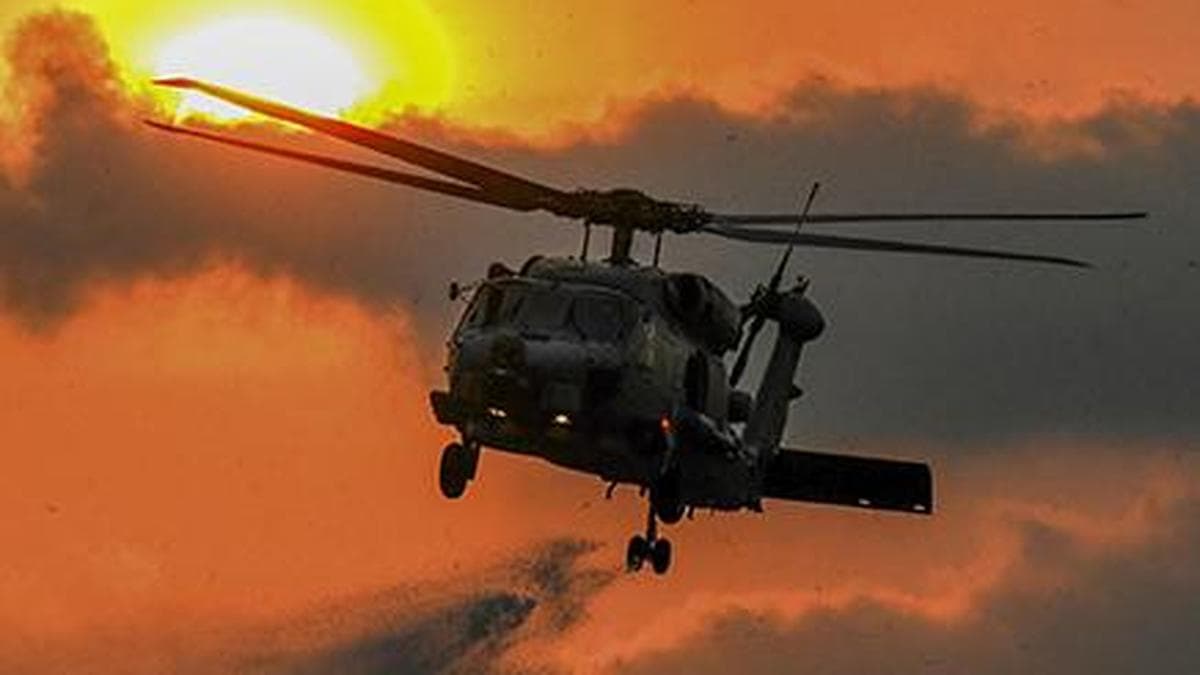
Indian Navy to commission second MH-60R helicopter squadron, INAS 335, at Goa.
Summary
The Indian Navy is set to commission its second MH-60R helicopter squadron, INAS 335, at Goa. This strategic move aims to significantly bolster India's maritime surveillance, anti-submarine warfare, and overall multi-role operational capabilities in the Indian Ocean Region. For competitive exams, this highlights India's ongoing modernization of its naval assets and commitment to enhancing defence preparedness.
Key Points
- 1The Indian Navy is commissioning its second MH-60R helicopter squadron.
- 2The name of the new squadron to be commissioned is INAS 335.
- 3The commissioning ceremony for INAS 335 will take place in Goa.
- 4INAS 335 will enhance the Indian Navy's maritime surveillance capabilities.
- 5The squadron will also boost anti-submarine and multi-role operational capabilities.
In-Depth Analysis
The commissioning of the second MH-60R helicopter squadron, INAS 335, by the Indian Navy at Goa marks a significant stride in India's ongoing efforts to modernize its naval aviation and bolster its maritime security capabilities. This development is not merely a technical upgrade but a strategic enhancement with far-reaching implications for India's role in the Indian Ocean Region (IOR) and its broader geopolitical standing.
**Background Context:** India's vast maritime interests, encompassing a 7,516 km coastline and an Exclusive Economic Zone (EEZ) of over 2 million square kilometers, necessitate a robust and agile naval force. The Indian Ocean, a critical global trade artery, has witnessed increasing geostrategic competition, necessitating heightened surveillance, anti-submarine warfare (ASW), and multi-role capabilities. For decades, the Indian Navy relied on its aging fleet of Sea King helicopters for these roles. However, with evolving threats, including sophisticated submarines and non-state actors, the need for cutting-edge platforms became paramount. This led to India's decision in 2020 to acquire 24 MH-60R Seahawk helicopters from the United States under a Foreign Military Sales (FMS) deal worth over $2.6 billion. The first squadron, INAS 334 'Seahawks', was commissioned in Kochi in March 2022, and the current commissioning represents the next phase of this crucial induction.
**What Happened and Key Stakeholders:** The Indian Navy is commissioning INAS 335, its second MH-60R squadron, at INS Hansa, Goa. These helicopters are advanced multi-role platforms manufactured by Lockheed Martin, equipped with sophisticated sensors, sonars, and weaponry for anti-submarine warfare, anti-surface warfare (ASuW), search and rescue (SAR), and maritime surveillance. The primary stakeholders include the **Indian Navy**, which is the end-user and operator of these critical assets; the **Ministry of Defence (MoD)**, responsible for the procurement and strategic planning; the **Government of the United States**, which facilitated the sale through its FMS program; and **Lockheed Martin**, the manufacturer, which is also involved in training and logistical support. The choice of Goa as the commissioning location, home to INS Hansa, a major naval air station, underscores its strategic importance for naval operations on India's western seaboard.
**Significance for India:** The induction of INAS 335 significantly enhances India's maritime capabilities across several dimensions. Firstly, it provides a formidable **anti-submarine warfare (ASW)** capability, crucial for detecting and neutralizing stealthy modern submarines, a growing threat in the IOR. Secondly, the helicopters will bolster **maritime surveillance**, offering extended range and endurance, vital for monitoring India's vast EEZ, choke points, and crucial sea lanes of communication. Thirdly, their **multi-role operational capability** means they can perform various tasks, from anti-piracy operations and counter-terrorism to humanitarian assistance and disaster relief (HADR) missions, making the Indian Navy a more versatile and responsive force. This acquisition also strengthens India's 'net security provider' role in the IOR, contributing to regional stability and security against both traditional and non-traditional threats. Geopolitically, it deepens the strategic partnership between India and the United States, fostering greater interoperability and cooperation, especially in the Indo-Pacific context, aligning with initiatives like the Quad.
**Constitutional Provisions and Broader Themes:** While direct constitutional articles might not detail defence procurement, the entire process is rooted in the Executive's powers and responsibilities. **Article 53(2)** vests the Supreme Command of the Defence Forces of the Union in the President, exercised by the Union Government through the Ministry of Defence. **Article 74** stipulates that the President shall act on the aid and advice of the Council of Ministers, which approves such significant defence acquisitions. The procurement process itself is governed by the **Defence Acquisition Procedure (DAP)**, a comprehensive policy framework designed to ensure transparency, accountability, and efficiency in defence purchases. This procurement, though an import, aligns with broader themes of national security, international relations (strengthening strategic alliances), and regional power projection. It indirectly supports the 'Blue Economy' by securing maritime trade and resources. The 'Atmanirbhar Bharat' (Self-Reliant India) initiative in defence also benefits in the long run, as such advanced platforms provide a benchmark and impetus for indigenous development, and often involve offset clauses that promote domestic manufacturing.
**Future Implications:** The commissioning of INAS 335 is part of a larger modernization drive. Future implications include the continued induction of the remaining MH-60R helicopters, further strengthening naval aviation. This will enable the Indian Navy to deploy these advanced assets across its fleet, including on aircraft carriers (like INS Vikramaditya and INS Vikrant) and frontline warships, enhancing their operational reach and lethality. It signals India's commitment to maintaining a technological edge in maritime defence and its resolve to be a dominant maritime power in the IOR. This move will likely lead to deeper strategic engagements with the US and other friendly nations, fostering joint exercises and knowledge sharing. Moreover, the experience gained from operating these sophisticated platforms will feed into India's long-term goal of indigenous defence production, motivating efforts to design and manufacture similar advanced multi-role helicopters domestically, aligning with the vision of 'Make in India' in defence.
Exam Tips
This topic falls under GS Paper-III (Internal Security & Defence) for UPSC, and General Awareness/Current Affairs for SSC, Banking, Railway, and State PSC exams. Focus on the 'why' and 'what' of defence acquisitions.
Study related topics like India's Maritime Doctrine, the geopolitical significance of the Indian Ocean Region, India-US defence cooperation, and the 'Make in India' initiative in defence. Understand how this acquisition fits into India's broader strategic goals.
Common question patterns include direct questions on the name of the helicopter/squadron, its capabilities (ASW, surveillance), significance for India's defence, and the country of origin. For UPSC, analytical questions linking it to India's foreign policy, national security, or regional stability are common.
Memorize key facts: MH-60R Seahawk, INAS 335, Goa (INS Hansa), US (Lockheed Martin), 24 helicopters, primary roles (ASW, surveillance, SAR).
Understand the difference between various types of naval aircraft (helicopters, maritime patrol aircraft, fighter jets) and their specific roles in naval operations.
Related Topics to Study
Full Article
INAS 335 to enhance maritime surveillance, anti-submarine and multi-role operational capability