



Relevant for Exams
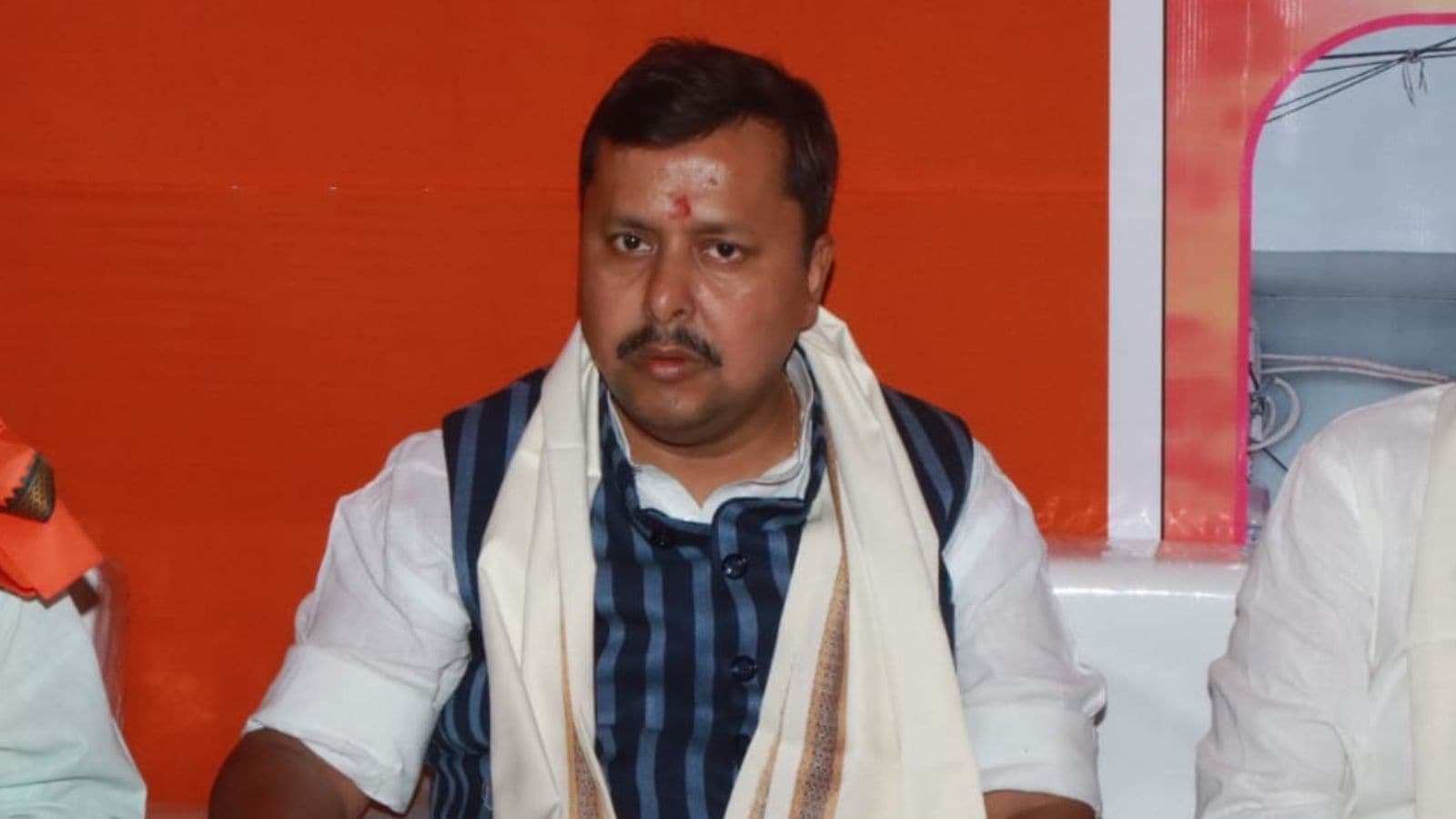
Nitin Nabin elevated as BJP National Working President, lauded by PM Modi and Amit Shah.
Summary
Nitin Nabin has been elevated to the significant position of BJP National Working President, a key organizational role within India's ruling party. This appointment was lauded by Prime Minister Narendra Modi and Union Home Minister Amit Shah, highlighting Nabin's dedication. Such high-level political appointments are crucial for competitive exams, particularly for understanding party structures and prominent figures in current affairs.
Key Points
- 1Nitin Nabin has been elevated to the position of BJP National Working President.
- 2Prime Minister Narendra Modi publicly lauded Nitin Nabin following his elevation.
- 3Union Home Minister Amit Shah also praised Nitin Nabin, highlighting his dedication.
- 4Nitin Nabin was described as a "hardworking karyakarta" by the top leadership.
- 5This appointment represents a significant organizational change within the Bharatiya Janata Party (BJP).
In-Depth Analysis
The elevation of Nitin Nabin as the BJP National Working President marks a significant organizational development within India's ruling Bharatiya Janata Party. This appointment, lauded by Prime Minister Narendra Modi and Union Home Minister Amit Shah, underscores the party's emphasis on rewarding dedicated 'karyakartas' (workers) and signals potential strategic shifts ahead of crucial state elections and the long-term political landscape.
**Background Context and What Happened:** The BJP, known for its robust organizational structure, operates through a clear hierarchy from the national level down to the booth level. The position of National President is the highest organizational post, currently held by J.P. Nadda. Historically, the party has at times appointed a 'Working President' to manage day-to-day organizational affairs, allowing the full-time President to focus on broader strategic or governmental responsibilities. J.P. Nadda himself served as Working President before taking over as full President. Nitin Nabin's elevation into this pivotal role indicates a strategic move by the top leadership. While specific details of his previous roles are not provided in the summary, such appointments typically involve individuals with a proven track record in party affairs, often having served as state unit chiefs, general secretaries, or youth wing leaders. The public commendation from PM Modi and Amit Shah, describing him as a "hardworking karyakarta," is a strong endorsement, signifying trust and validating his dedication to the party's ideology and objectives.
**Key Stakeholders Involved:** The primary stakeholders include **Nitin Nabin** himself, whose political career receives a major boost, placing him in a national leadership position. The **Bharatiya Janata Party (BJP)** is the central stakeholder, as this appointment directly impacts its internal functioning, electoral strategy, and public image. **Prime Minister Narendra Modi** and **Union Home Minister Amit Shah** are key figures, as their endorsement highlights the centralized nature of high-level party appointments and their vision for the party's future. The **party cadre and grassroots workers** are also significant stakeholders, as such elevations serve as a powerful message that diligence and loyalty are recognized and rewarded within the party structure, potentially boosting morale and commitment. Finally, **opposition parties** closely observe such moves for insights into the BJP's internal dynamics and future electoral strategies.
**Why This Matters for India:** This appointment has several implications for India's political landscape. Firstly, it reflects the **internal health and strategic direction** of the ruling party. A strong and well-oiled party organization is crucial for effective governance, policy dissemination, and electoral success in a diverse country like India. Secondly, the Working President often plays a critical role in **coordinating election campaigns**, managing state unit affairs, and resolving internal disputes. With several key state assembly elections (e.g., Maharashtra, Haryana, Jharkhand) on the horizon, Nabin's role will be crucial in mobilizing party resources and cadre. Thirdly, it speaks to the **BJP's leadership development strategy**. By elevating dedicated workers, the party expands its pool of national leaders, ensuring continuity and fresh perspectives. This also reinforces the idea of meritocracy within the party, though political appointments always involve strategic considerations. For India's multi-party democratic system, the robust functioning of major parties like the BJP is essential for maintaining a healthy political discourse and ensuring accountability.
**Historical Context and Constitutional Relevance:** The concept of a Working President is an organizational tool used by various political parties, not unique to the BJP. It allows for a division of labor at the top, ensuring that both strategic vision and day-to-day management are effectively handled. While the Indian Constitution does not directly govern the internal appointments of political parties, it lays the framework for their existence and functioning. **Article 324** of the Constitution empowers the Election Commission of India (ECI) to supervise, direct, and control elections. Political parties are registered with the ECI under **Section 29A of the Representation of the People Act, 1951**, which mandates them to uphold the principles of democracy, socialism, and secularism. The internal structure and democratic functioning of parties, though largely autonomous, are therefore indirectly linked to the broader constitutional mandate of a democratic republic. The **Tenth Schedule (Anti-defection Law)** also highlights the importance of party leadership and discipline within the legislative framework.
**Future Implications:** Nitin Nabin's elevation could lead to a **re-energized organizational drive** within the BJP, particularly in states where the party seeks to consolidate its position or expand its base. He is likely to be instrumental in implementing the party's strategy for upcoming state elections and preparing the ground for the 2029 general elections. This move might also indicate a strategy to empower a new generation of leaders from diverse backgrounds, ensuring the party's long-term sustainability. His performance in this role will be closely watched, as it could pave the way for even higher responsibilities in the future, thereby impacting the future leadership landscape of not just the BJP but potentially the nation.
Exam Tips
This topic falls under 'Indian Polity and Governance' and 'Current Affairs (National Appointments)' in the UPSC, SSC, Banking, Railway, and State PSC syllabi. Focus on the structure and functioning of political parties.
Study related topics such as the organizational hierarchy of major political parties (e.g., BJP, INC), the role of the Election Commission of India, and key provisions of the Representation of the People Act, 1951.
Common question patterns include direct questions on who holds specific party positions, questions on the significance of such appointments for party strategy or national politics, and 'match the following' questions linking leaders to their party roles. Understand the difference between governmental and party positions.