



Relevant for Exams
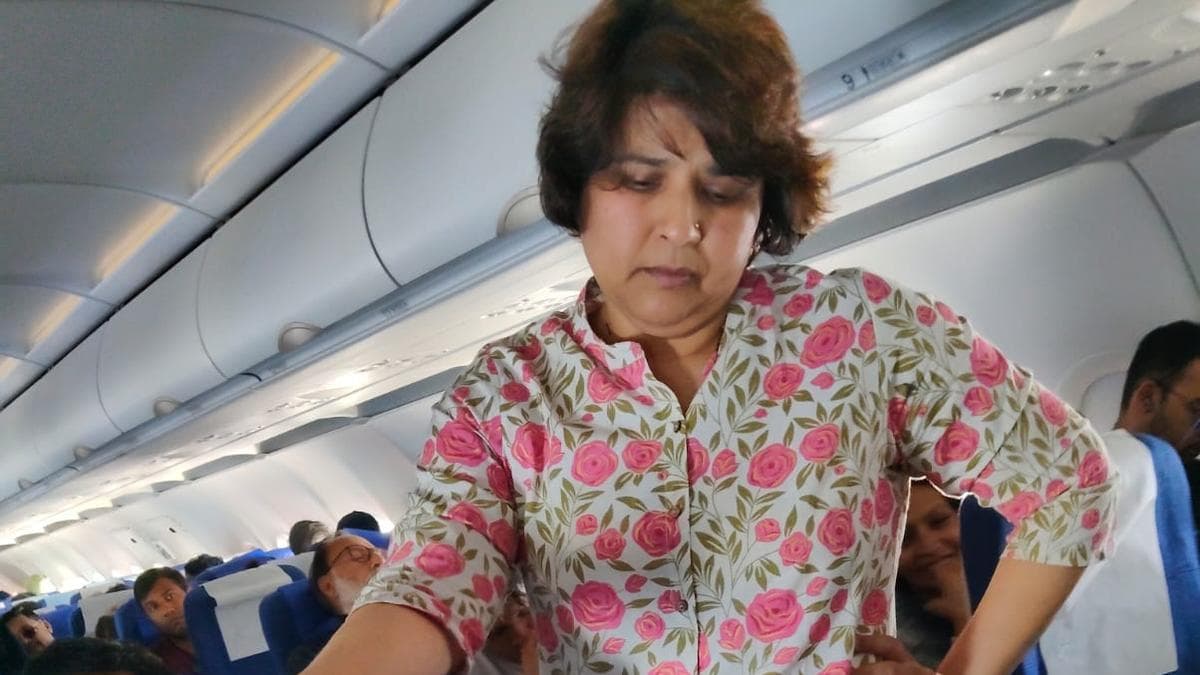
Former Karnataka MLA Dr. Anjali Nimbalkar revives US woman with CPR on Goa-Delhi flight.
Summary
Former Karnataka MLA, Dr. Anjali Nimbalkar, successfully revived a US woman who fainted on a flight from Goa to Delhi by performing cardio-pulmonary resuscitation (CPR). This incident highlights the importance of medical knowledge and quick thinking in emergency situations, serving as a general awareness point about public figures demonstrating civic responsibility and medical expertise.
Key Points
- 1The lifesaver was Dr. Anjali Nimbalkar, a former MLA from Karnataka.
- 2She performed Cardio-pulmonary resuscitation (CPR) to revive the fainted passenger.
- 3The incident occurred on a flight traveling from Goa to Delhi.
- 4The passenger who fainted and was revived was identified as a US woman.
- 5Dr. Anjali Nimbalkar's actions demonstrated medical expertise in an in-flight emergency.
In-Depth Analysis
The recent incident where Dr. Anjali Nimbalkar, a former Karnataka MLA, successfully revived a US woman on a flight from Goa to Delhi using Cardio-Pulmonary Resuscitation (CPR) is a poignant reminder of the critical importance of medical knowledge and swift action in emergency situations. This event, while seemingly isolated, offers a rich tapestry for understanding broader themes relevant to India's public health, civic responsibility, and legal frameworks.
**Background Context: The Lifesaving Art of CPR**
Cardio-Pulmonary Resuscitation (CPR) is an emergency procedure performed when the heart stops beating, either due to a sudden cardiac arrest, choking, drowning, or other causes. It involves chest compressions and artificial ventilation to manually preserve brain function until further medical intervention can take place. The immediate application of CPR can double or triple a person's chance of survival. In India, public awareness and training in CPR are still developing, making such interventions by trained individuals, especially in public spaces like flights, exceptionally significant. In-flight medical emergencies, though relatively rare, pose unique challenges due to limited resources, confined space, and the time sensitivity of reaching advanced medical care.
**What Happened and Key Stakeholders**
As the flight from Goa to Delhi was airborne, a US woman passenger suddenly experienced shivers and fainted. Dr. Anjali Nimbalkar, a medical professional and former Member of Legislative Assembly (MLA) from Khanapur constituency in Karnataka, was also on board. Recognizing the severity of the situation, she immediately intervened, performing CPR. Her timely and expert intervention led to the revival of the unconscious passenger. The key stakeholders in this incident include: **Dr. Anjali Nimbalkar** herself, whose medical expertise and civic courage were paramount; the **US passenger**, whose life was saved; the **airline crew**, who are typically trained in basic first aid but rely on advanced medical professionals in critical situations; and the **airline company**, which has protocols for medical emergencies and carries basic medical kits. Beyond this, the general public and fellow passengers are also stakeholders, as such incidents foster a sense of collective responsibility and highlight the value of preparedness.
**Significance for India: A Multifaceted Impact**
This incident holds substantial significance for India across several dimensions. Firstly, it underscores the **importance of public health preparedness** and the need for widespread CPR and basic life support (BLS) training. While airline staff receive some training, the presence of a qualified doctor proved invaluable. Secondly, it highlights the **role of public figures** in demonstrating civic responsibility and utilizing their professional skills for the greater good. Dr. Nimbalkar's action sets a powerful example of leadership extending beyond political duties. Thirdly, it subtly projects a positive image of India's medical expertise and compassionate ethos on an international platform, especially as the beneficiary was a foreign national. Such acts contribute to India's 'soft power'. Finally, it draws attention to the existing **emergency medical services (EMS) infrastructure** in India and the gaps that may exist, particularly in non-hospital settings or during transit.
**Historical Context and Constitutional Provisions**
Historically, emergency medical care in India has evolved, but widespread public training in life-saving techniques like CPR is a relatively recent focus. The incident also brings into focus several constitutional and legal provisions. The most fundamental is **Article 21 of the Indian Constitution**, which guarantees the 'Right to Life'. The Supreme Court has interpreted this right broadly to include the right to health and medical care. While not a direct legal obligation for every citizen to perform CPR, the spirit of Article 21 encourages efforts to preserve life. More specifically, the **Good Samaritan Law**, primarily articulated through Supreme Court guidelines in 2016 and later incorporated into the **Motor Vehicles (Amendment) Act, 2019**, offers protection to individuals who help accident victims without fear of legal harassment. Although this incident was not a road accident, the underlying principle of encouraging citizens to render aid without fear applies broadly to emergency situations. Furthermore, the **Aircraft Rules, 1937**, and subsequent **Civil Aviation Requirements (CARs)** issued by the Directorate General of Civil Aviation (DGCA), mandate certain medical equipment and training for airline crew to handle in-flight medical emergencies, but they do not negate the value of a qualified medical professional's intervention.
**Future Implications**
This incident could serve as a catalyst for several positive changes. It might spur greater advocacy for mandatory CPR and first-aid training, not just for airline personnel, but also for other public-facing professionals such as police, railway staff, and bus drivers. It could also lead to increased public awareness campaigns promoting basic life support skills, thereby building a more resilient and responsive society. The incident reinforces the idea that medical professionals, regardless of their current profession, carry a unique responsibility and can make a profound difference. Ultimately, it strengthens the narrative around proactive health measures and community preparedness, contributing to a more robust public health ecosystem in India.
Exam Tips
This topic falls under General Science (Biology: Human Physiology, First Aid), Current Affairs (Recent Events, Personalities), and Governance (Public Health, Disaster Management) sections of competitive exams.
Study related topics such as the principles of CPR, common medical emergencies, the Good Samaritan Law (its provisions and significance), and the role of emergency medical services (EMS) in India. Understand basic first aid protocols.
Expect questions on factual details (Who performed CPR? Where did it happen?), conceptual understanding (What is CPR? What is Article 21's relevance?), and analytical questions (Significance of such acts, role of public figures in civic responsibility, importance of public health training).
Related Topics to Study
Full Article
As the flight took off from Goa to Delhi, the traveller started experiencing shivers and fainted. Dr. Anjali exercised cardio-pulmonary resuscitation and revived the woman.