



Relevant for Exams
Gujarat youth trafficked to Myanmar cyber-fraud compounds via Moei river for forced cyber slavery.
Summary
Young men from Gujarat are being lured with false promises of data-entry jobs and subsequently trafficked across the Moei river into alleged cyber-fraud compounds in Myanmar. This report by Abhinay Deshpande highlights a critical issue of human trafficking and cyber slavery, where victims are held captive. The incident is significant for competitive exams as it touches upon cross-border crime, human trafficking, cyber exploitation, and India-Myanmar border security challenges.
Key Points
- 1Young men from Gujarat are being lured by promises of data-entry jobs.
- 2Victims are trafficked across the Moei river, which forms part of the border.
- 3The destination for these trafficked individuals is alleged cyber-fraud compounds in Myanmar.
- 4The nature of their captivity involves forced cyber slavery and exploitation.
- 5The issue was reported by Abhinay Deshpande, highlighting cross-border human trafficking.
In-Depth Analysis
The alarming report of young men from Gujarat being lured into cyber slavery in Myanmar across the Moei river shines a harsh light on a critical confluence of transnational crime, human trafficking, and the vulnerabilities exacerbated by economic aspirations and geopolitical instability. This incident is not an isolated event but a stark symptom of a growing global menace.
**Background Context:**
The roots of this issue are multi-layered. India, with its large youth population, faces the perennial challenge of providing adequate employment opportunities. Many young individuals, particularly from economically weaker sections or those seeking quick upward mobility, become susceptible to promises of lucrative overseas jobs. Recruiters, often operating through social media or local networks, exploit these aspirations, painting a picture of easy money and a comfortable life abroad. On the other side of the border, Myanmar's internal political instability, particularly since the 2021 military coup, has led to a breakdown of law and order in many border regions. Areas like Myawaddy, situated across the Moei River from Thailand, have become de facto autonomous zones, controlled by ethnic armed organizations or militias, often with links to transnational criminal syndicates. These unregulated zones provide fertile ground for the proliferation of illegal activities, including online gambling, crypto scams, and elaborate cyber-fraud operations, which require a constant supply of cheap, exploitable labor.
**What Happened:**
As detailed in the report, young men from Gujarat were enticed by fraudulent offers of data-entry jobs, promising high salaries and comfortable working conditions. These individuals, often unaware of the true nature of the work or the destination, were then trafficked across the porous India-Myanmar border, or sometimes via more circuitous routes, and eventually transported to these cyber-fraud compounds in Myanmar. Once there, their passports were confiscated, their movements restricted, and they were forced into 'cyber slavery' – compelled to work long hours under duress, scamming people worldwide through various online frauds (e.g., romance scams, investment scams, crypto scams). They faced severe physical and psychological abuse, with threats to themselves and their families back home, ensuring their compliance. The eventual return of these individuals to India suggests intervention by Indian authorities, likely involving diplomatic efforts and coordination with international agencies.
**Key Stakeholders Involved:**
1. **Victims:** Primarily young, unemployed or underemployed Indian men from states like Gujarat, seeking better economic prospects.
2. **Perpetrators:** Transnational criminal syndicates, often with Chinese, Thai, or local Myanmar links, who operate these cyber-fraud compounds. They employ a network of local recruiters and facilitators in India.
3. **Indian Government:** The Ministry of External Affairs (MEA), state police (e.g., Gujarat Police), the National Investigation Agency (NIA) through its Anti-Human Trafficking Units, and border security forces (like Assam Rifles along the India-Myanmar border) are crucial in rescue, repatriation, investigation, and prevention efforts.
4. **Myanmar Authorities:** Their capacity to act is severely hampered by internal conflict and lack of control over border regions, sometimes leading to complicity or inability to intervene effectively.
5. **International Organizations:** Bodies like the United Nations Office on Drugs and Crime (UNODC) and the International Organization for Migration (IOM) play a vital role in combating human trafficking, assisting victims, and fostering international cooperation.
**Significance for India:**
This issue has profound significance for India. Firstly, it's a grave human rights violation, undermining the dignity and liberty of Indian citizens. Secondly, it poses a national security concern, as porous borders facilitate not just human trafficking but also drug smuggling, arms trafficking, and insurgent movements. Thirdly, the involvement of Indian citizens in cyber-fraud operations, even unwillingly, can tarnish India's image and potentially lead to diplomatic friction. Economically, it represents a loss of productive workforce and a drain on national resources for rescue and rehabilitation. Socially, it creates immense trauma for victims and their families, eroding trust in official systems and job markets. The rise of such incidents also highlights the evolving nature of organized crime, moving from traditional forms to sophisticated cyber-enabled exploitation.
**Historical Context and Constitutional Provisions:**
Human trafficking, in various forms, has historical roots globally, but its modern manifestation, particularly cyber slavery, is relatively new. India has a history of combating forced labor and trafficking, reflected in its constitutional framework. **Article 23 of the Constitution of India** explicitly prohibits "traffic in human beings and begar and other similar forms of forced labour," making any contravention punishable by law. This article is a fundamental right ensuring protection against exploitation. Furthermore, **Article 21 (Right to Life and Personal Liberty)** encompasses the right to live with dignity, which is severely violated in cases of cyber slavery. To combat trafficking, India enacted the **Immoral Traffic (Prevention) Act, 1956 (ITPA)**, which primarily addresses sexual exploitation but has broader implications for human trafficking. More recently, there have been efforts to introduce a comprehensive **Trafficking of Persons (Prevention, Care and Rehabilitation) Bill**, aimed at providing a dedicated legal framework for all forms of trafficking. India is also a signatory to international instruments like the UN Convention against Transnational Organized Crime (UNTOC) and its Protocol to Prevent, Suppress and Punish Trafficking in Persons, Especially Women and Children (Palermo Protocol), committing it to international cooperation.
**Future Implications:**
The future demands a multi-pronged approach. Domestically, there's a need for enhanced public awareness campaigns, especially targeting vulnerable youth, about the dangers of fraudulent job offers. Strengthening law enforcement capabilities, improving intelligence sharing between state and central agencies, and tightening border security are crucial. Internationally, India must intensify diplomatic efforts with Myanmar and other ASEAN nations to dismantle these criminal networks. This includes intelligence sharing, joint operations, and advocating for stronger regional legal frameworks against cybercrime and human trafficking. The 'Act East Policy' can be leveraged to foster deeper security cooperation with Southeast Asian neighbours. Rehabilitation and reintegration programs for rescued victims are also paramount to prevent re-victimization. The incident underscores the urgent need to address both the push factors (unemployment, economic despair) and pull factors (lucrative criminal enterprises in ungoverned spaces) that fuel this heinous crime.
Exam Tips
This topic falls under GS-II (Governance, Social Justice, International Relations) and GS-III (Internal Security, Cyber Security) of the UPSC Civil Services Syllabus. Focus on the constitutional provisions (Articles 21, 23) and relevant acts (ITPA, proposed Anti-Trafficking Bill) for direct questions.
Study related topics like India's border management challenges (especially with Myanmar), the 'Act East Policy', the role of various security agencies (NIA, MEA, BSF/Assam Rifles), and international conventions against human trafficking. Understand the definitions of human trafficking and cybercrime.
Common question patterns include: 'Discuss the challenges of cross-border human trafficking in India and the measures taken by the government.' 'Analyze the role of instability in neighboring countries on India's internal security.' 'Examine the constitutional and legal framework to combat human trafficking in India.' Prepare for both descriptive and objective questions on specific articles or acts.
Pay attention to the socio-economic drivers behind such incidents, such as unemployment and lack of awareness among vulnerable populations. Questions might explore the 'push and pull' factors of human trafficking.
Understand the evolving nature of organized crime, especially the nexus between traditional trafficking and cyber exploitation. Be prepared to discuss the technological aspects of cyber slavery and the challenges it poses for law enforcement.
Related Topics to Study
Full Article
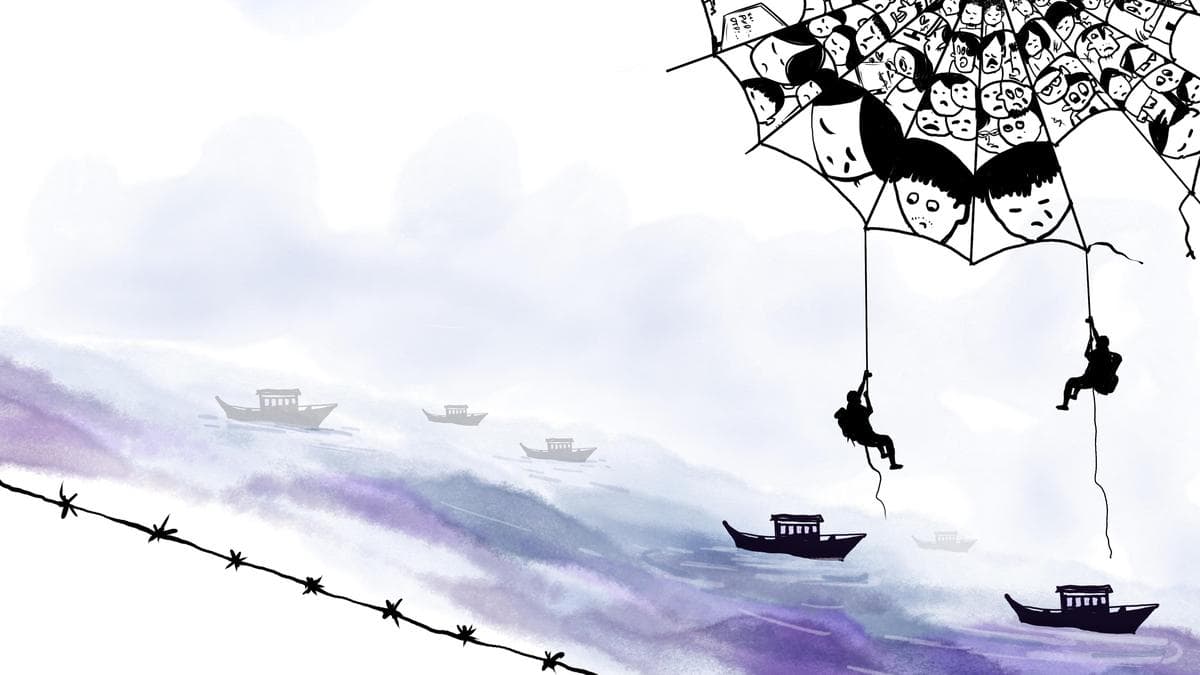
Promises of data-entry jobs draw young men from Gujarat across the Moei river into Myanmar’s alleged cyber-fraud compounds. Abhinay Deshpande reports on their passage, from aspiration to captivity, and their eventual return to India