



Relevant for Exams
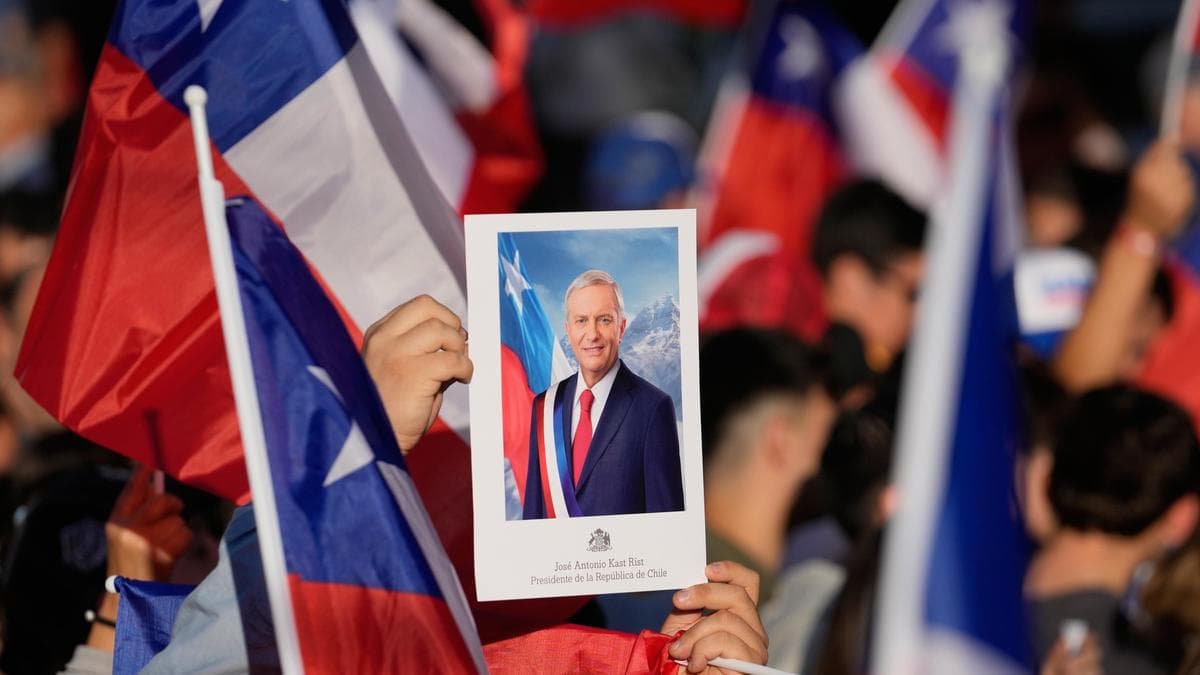
Ultra-conservative Jose Antonio Kast wins Chile's presidential runoff; leftist candidate concedes.
Summary
Ultra-conservative Jose Antonio Kast won Chile's presidential runoff election, with the leftist candidate conceding defeat. This electoral outcome signifies a notable shift in Chile's political landscape towards conservative policies, particularly concerning immigration and crime. For competitive exams, this development is significant for international current affairs, requiring awareness of key global leaders and national elections.
Key Points
- 1Jose Antonio Kast, an ultra-conservative candidate, won the presidential runoff election in Chile.
- 2The opposing leftist candidate conceded defeat in the Chilean presidential runoff.
- 3Kast's campaign focused on vowing a harsh security crackdown.
- 4His agenda aims to address heightened fears about uncontrolled immigration in Chile.
- 5Kast also prioritizes tackling crime as a key policy initiative.
In-Depth Analysis
The presidential runoff election in Chile, culminating in the victory of ultra-conservative Jose Antonio Kast, marks a significant turning point for the South American nation. This outcome reflects a profound shift in voter sentiment, moving away from the leftist and progressive agenda that had gained traction in recent years, towards a more traditional, law-and-order focused approach.
**Background Context and Historical Roots:**
Chile has a complex political history, marked by periods of democratic rule interrupted by authoritarianism. The most prominent of these was the military dictatorship of General Augusto Pinochet from 1973 to 1990, a period remembered for economic liberalization alongside severe human rights abuses. While Chile transitioned to democracy, the legacy of Pinochet's constitution and economic model continued to shape the country. In 2019, Chile experienced widespread social unrest, triggered by an increase in Santiago's metro fares, but quickly escalating into broader protests against inequality, the high cost of living, and the perceived shortcomings of the existing economic and political system. These protests, some of the most significant in Chile's modern history, led to a national referendum in October 2020, where nearly 80% of voters approved drafting a new constitution to replace the Pinochet-era charter. This move was seen as a victory for progressive forces aiming to enshrine greater social rights and reduce inequality.
**The Election and Key Stakeholders:**
Jose Antonio Kast, a lawyer and former congressman, emerged as the standard-bearer for the ultra-conservative right. His campaign resonated with a segment of the electorate deeply concerned about perceived rising crime rates, uncontrolled immigration, and the stability of the nation. Kast's platform was characterized by a strong emphasis on law and order, advocating for a harsh security crackdown, stricter immigration controls, and a more traditional social agenda. He also promised tax cuts and a smaller state, appealing to free-market proponents. His opponent, the leftist candidate Gabriel Boric, represented a coalition of progressive parties, advocating for increased social spending, environmental protection, and a more inclusive constitution. The Chilean electorate was deeply polarized, with the first round of voting showing a narrow lead for Kast, which he then consolidated in the runoff, much to the surprise of many pollsters.
**Kast's Agenda and Immediate Implications:**
Kast's victory signals a potential reversal or significant slowdown in the progressive agenda that emerged from the 2019 protests. His administration is expected to prioritize public safety, potentially through increased police powers and a tougher stance on crime. His proposed policies on immigration, vowing a "harsh security crackdown" to address "uncontrolled immigration," suggest a more restrictive approach. Economically, his government is likely to pursue market-friendly policies, aiming to attract foreign investment and stimulate growth. Socially, there could be pushback against liberal reforms. The future of the ongoing constitutional reform process, aimed at replacing the Pinochet-era constitution, also becomes uncertain. While the process is independent, the political climate under Kast's presidency could influence public debate and the final referendum on the new charter.
**Broader Themes & Significance for India:**
This electoral outcome in Chile is part of a broader global trend of the rise of right-wing populism and conservative movements. Similar shifts have been observed in various parts of the world, often fueled by concerns over economic insecurity, cultural identity, and public safety. For India, observing such democratic transitions and shifts in political landscapes globally is crucial for understanding international relations. While direct economic or political impact on India from Chile's election is limited, it reinforces the need for India to maintain diverse diplomatic relations. India, as the world's largest democracy, values democratic processes and adheres to the principle of non-interference in the internal affairs of other nations. India's foreign policy, guided by principles enshrined in Article 51 of its Constitution (promotion of international peace and security, maintenance of just and honorable relations between nations, fostering respect for international law and treaty obligations, and encouragement of settlement of international disputes by arbitration), dictates a pragmatic approach to engaging with all democratically elected governments. Moreover, India's trade relations with Latin American countries, though not as extensive as with other regions, are growing, and understanding the political stability and policy directions of these nations is important for future economic engagements.
**Future Trajectory:**
Kast's presidency will undoubtedly face significant challenges, including managing public expectations, addressing social inequalities that fueled the 2019 protests, and navigating a polarized political landscape. The constitutional convention will continue its work, and the proposed new constitution will eventually be put to a national referendum. The ideological clash between the conservative government and the progressive forces advocating for a new social contract will define Chile's immediate future. Regionally, Chile's shift could influence the political dynamics in Latin America, potentially strengthening conservative blocs or creating new tensions. Internationally, Chile will likely continue to engage in multilateral forums, but its stance on issues like climate change and human rights might align more closely with other conservative governments.
Exam Tips
This topic falls under the 'International Relations' and 'Current Affairs' sections of competitive exams (UPSC GS-II, SSC CGL, Banking PO, State PSCs). Be prepared for direct questions on the names of leaders, countries, and major policy shifts.
Study the broader trend of the 'Rise of Right-Wing Populism' globally. Understand its causes (economic insecurity, immigration, cultural shifts) and manifestations in different countries (e.g., Brazil, USA, parts of Europe). Compare and contrast the factors at play in various regions.
Familiarize yourself with the political geography of Latin America. Know the capitals, major leaders, and recent significant political events in key countries like Brazil, Argentina, Mexico, and Venezuela. Questions often test knowledge of regional dynamics.
Expect questions requiring analytical understanding of democratic transitions, constitutional reforms, and the challenges faced by democracies. For instance, how do social movements influence political outcomes? What are the implications of a polarized electorate?
Pay attention to India's foreign policy principles (DPSP Article 51) and its engagement with Latin American countries. While direct impact is minimal, India's stance on global democratic processes and trade relations with these nations is relevant.
Related Topics to Study
Full Article
Vowing a harsh security crackdown to address heightened fears about uncontrolled immigration and crime, Jose Antonio Kast's popularity has surged in recent months.