



Relevant for Exams
9 killed in shooting at Sydney's Bondi Beach; 1 shooter dead, another arrested.
Summary
A shooting incident at Australia's Bondi Beach in Sydney resulted in the deaths of 9 people, with one shooter neutralized and another apprehended. This act of unprecedented violence caused widespread panic and chaos, becoming a significant international tragedy. For competitive exams, it serves as a factual recall point for general awareness regarding major global incidents, emphasizing the location and casualty count.
Key Points
- 1The incident occurred at Bondi Beach in Sydney, Australia.
- 2A total of 9 people were killed in the shooting.
- 3One shooter was reported dead, and another was arrested.
- 4Eyewitness accounts described the scene as one of panic and chaos.
- 5The event is categorized as an act of unprecedented violence.
In-Depth Analysis
The tragic shooting incident at Sydney's iconic Bondi Beach, resulting in the deaths of 9 people, with one shooter neutralized and another apprehended, sent shockwaves across Australia and the international community. This act of unprecedented violence, unfolding in a typically serene and popular tourist destination, highlights the pervasive challenges of public safety and the unpredictable nature of such events.
**Background Context and The Incident:** Bondi Beach is not just a local attraction but a global landmark, synonymous with Australia's vibrant beach culture and laid-back lifestyle. It draws millions of visitors annually, including a significant number of international tourists. The incident, therefore, occurred in a highly visible and frequented public space, amplifying its impact. While the quick summary does not delve into the specific motives or background of the perpetrators, such events often stem from a complex interplay of factors including mental health issues, extremist ideologies, or personal grievances. Australia, historically, has maintained stringent gun control laws following the devastating Port Arthur massacre in 1996, which drastically reduced the incidence of mass shootings. This event, therefore, represents a rare and deeply disturbing breach of public security.
**Key Stakeholders Involved:** Primarily, the **Australian Government** and its **law enforcement agencies**, particularly the New South Wales (NSW) Police, are the central stakeholders. Their immediate response, investigation, and efforts to secure the area and apprehend the remaining perpetrator were crucial. The **victims** and their **families** are, of course, the most directly impacted, grappling with immense loss and trauma. The **local community** of Sydney and Australia as a whole are also key stakeholders, as the incident affects their sense of safety and community cohesion. Internationally, governments whose citizens were among the casualties, and the broader global community, are also stakeholders, expressing solidarity and monitoring the situation.
**Why This Matters for India:** This incident carries significant implications for India due to several factors. Firstly, Australia is a preferred destination for the **Indian diaspora**, including a large number of students and professionals. The safety and security of Indian citizens residing or traveling abroad are paramount for the Indian government. Such incidents raise concerns among the diaspora and their families back home. Secondly, India and Australia share a robust **Comprehensive Strategic Partnership (CSP)**, established in 2020. This partnership encompasses cooperation across various sectors, including defense, security, trade, and education. Events like the Bondi Beach shooting underscore the shared challenges of urban security and the importance of continued intelligence sharing and counter-terrorism cooperation between the two nations, particularly within forums like the Quad. Thirdly, for India, a nation that has grappled with various forms of terrorism and public safety challenges, the incident offers lessons in crisis management, emergency response protocols, and securing public spaces. It prompts a review of India's own strategies for preventing and responding to similar 'lone wolf' or mass casualty events in crowded areas.
**Historical Context and Broader Themes:** While Australia has a commendable record on gun control, the Port Arthur massacre of 1996, which led to the National Firearms Agreement, remains a stark reminder of past tragedies. This current incident, while different in scale and context, reignites discussions around public safety, mental health support, and the challenges of preventing violence in open public spaces. It also links to broader global themes of urban resilience, the psychological impact of violence on communities, and the role of international cooperation in combating crime and ensuring citizen safety.
**Future Implications:** In the immediate future, Australia is likely to see enhanced security measures in public spaces, particularly in high-footfall areas. There may be a review of intelligence gathering and threat assessment protocols. For India, the incident could lead to renewed dialogues with Australia on consular assistance for its citizens and further strengthening of bilateral security cooperation. Globally, such events contribute to the ongoing discourse on global security threats, the need for robust law enforcement, and the importance of addressing the root causes of violence, whether ideological or psychological.
**Related Constitutional Articles, Acts, or Policies (for India):** While this is an Australian incident, its relevance to India can be framed through India's constitutional and policy perspectives. The **Directive Principles of State Policy (DPSP)**, particularly **Article 51**, which advocates for the promotion of international peace and security, implicitly underscores India's interest in global stability and the safety of its citizens worldwide. The **Ministry of External Affairs (MEA)**, guided by India's foreign policy objectives, plays a crucial role in providing consular assistance and ensuring the welfare of Indian citizens abroad, leveraging its network of embassies and high commissions. Domestically, India's own **internal security framework**, including laws like the **Unlawful Activities (Prevention) Act (UAPA)** and the role of agencies like the **National Investigation Agency (NIA)**, are designed to combat terrorism and maintain public order. While these are national laws, the principles behind them – robust intelligence, rapid response, and inter-agency coordination – are universally applicable in addressing such threats, offering a comparative lens for students to understand India's preparedness. The incident also indirectly touches upon the fundamental right to life and personal liberty (**Article 21**) for Indian citizens, even when they are outside the national borders, as their safety is a core concern for the Indian state.
Exam Tips
General Awareness (International Events): Be prepared for direct factual questions regarding the location (Bondi Beach, Sydney, Australia), the nature of the event (mass shooting), and the number of casualties. Focus on 'who, what, where, when' aspects.
Geography (Mapping): Familiarize yourself with the geography of Australia, specifically locating major cities like Sydney and prominent landmarks like Bondi Beach. Map-based questions can ask about the location of such incidents.
International Relations & Current Affairs: Understand the broader context of India-Australia relations (e.g., Quad, trade, diaspora). Questions might explore how such events impact bilateral ties or the safety of Indian citizens abroad.
Public Safety & Internal Security (Comparative Analysis): While the event is international, analyze it through the lens of India's own public safety measures, disaster management, and anti-terrorism policies. Questions could involve comparing response mechanisms or discussing lessons learned for India.
Related Topics to Study
Full Article
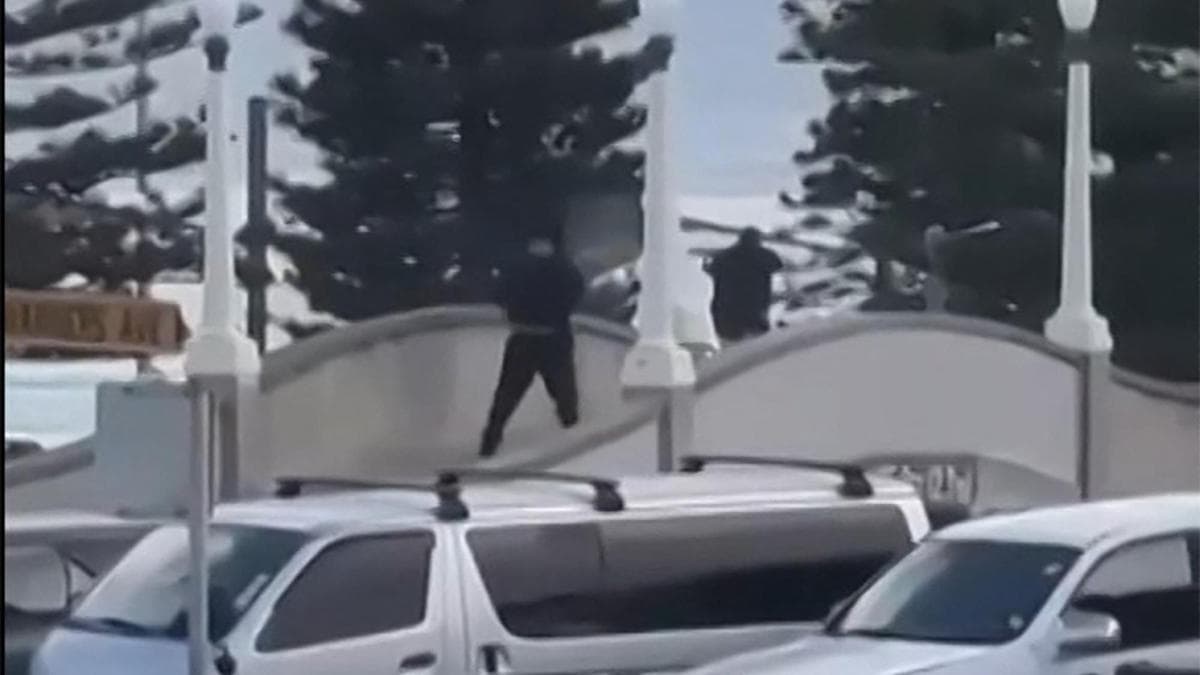
Eyewitness accounts reveal a scene of panic and chaos, with multiple casualties reported and the community grappling with the aftermath of the unprecedented violence at Australia’s Bondi Beach