



Relevant for Exams
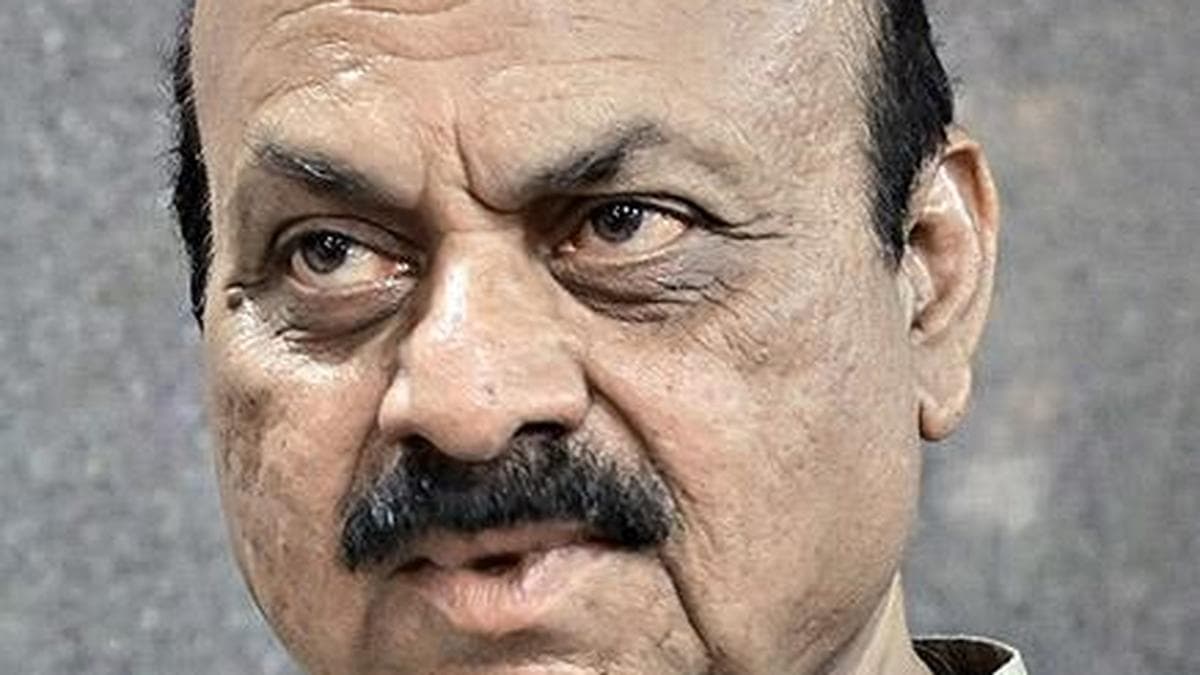
Former CM Bommai urges support for revised Bedti-Varada river linking project, citing better water utilisation.
Summary
Former Chief Minister Basavaraj Bommai appealed to activists and seers not to oppose the Bedti-Varada river linking project, stating it has been revised for better water utilisation. This project is crucial for addressing water scarcity and enhancing irrigation in parts of Karnataka, making it relevant for understanding regional development initiatives and water management policies in competitive exams.
Key Points
- 1The project in question is the Bedti-Varada river linking project.
- 2Former Chief Minister Basavaraj Bommai made an appeal against its opposition.
- 3The project's primary objective is to ensure better utilisation of water.
- 4The project design has been revised to address previous concerns and misconceptions.
- 5The Bedti-Varada river linking project is located in Karnataka, as indicated by former CM Bommai's involvement.
In-Depth Analysis
The appeal by former Chief Minister Basavaraj Bommai regarding the Bedti-Varada river linking project brings to the forefront critical issues of water resource management, regional development, and environmental conservation in India. This project, located in Karnataka, is a microcosm of the larger national debate surrounding river interlinking initiatives, highlighting the complex interplay between human needs, ecological concerns, and governance.
**Background Context and the Genesis of River Linking:**
India, with its vast geographical diversity and monsoon-dependent agriculture, has historically grappled with water management challenges. While some regions face chronic floods, others experience severe droughts. The concept of river interlinking, aimed at transferring surplus water from water-rich basins to deficit ones, emerged as a potential solution. The idea gained prominence with Dr. K.L. Rao's proposal in 1972 and later solidified into the National Perspective Plan (NPP) formulated by the Ministry of Water Resources in 1980. The National Water Development Agency (NWDA) was established in 1982 to conduct detailed studies for these interlinking projects. The Bedti-Varada project aligns with this broader vision, specifically targeting the intra-state transfer of water within Karnataka. The Bedti river is a west-flowing river, often experiencing surplus water during the monsoon, while the Varada river, an east-flowing tributary of the Tungabhadra, flows through drought-prone regions of North Karnataka, where there is a significant demand for irrigation and drinking water.
**What Happened: The Current Appeal and Project Revision:**
Basavaraj Bommai's recent appeal to activists and seers not to oppose the Bedti-Varada project stems from the state government's commitment to addressing water scarcity in parts of Karnataka. The project, initially conceptualized to divert water from the Bedti basin to the Varada basin, has faced considerable opposition from environmental groups and local communities. Their concerns primarily revolve around the potential ecological damage, submergence of vast forest areas, displacement of indigenous communities, and impact on biodiversity. Bommai's statement about the project being "revised to ensure better utilisation of water" suggests that the government has attempted to incorporate changes to mitigate some of these concerns, possibly by altering the project's scope, alignment, or implementing more robust environmental safeguards. This revision is an acknowledgment of the strong public and environmental scrutiny such large-scale projects attract.
**Key Stakeholders Involved:**
Several key stakeholders are deeply invested in the outcome of this project. The **Karnataka State Government** is the primary proponent, viewing it as a crucial developmental initiative to ensure water security for agriculture, industry, and drinking purposes, particularly in the arid regions. **Farmers and local communities** in the benefiting regions are eager for the project's completion, anticipating improved livelihoods and relief from water scarcity. Conversely, **environmental activists, local seers, and tribal communities** living in the project's impact zone are strong opponents. They raise concerns about the irreversible damage to the Western Ghats' fragile ecosystem, loss of biodiversity, and potential displacement without adequate rehabilitation. The **Central Government**, through its Ministry of Environment, Forest and Climate Change (MoEFCC), plays a crucial regulatory role in granting environmental and forest clearances, often acting as an arbiter in such development-versus-environment debates.
**Why This Matters for India: Significance and Broader Themes:**
The Bedti-Varada project is highly significant for India as it encapsulates several critical national challenges. Firstly, it highlights the persistent issue of **water security** and the desperate need for sustainable water management solutions in a climate-changing world. Secondly, it underscores the inherent **conflict between development and environmental conservation**. While infrastructure projects are vital for economic growth and human well-being, their ecological footprint cannot be ignored. The project also touches upon **regional disparities** and the political imperative to ensure equitable resource distribution. Furthermore, it reflects the challenges of **governance and public participation** in large-scale projects, where reconciling diverse interests and addressing public grievances is paramount. The debates surrounding this project contribute to the broader discourse on India's path towards **sustainable development**, balancing immediate needs with long-term ecological health.
**Historical Context and Constitutional Framework:**
The history of river linking in India is replete with ambitious plans and contentious debates. While the NPP envisioned linking 30 major rivers through 37 links, only a few have progressed. The constitutional framework for water in India places it primarily under **Entry 17 of the State List** in the Seventh Schedule, meaning states have primary jurisdiction over water supply, irrigation, and canals. However, Parliament has the power under **Article 262** to legislate on the adjudication of disputes relating to waters of inter-state rivers or river valleys, though the Bedti-Varada project is intra-state. Nevertheless, any large-scale water project requires clearances under central laws such as the **Environmental (Protection) Act, 1986**, the **Forest (Conservation) Act, 1980**, and potentially the **Wildlife Protection Act, 1972**, if protected areas are impacted. The **National Water Policy, 2012**, emphasizes integrated water resource management, sustainability, and equitable distribution, guiding such projects.
**Future Implications:**
The future of the Bedti-Varada project will have significant implications. If successfully implemented, it could serve as a model for intra-state water transfer, potentially alleviating water stress in arid regions of Karnataka and boosting agricultural productivity. This could lead to improved food security and rural economic development. However, if the environmental concerns are not adequately addressed, it could lead to severe ecological degradation, loss of biodiversity in the Western Ghats, and prolonged legal battles, setting a negative precedent. The project's outcome will also influence public perception and political will for future river linking initiatives across India. It underscores the growing importance of transparent Environmental Impact Assessments (EIAs), robust public consultations, and the integration of traditional ecological knowledge to ensure that development is truly sustainable and inclusive.
Exam Tips
This topic falls under GS Paper I (Geography - Water Resources, Environment) and GS Paper III (Environment & Ecology, Infrastructure, Economy - Agriculture) for UPSC Civil Services Exam. For State PSCs, it's relevant for Geography, Environment, and Current Affairs sections.
Study the National River Linking Project (NRLP), its various components, and the arguments for and against it. Pay attention to the constitutional provisions related to water (Seventh Schedule, Article 262) and key environmental legislation like the Environment (Protection) Act, 1986, and Forest (Conservation) Act, 1980.
Common question patterns include: (a) Factual questions on specific river linking projects or the agencies involved (e.g., NWDA). (b) Conceptual questions on the pros and cons of river interlinking. (c) Analytical questions on balancing development with environmental conservation, or the role of various stakeholders in such projects. (d) Policy-oriented questions on India's National Water Policy.
Related Topics to Study
Full Article
MP and Former Chief Minister Basavaraj Bommai has appealed to activists and seers not to oppose the Bedti and Varada river linking project based on misconceptions as the project has been revised to ensure better utilisation of water