

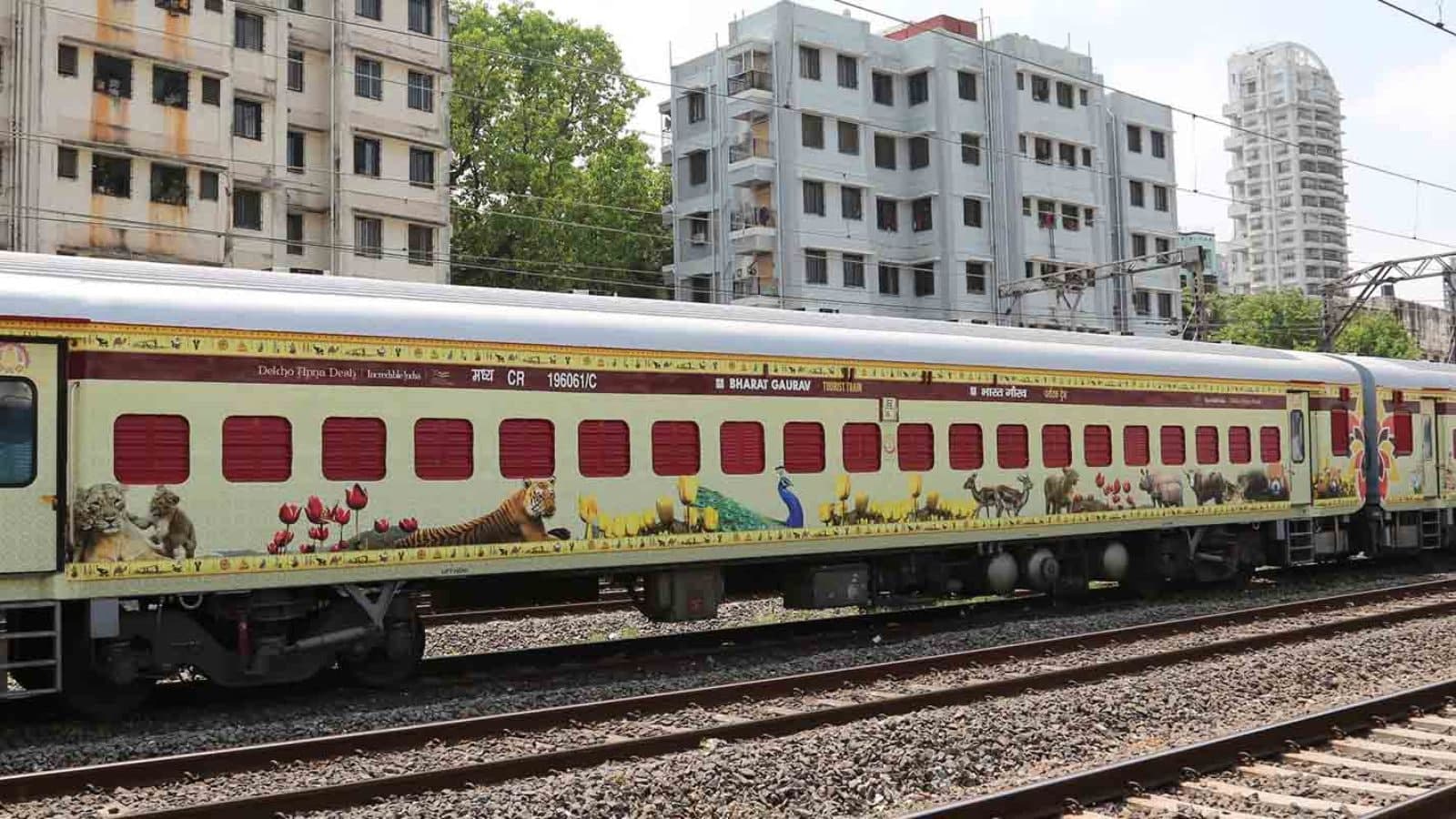


Content unavailable: Cannot analyze Bharat Gaurav train performance or Railway Minister's response.
Summary
Article content is unavailable, preventing the extraction of specific details regarding Bharat Gaurav trains' occupancy and performance. Therefore, a comprehensive summary, key points, and precise exam relevance cannot be generated from the provided input.
Key Points
- 1No content available to extract specific facts about Bharat Gaurav trains.
- 2Occupancy rates and performance data for Bharat Gaurav trains are not provided.
- 3Details of the Railway Minister's response regarding train performance are missing.
- 4Cannot identify specific dates, names, or numbers relevant to the article's topic.
- 5Lack of article content prevents the formulation of exam-focused key points.
In-Depth Analysis
The "Bharat Gaurav trains occupancy" topic, despite the lack of specific article content, opens a fascinating window into Indian Railways' evolving strategy, particularly its foray into theme-based tourism and public-private partnerships (PPPs). To truly grasp its significance, one must understand the context of Indian Railways, its vast network, and the government's push for both modernization and leveraging cultural heritage for economic growth.
Indian Railways, a behemoth with a history dating back to 1853, has traditionally been the lifeline of the nation, primarily focusing on passenger and freight movement. However, in recent decades, there has been a growing emphasis on diversifying revenue streams and enhancing passenger experience. This led to various initiatives, including the introduction of premium trains like Vande Bharat Express and Tejas Express, and a renewed focus on tourism. The Bharat Gaurav scheme, launched in November 2021 by the Ministry of Railways, represents a significant step in this direction. It was envisioned as a means to showcase India's rich cultural heritage and magnificent historical places to both domestic and international tourists through theme-based circuit trains.
Under this innovative scheme, private players – including tour operators, state tourism corporations, and other entities – are permitted to lease railway rakes from Indian Railways and operate them as theme-based tourist circuit trains. These operators have the flexibility to design their own itineraries, decide tariffs, and provide onboard services, thereby offering a customized and immersive travel experience. The first Bharat Gaurav train commenced its journey in June 2022 from Coimbatore North to Shirdi, marking the operationalization of this distinctive model. The scheme aligns perfectly with the government's 'Dekho Apna Desh' initiative, which aims to promote domestic tourism, and 'Ek Bharat Shreshtha Bharat', fostering national integration through cultural exchange.
Key stakeholders in this initiative include the **Indian Railways (Ministry of Railways)**, which acts as the facilitator, providing the railway infrastructure, rolling stock (rakes), and operational support. **Private Tour Operators and State Tourism Boards** are the core operators, investing in the tours, marketing them, and managing the entire customer experience. **Passengers/Tourists** are the ultimate beneficiaries and the demand drivers, whose interest in these unique packages determines the success of the trains. Lastly, **local economies** at the various tourist destinations benefit from increased footfall, leading to job creation and boosting local businesses, including hotels, guides, and artisans.
The significance of Bharat Gaurav trains for India is multi-faceted. Economically, it aims to boost the tourism sector, a major contributor to India's GDP and employment. By allowing private participation, it injects entrepreneurial spirit and innovation into railway tourism, potentially increasing revenue for both the operators and Indian Railways. Socially and culturally, these trains play a crucial role in promoting India's diverse heritage, religious sites, and natural beauty, making them accessible to a wider audience. Politically, it showcases the government's commitment to leveraging public assets through PPP models, enhancing infrastructure utilization, and promoting 'Atmanirbhar Bharat' by encouraging domestic tourism and related services. The success of the scheme, particularly its occupancy rates, is a critical indicator of the viability of such PPP models in the railway sector.
Historically, while Indian Railways has run special tourist trains (like Palace on Wheels), the Bharat Gaurav scheme marks a departure by extensively privatizing the *operation* and *marketing* of these theme-based circuits. This reflects a broader trend in India towards greater private sector involvement in infrastructure and service delivery, a policy shift that gained momentum post-1991 economic reforms. The scheme can be linked to broader themes of governance reform, economic liberalization, and cultural preservation.
Regarding constitutional provisions and policies, while there isn't a specific Article for Bharat Gaurav trains, the scheme operates within the framework of **Indian Railways Act, 1989**, which governs railway operations. Railways fall under the **Union List (Entry 22)** of the Seventh Schedule of the Constitution, granting the central government exclusive legislative power. The promotion of tourism can be linked to the **Directive Principles of State Policy (DPSP)**, particularly Article 39 (economic justice) and Article 48A (protection and improvement of environment), if eco-tourism is involved. The broader **National Tourism Policy** and various Union Budget announcements provide the policy context for such initiatives. The performance of these trains, as indicated by their occupancy, will have significant future implications. High occupancy would validate the PPP model, encourage more private players, and potentially lead to the expansion of similar theme-based circuits across the country. Conversely, low occupancy might necessitate a re-evaluation of the scheme's operational framework, marketing strategies, or pricing mechanisms, highlighting the challenges of balancing commercial viability with public service objectives in a diverse market like India. The Railway Minister's response to occupancy data would thus be crucial for policy adjustments and future directions.
Exam Tips
This topic primarily falls under **GS Paper 3 (Indian Economy - Infrastructure & Tourism)** in the UPSC Civil Services Exam syllabus. It can also be relevant for **GS Paper 1 (Indian Heritage and Culture)** if specific cultural circuits are highlighted, and **GS Paper 2 (Governance - Government Policies & Interventions)** for the PPP model aspect.
When studying, focus on related topics such as the evolution of Indian Railways, the 'Dekho Apna Desh' initiative, National Tourism Policy, different models of Public-Private Partnerships (PPP) in India, and the economic impact of the tourism sector. Understand the distinction between Bharat Gaurav trains and other luxury tourist trains like Palace on Wheels.
Common question patterns include: factual questions about the launch year and features of the Bharat Gaurav scheme; analytical questions on the pros and cons of private participation in railways and tourism; policy-oriented questions on how such initiatives align with government objectives like 'Atmanirbhar Bharat' or 'Ek Bharat Shreshtha Bharat'; and mains questions discussing the economic viability and social impact of such schemes on India's tourism sector.
Pay attention to any specific numbers or targets mentioned by the government regarding the number of trains, routes, or expected revenue, as these can be factual points in prelims. For mains, analyze the challenges and opportunities for such niche tourism products in a competitive market.
Always link current affairs like this to broader constitutional provisions or government policies. For instance, how does this scheme reflect the DPSP or the Union List's mandate on railways? This demonstrates a deeper understanding.