



Relevant for Exams
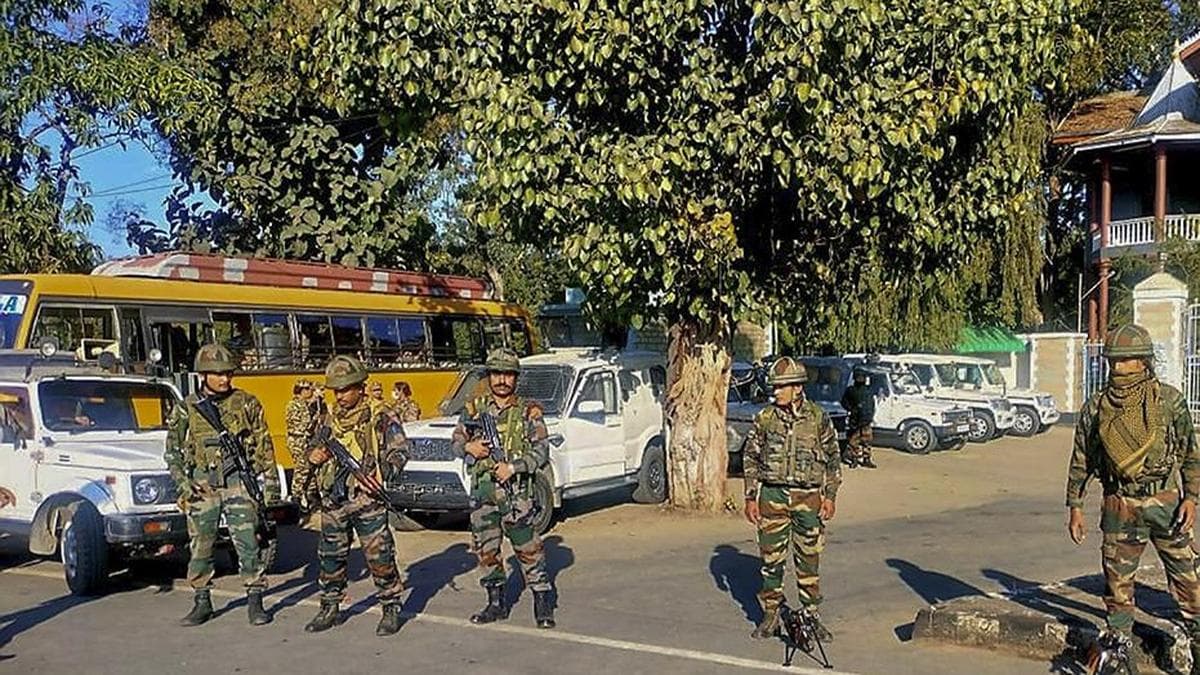
Banned insurgent group claims drone attack on Assam Rifles camp, injuring four personnel on Nov 28.
Summary
A banned insurgent group released a video claiming responsibility for a drone attack on an Assam Rifles camp on November 28, which resulted in injuries to four personnel. This incident underscores the growing threat of advanced drone technology being utilized by non-state actors in internal security challenges, particularly in India's Northeast region. It is significant for competitive exams focusing on internal security, defence technology, and regional insurgency dynamics.
Key Points
- 1The alleged drone attack occurred on November 28.
- 2The target of the attack was an Assam Rifles camp.
- 3A banned insurgent group released a video claiming responsibility for the drone attack.
- 4Four Assam Rifles personnel were reported injured in the incident.
- 5The incident highlights the use of drone technology by insurgent groups in internal security contexts.
In-Depth Analysis
The alleged drone attack on an Assam Rifles camp on November 28, where four personnel were injured and a banned insurgent group claimed responsibility, marks a concerning evolution in India's internal security landscape. This incident underscores a paradigm shift in the tactics employed by non-state actors, incorporating advanced technology like drones, and presents multifaceted challenges for India's defence and security establishment.
To truly grasp the significance, we must first understand the background context of India's Northeast region. This area has historically been plagued by various insurgencies rooted in ethnic identity, demands for greater autonomy or secession, and socio-economic grievances. Groups like the National Socialist Council of Nagaland (NSCN), United Liberation Front of Assam (ULFA), and others have operated for decades, often exploiting the challenging terrain, dense forests, and porous international borders with Myanmar, Bangladesh, and Bhutan. The Assam Rifles, India's oldest paramilitary force, plays a crucial dual role in this region: guarding the Indo-Myanmar border under the operational control of the Ministry of Defence and conducting counter-insurgency operations under the Ministry of Home Affairs. Their presence is vital for maintaining peace and order, but they frequently face threats from these well-entrenched insurgent groups.
The incident on November 28, while not providing details about the specific group, highlights the increasing sophistication of these outfits. The use of drones for surveillance, reconnaissance, and now, apparently, for direct attacks, represents a significant upgrade in their operational capabilities. Traditionally, insurgent attacks involved ambushes, IEDs, and direct firefights. The deployment of drones introduces an element of stealth, precision, and deniability, allowing attackers to operate from a distance while minimizing direct exposure. This technological leap poses a serious threat, as commercially available drones can be easily acquired, modified, and weaponized, making them accessible to a wider range of non-state actors.
Key stakeholders in this scenario include the Indian government, particularly the Ministry of Home Affairs (MHA) and the Ministry of Defence (MoD), which are responsible for internal security and border management. The Assam Rifles personnel, who are on the front lines, are direct targets and a critical component of the state's response. The banned insurgent groups are the perpetrators, seeking to challenge state authority, gain publicity, and inflict casualties. The local populace, often caught between security forces and insurgent groups, also remains a significant stakeholder, with their peace and development directly impacted by such incidents.
This development matters immensely for India. Firstly, it escalates the internal security threat, demanding a complete overhaul of existing counter-insurgency doctrines and defence preparedness. The ability of non-state actors to bypass traditional security perimeters using air-borne platforms necessitates robust counter-drone technologies, including jammers, spoofers, and kinetic interception systems. Secondly, it highlights vulnerabilities in border management, as drones could potentially be launched from across international borders, complicating attribution and response. Thirdly, the economic implications are significant; instability deters investment and hinders developmental projects crucial for integrating the Northeast with the national mainstream. Politically, such attacks can fuel public fear and question the efficacy of security forces, potentially leading to social unrest.
From a legal and constitutional perspective, the Union Government's responsibility to protect states from internal disturbance is enshrined in **Article 355** of the Constitution. The deployment of forces like the Assam Rifles falls under the Union List of the **Seventh Schedule** (Entry 2: Naval, military and air forces; any other armed forces of the Union). The banning of such groups is carried out under the **Unlawful Activities (Prevention) Act (UAPA), 1967**, which empowers the government to declare associations as unlawful and individuals as terrorists. The controversial **Armed Forces (Special Powers) Act (AFSPA), 1958**, often applied in 'disturbed areas' of the Northeast, grants special powers to armed forces personnel, though its application has been progressively reduced in some parts due to improving security situations. The **Drone Rules, 2021**, aim to regulate drone operations in India, but enforcing these regulations against malicious non-state actors remains a significant challenge.
The future implications are profound. India must invest heavily in indigenous counter-drone technologies and strategies. This includes developing advanced surveillance systems, training personnel in drone detection and neutralization, and fostering robust intelligence gathering, both human and technical, to preempt such attacks. There is also a need for enhanced cross-border cooperation with neighbouring countries to curb the flow of arms and technology to insurgent groups. This incident serves as a stark reminder that modern warfare is evolving into a hybrid threat, where conventional and unconventional tactics merge, and technological asymmetry can be exploited by even smaller actors. India's internal security framework must adapt swiftly to this new reality, ensuring both robust defence and continued efforts towards peace and development in the region.
Exam Tips
This topic is highly relevant for UPSC GS Paper III (Internal Security & Science & Technology). Focus on the evolving nature of internal security threats, the role of technology in modern warfare/insurgency, and India's strategies for border management and counter-terrorism.
Study related topics such as the history of insurgency in India's Northeast (key groups, causes, government responses like peace accords), the mandate and role of paramilitary forces like Assam Rifles, and the complete framework of India's Drone Rules, 2021, along with emerging counter-drone technologies.
Expect analytical questions in Mains exams on the challenges posed by weaponized drones to internal security, comparing traditional insurgency tactics with technology-driven ones, and policy recommendations for effective counter-drone measures. For Prelims, factual questions on the Assam Rifles, UAPA, AFSPA, or drone regulations are possible.
Always connect such incidents to broader themes like 'national security challenges', 'impact of technology on governance', and 'regional stability'. Understanding the geographical context of the Northeast, including international borders, is crucial.
Be prepared to discuss the ethical and human rights dimensions related to counter-insurgency operations and the use of special powers acts like AFSPA, as these are frequently debated topics.
Related Topics to Study
Full Article
The incident is said to have occurred on November 28, in which four Assam Rifles personnel were injured.