

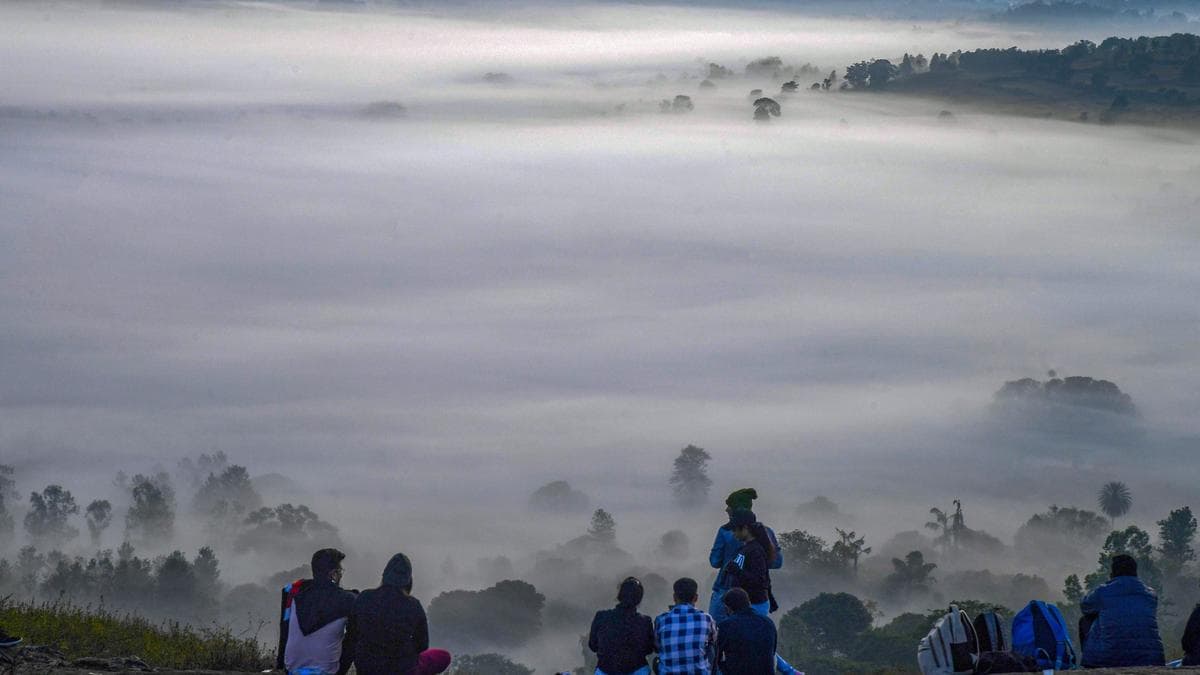


No content available to extract facts on Andhra Pradesh winter chills till December 25.
Summary
The provided article content is unavailable, preventing the extraction of specific details regarding winter chills in Andhra Pradesh till December 25. Without information on exact dates, temperature forecasts, or affected regions, no exam-relevant facts can be identified for competitive exam preparation.
Key Points
- 1No specific content was provided for analysis.
- 2Therefore, no dates related to the winter chill period in A.P. could be identified.
- 3No specific names of regions or officials were mentioned in the context of the weather.
- 4No numerical data, such as temperature forecasts or percentages, could be extracted.
- 5The absence of content precludes the identification of exam-relevant facts.
In-Depth Analysis
While the specific content of the article regarding winter chills in Andhra Pradesh is unavailable, the title itself points to a crucial and recurring theme in Indian meteorology and disaster management: the impact of seasonal weather phenomena on states. Understanding such events is vital for competitive exam aspirants, as they touch upon geography, disaster management, governance, and socio-economic aspects.
**Background Context: Understanding Winter Chills in India**
Winter chills, often manifesting as cold waves or severe cold waves, are common across large parts of India, particularly in the northern, central, and eastern regions. These phenomena are typically driven by a combination of factors. One primary cause is the influence of 'Western Disturbances' – extra-tropical storms originating in the Mediterranean region that bring sudden winter rain and snow to the northwestern parts of the Indian subcontinent. After their passage, cold, dry winds from the Himalayas often sweep across the plains, leading to a significant drop in temperatures. Another factor can be the presence of persistent anticyclonic systems over the northern plains, which lead to clear skies, radiation cooling, and a build-up of cold air. The India Meteorological Department (IMD), established in 1875, is the nodal agency responsible for meteorological observations, weather forecasting, and seismology in India. It defines a 'cold wave' based on specific criteria related to minimum temperatures and their deviation from normal.
**What Happens During Winter Chills and Their Impact**
When a state like Andhra Pradesh experiences prolonged winter chills, even if it's not as severe as in northern India, it can have significant ramifications. The primary effects are on human health, agriculture, and daily life. Vulnerable populations, including the homeless, elderly, and children, are particularly susceptible to cold-related illnesses such like hypothermia, frostbite, and respiratory infections. Public health infrastructure often faces increased strain. Agriculturally, unseasonal or prolonged cold can damage standing crops, especially horticulture and rabi crops, leading to substantial economic losses for farmers. For instance, a sudden dip in temperature can affect crops like paddy, pulses, and vegetables, impacting food security and farmer incomes. Daily life is disrupted, with schools often closing, transportation systems facing delays due to fog, and energy consumption increasing for heating.
**Key Stakeholders Involved**
Several stakeholders play crucial roles during such weather events. The **India Meteorological Department (IMD)** is paramount, providing crucial forecasts and warnings. State-level disaster management authorities, such as the **Andhra Pradesh State Disaster Management Authority (APSDMA)**, along with the **National Disaster Management Authority (NDMA)**, are responsible for preparedness, response, and relief operations. Local administration (district collectors, panchayats) is on the front lines, coordinating relief camps, distributing blankets, and ensuring essential services. Farmers are directly impacted, requiring support and compensation. Healthcare providers manage the increased patient load, and NGOs often step in to provide humanitarian aid to the most vulnerable.
**Significance for India**
Winter chills, particularly cold waves, have profound socio-economic implications for India. Economically, agricultural losses can run into thousands of crores, impacting the GDP and rural livelihoods. The cost of providing relief, healthcare, and restoring normalcy can strain state budgets. Socially, they exacerbate existing inequalities, disproportionately affecting the poor and marginalized. The issue also highlights the broader challenge of climate change, which is projected to increase the frequency and intensity of extreme weather events, including cold waves, in some regions, while others experience rising temperatures. This necessitates robust disaster preparedness and adaptation strategies.
**Related Constitutional Articles, Acts, and Policies**
The framework for managing such events is enshrined in various legal and policy instruments. The **Disaster Management Act, 2005**, provides the legal basis for the constitution of the NDMA, SDMAs, and District Disaster Management Authorities (DDMAs). It outlines the responsibilities for disaster preparedness, mitigation, response, and relief. The **National Policy on Disaster Management, 2009**, further details the government's approach. Financially, the **National Disaster Response Fund (NDRF)** and **State Disaster Response Fund (SDRF)**, constituted under Section 46 and 48 of the DM Act, 2005 respectively, provide resources for immediate relief. From a constitutional perspective, **Article 21 (Right to Life and Personal Liberty)** implicitly includes the right to a dignified life, which necessitates protection from extreme weather. Furthermore, **Article 47 (Duty of the State to raise the level of nutrition and the standard of living and to improve public health)** under the Directive Principles of State Policy provides a guiding principle for state action in health-related emergencies arising from such events. The subject of 'Public health and sanitation' falls under **List II (State List)** of the Seventh Schedule, while 'Disaster Management' is typically managed through concurrent responsibilities, often falling under **List III (Concurrent List)** as an aspect of social and economic planning.
**Future Implications**
The increasing variability in weather patterns, attributed partly to climate change, suggests that India may face more frequent and intense extreme weather events. This necessitates strengthening IMD's forecasting capabilities, investing in climate-resilient agriculture, and enhancing public health infrastructure. Early warning systems, community-level preparedness, and effective implementation of disaster management plans are crucial. Furthermore, integrating climate change adaptation strategies into state-level development plans, such as through State Action Plans on Climate Change (SAPCCs) under the broader **National Action Plan on Climate Change (NAPCC)**, will be vital for building long-term resilience against such environmental challenges.
Exam Tips
This topic primarily falls under 'Geography (Climatology, Indian Monsoon)' and 'Disaster Management' sections of the UPSC Civil Services Exam (Prelims & Mains GS-I, GS-III). Be prepared to explain the causes and effects of various weather phenomena.
Study the institutional framework of disaster management in India: National Disaster Management Authority (NDMA), State Disaster Management Authorities (SDMAs), and the provisions of the Disaster Management Act, 2005. Understand their roles and responsibilities.
Familiarize yourself with the India Meteorological Department (IMD) – its functions, forecasting methods, and warning dissemination mechanisms. Questions often test knowledge about specific meteorological terms (e.g., cold wave, heat wave, Western Disturbances).
Focus on the socio-economic impacts of extreme weather events, particularly on agriculture, public health, and vulnerable populations. Be ready to discuss government schemes and policies aimed at mitigating these impacts (e.g., crop insurance, health programs).
Practice essay questions or long-answer questions that require linking climate change, extreme weather events, disaster preparedness, and sustainable development goals. Understand the constitutional provisions and policies related to public health and disaster relief.