



Relevant for Exams
Maharashtra's winter session: Unprecedented absence of LoP in both Legislative Houses.
Summary
Maharashtra's winter session witnessed an unprecedented situation with no Leader of Opposition (LoP) in both its Legislative Assembly and Council. This highlights a significant procedural anomaly in state legislature functioning, impacting democratic checks and balances. For exams, understanding the role of LoP and legislative procedures is crucial, especially in state-specific polity questions.
Key Points
- 1The unprecedented situation occurred in the state of Maharashtra's legislative houses.
- 2The specific anomaly was the absence of a Leader of Opposition (LoP).
- 3This absence was noted concurrently in both the Legislative Assembly and the Legislative Council of Maharashtra.
- 4The event transpired during the state's recent winter session.
- 5This marks the first instance in Maharashtra's legislative history where both Houses lacked an LoP simultaneously.
In-Depth Analysis
The absence of a Leader of Opposition (LoP) in both the Maharashtra Legislative Assembly and Legislative Council during the recent winter session marked an unprecedented situation, highlighting significant procedural anomalies and raising concerns about democratic checks and balances. This event is a direct consequence of the tumultuous political landscape in Maharashtra over the past few years, characterized by significant party splits and realignments.
**Background Context and What Happened:**
The role of the Leader of Opposition is a cornerstone of parliamentary democracy, crucial for ensuring accountability, providing constructive criticism, and offering an alternative voice to the government. While not explicitly mentioned in the Constitution, the LoP's position is recognized statutorily through the Salary and Allowances of Leaders of Opposition in Parliament Act, 1977, and similar acts at the state level. The convention dictates that the leader of the single largest opposition party, commanding at least 10% of the total strength of the House, is recognized as the LoP. In Maharashtra, the political upheaval began with the Shiv Sena split in June 2022, leading to the collapse of the Maha Vikas Aghadi (MVA) government and the formation of a new coalition government led by Eknath Shinde (Shiv Sena-BJP). Subsequently, in July 2023, the Nationalist Congress Party (NCP) also witnessed a major split, with Ajit Pawar leading a faction to join the ruling coalition, taking a significant number of MLAs with him. These splits severely fragmented the opposition ranks. During the winter session, no single opposition party or pre-poll alliance could muster the requisite 10% of seats (29 MLAs in the 288-member Assembly and 7 MLCs in the 78-member Council) to claim the LoP position in either house. Consequently, for the first time in Maharashtra's history, both Houses functioned without a recognized LoP.
**Key Stakeholders Involved:**
The primary stakeholders include the various political factions: the Shiv Sena (Eknath Shinde faction, part of the ruling coalition, and the Uddhav Thackeray faction, now in opposition), the Nationalist Congress Party (Ajit Pawar faction, part of the ruling coalition, and the Sharad Pawar faction, in opposition), and the Indian National Congress (a significant opposition party). The ruling coalition, comprising the BJP, Eknath Shinde's Shiv Sena, and Ajit Pawar's NCP faction, benefits from a weakened opposition. The Speaker of the Legislative Assembly and the Chairman of the Legislative Council are also crucial, as they are responsible for recognizing the LoP based on house rules and conventions. The electorate, ultimately, is a key stakeholder as their representation and the scrutiny of government actions are impacted.
**Why This Matters for India:**
This situation has profound implications for India's democratic health. The absence of an LoP significantly weakens the institutional checks and balances against executive overreach. The LoP plays a vital role in scrutinizing government policies, participating in key appointments (like Lokpal, Central Vigilance Commissioner), and leading the opposition's legislative strategy. Without a recognized LoP, the opposition's voice may become fragmented, making it harder to hold the government accountable, raise public interest issues effectively, and ensure robust debate on legislation. This can lead to a perceived decline in the quality of legislative scrutiny and potentially reduce public trust in democratic institutions. It also sets a concerning precedent for other states, particularly those with fluid political alignments and frequent defections, undermining the spirit of parliamentary democracy and competitive politics.
**Historical Context and Constitutional Provisions:**
While the Constitution does not explicitly create the office of the LoP, its importance is derived from parliamentary conventions and statutes. The concept gained formal recognition in India in 1977 with the aforementioned Act, which conferred statutory status, salary, and perks equivalent to a cabinet minister on the LoP in Parliament. State legislatures have analogous provisions. The underlying cause of this situation – party splits and defections – directly relates to the Tenth Schedule of the Indian Constitution (Anti-defection Law), introduced by the 52nd Amendment Act of 1985. This law aims to prevent political defections, but its provisions, particularly regarding splits and mergers, have often been subject to complex interpretations and legal challenges, contributing to political instability.
**Future Implications:**
The immediate implication is a less effective opposition in Maharashtra, potentially leading to smoother passage of government legislation with reduced debate and scrutiny. In the long term, this situation could further entrench the dominance of the ruling coalition and reduce the vibrancy of democratic discourse. It may also prompt discussions on reforming the rules for LoP recognition, perhaps by considering a collective recognition of opposition parties rather than strictly adhering to the 10% rule for a single party, especially in an era of multi-party systems and coalition politics. For competitive exams, understanding such 'unprecedented' events is crucial as they test a candidate's grasp of constitutional provisions, parliamentary procedures, and contemporary political dynamics. This event underscores the fragility of institutional norms when confronted with intense political maneuvering and highlights the ongoing challenge of maintaining robust democratic institutions in India's diverse political landscape.
Exam Tips
This topic falls under the 'Indian Polity' section of the UPSC, SSC, and State PSC syllabi, specifically 'Parliament and State Legislatures - Structure, Functioning, Conduct of Business, Powers & Privileges and Issues Arising Out of these'.
Study the 'Role of the Leader of Opposition' in detail, including its statutory basis (Salary and Allowances of Leaders of Opposition Act, 1977), functions, and significance for democratic accountability. Compare its role at the Centre and in states.
Relate this issue to the 'Anti-defection Law' (Tenth Schedule of the Constitution) and 'Party System in India'. Understand how political fragmentation and defections impact legislative functioning and the opposition's strength. Common questions involve the powers of the Speaker/Chairman in recognizing LoP or dealing with defections.
Prepare for analytical questions on the 'Importance of Opposition in a Democracy' and the 'Challenges to Parliamentary Democracy' in India. You might be asked to critically evaluate the consequences of a weak opposition or the procedural aspects of legislative functioning.
Familiarize yourself with the 'Rules of Procedure and Conduct of Business' of Parliament and State Legislatures, as these govern the recognition of parties, groups, and the LoP.
Related Topics to Study
Full Article
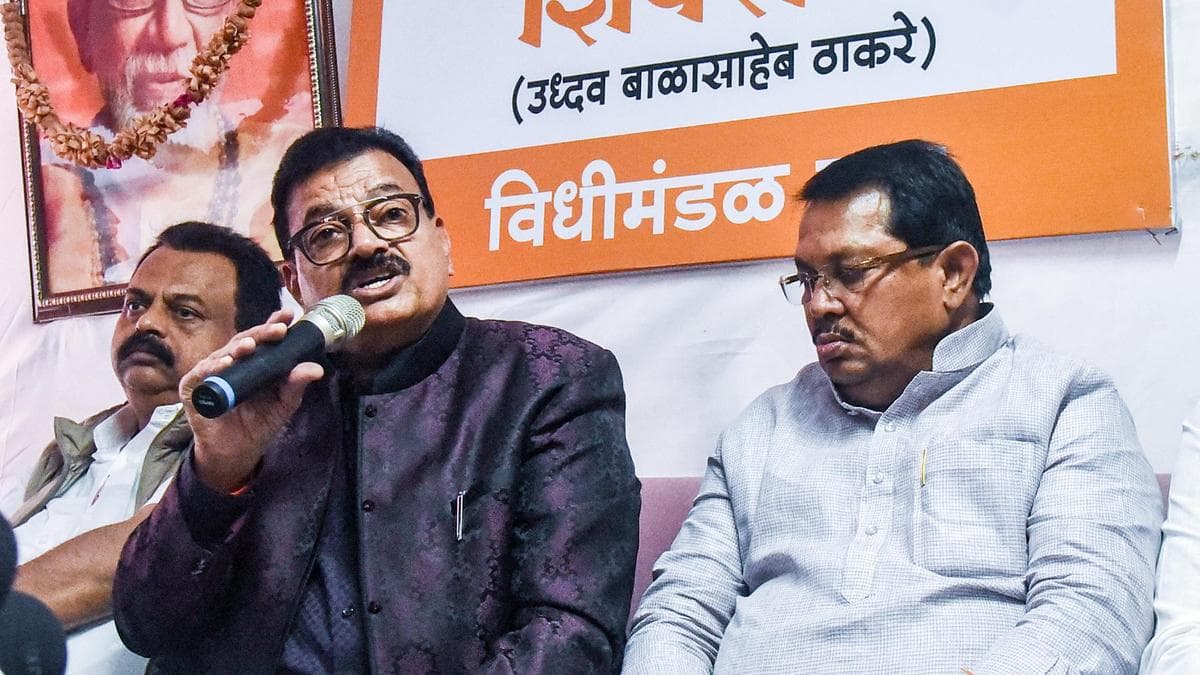
For the first time, there was no LOP in both Houses during the winter session