



Relevant for Exams
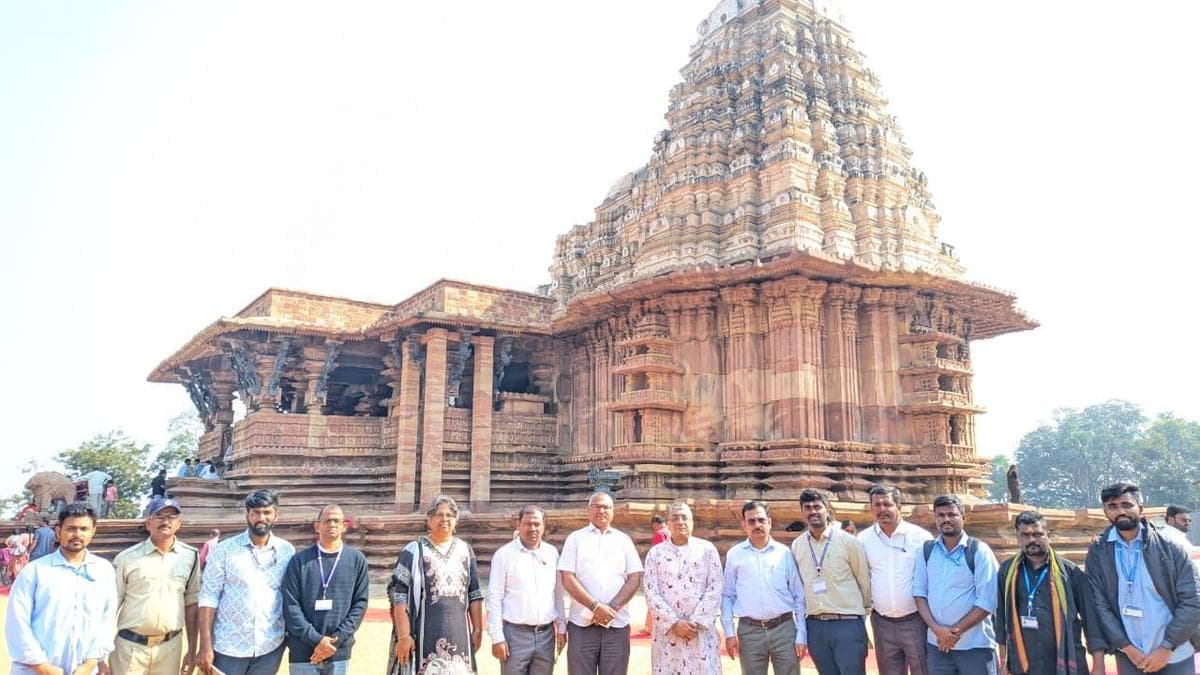
India's UNESCO Envoy reviews conservation at Ramappa Temple, a World Heritage Site in Telangana.
Summary
India's Ambassador and Permanent Representative to UNESCO reviewed conservation works at the historic Ramappa Temple in Telangana. This event underscores the nation's commitment to preserving its rich cultural heritage, especially sites designated as UNESCO World Heritage Sites. For competitive exams, this highlights the importance of knowing about India's UNESCO sites, their locations, and the role of international organizations in heritage conservation.
Key Points
- 1The review of conservation works was conducted by the Ambassador and Permanent Representative of India to UNESCO.
- 2The site under review was the Ramappa Temple, also known as Rudreshwara Temple.
- 3Ramappa Temple holds the prestigious status of a UNESCO World Heritage Site.
- 4The temple is geographically located in Palampet, Mulugu district, in the state of Telangana.
- 5Ramappa Temple was officially inscribed on the UNESCO World Heritage List in July 2021.
In-Depth Analysis
The review of conservation works at the Ramappa Temple by India's Ambassador and Permanent Representative to UNESCO is a significant event, underscoring India's unwavering commitment to preserving its invaluable cultural heritage, especially those sites recognized globally. This visit brings into focus not only the architectural marvel of the Ramappa Temple but also the intricate process of heritage conservation, the roles of various stakeholders, and the broader implications for India's cultural diplomacy and tourism.
**Background Context: The Grandeur of Ramappa Temple and its UNESCO Journey**
The Ramappa Temple, officially known as Rudreshwara Temple, is a magnificent example of Kakatiya architecture, dating back to 1213 CE. Located in Palampet, Mulugu district, Telangana, it was built by Recharla Rudra, a general of the Kakatiya ruler Ganapati Deva. The temple is dedicated to Lord Shiva, with its name derived from its chief sculptor, Ramappa, a rare tribute in Indian history. Its distinctive features include intricate carvings, sculptures depicting various dance forms (like Perini Sivatandavam), and the use of 'floating bricks' in its gopuram, which are exceptionally light and help in reducing the weight on the main structure. The temple stands as a testament to the advanced engineering and artistic prowess of the Kakatiya dynasty.
India has been actively pursuing the inscription of its rich cultural and natural sites on the UNESCO World Heritage List. The process involves meticulous documentation, meeting specific criteria (cultural or natural significance), and a rigorous evaluation by advisory bodies like ICOMOS (International Council on Monuments and Sites) for cultural sites. The Ramappa Temple's nomination highlighted its outstanding universal value as a masterpiece of human creative genius (Criterion i) and an outstanding example of a cultural tradition (Criterion iii). After years of dedicated effort, the temple was finally inscribed as a UNESCO World Heritage Site in July 2021, becoming the 39th such site in India.
**What Happened and Key Stakeholders Involved**
The Ambassador and Permanent Representative of India to UNESCO, a crucial diplomatic figure, visited the Ramappa Temple to review the ongoing conservation efforts. This visit signifies the high-level attention and commitment from the Indian government towards maintaining UNESCO standards for its heritage sites. The primary stakeholders involved in such conservation activities are:
1. **Archaeological Survey of India (ASI):** As the premier organization for archaeological research and protection of cultural heritage in India, ASI is directly responsible for the conservation, maintenance, and preservation of the Ramappa Temple. They implement scientific conservation techniques and ensure adherence to international guidelines.
2. **Ministry of Culture, Government of India:** This ministry oversees the ASI, formulates policies related to heritage conservation, allocates funds, and facilitates international cooperation with bodies like UNESCO.
3. **UNESCO (United Nations Educational, Scientific and Cultural Organization):** Through its World Heritage Centre, UNESCO provides guidance, technical assistance, and monitors the state of conservation of World Heritage Sites. Its recognition brings global attention and potential funding.
4. **Telangana State Government:** The state government plays a vital role in providing logistical support, developing tourism infrastructure around the site, and ensuring local community involvement.
5. **Local Communities:** Essential for sustainable conservation, local communities often benefit from tourism and contribute to the upkeep and protection of the site.
**Significance for India: Cultural Pride, Economic Boost, and Soft Power**
The conservation of sites like Ramappa Temple holds immense significance for India. Firstly, it reinforces the nation's commitment to **preserving its rich cultural heritage** for future generations, fulfilling a constitutional mandate. Secondly, the UNESCO tag significantly **boosts tourism**, both domestic and international. This increased footfall translates into economic benefits for the local region through job creation, demand for local handicrafts, and growth in the hospitality sector. It aligns with schemes like the PRASAD (Pilgrimage Rejuvenation and Spiritual Augmentation Drive) and Swadesh Darshan schemes, which aim to develop theme-based tourist circuits.
Furthermore, these sites are powerful tools for India's **soft power and cultural diplomacy**. Showcasing meticulously preserved heritage sites on a global stage enhances India's image as a culturally rich nation, fostering greater understanding and appreciation of its history and traditions. This contributes to India's standing in international relations and its ability to engage with global cultural discourse.
**Constitutional and Legal Framework**
India's commitment to heritage protection is enshrined in its constitution and various legislative acts. **Article 49** of the Directive Principles of State Policy (DPSP) mandates that "It shall be the obligation of the State to protect every monument or place or object of artistic or historic interest, declared by or under law made by Parliament to be of national importance, from spoliation, disfigurement, destruction, removal, disposal or export, as the case may be." Moreover, **Article 51A(f)**, a Fundamental Duty, states that it is the duty of every citizen of India "to value and preserve the rich heritage of our composite culture." The **Ancient Monuments and Archaeological Sites and Remains Act, 1958 (AMASR Act)**, provides the legal framework for the protection, preservation, and maintenance of ancient monuments and archaeological sites and remains of national importance.
**Future Implications**
The ongoing conservation efforts at Ramappa Temple, coupled with high-level reviews, indicate a sustained focus on maintaining the integrity and authenticity of India's World Heritage Sites. This will likely lead to enhanced conservation practices, leveraging advanced technologies, and greater international collaboration. The increased visibility and accessibility will further boost cultural tourism, driving socio-economic development in the region. It also sets a precedent for other potential World Heritage Sites in India, encouraging similar rigorous conservation and nomination processes, ensuring that more of India's diverse heritage receives global recognition and protection. These efforts are crucial for sustainable development and integrating heritage into the national growth narrative.
Exam Tips
This topic primarily falls under General Studies Paper I (Art & Culture, History, Geography - for location) and Current Affairs for UPSC, SSC, and State PSC exams. Be prepared for factual questions on the temple's location, builder, architectural style, and the year of its UNESCO inscription.
Study related topics such as other UNESCO World Heritage Sites in India (both cultural and natural), the functions and structure of the Archaeological Survey of India (ASI), and government schemes aimed at heritage conservation and tourism promotion (e.g., PRASAD, Swadesh Darshan).
Common question patterns include direct factual recall (e.g., 'Which dynasty built the Ramappa Temple?'), matching pairs (e.g., 'Temple A - State B'), statements on the significance or unique features of the temple, or questions on the role of UNESCO or ASI in heritage preservation. Also, be aware of constitutional provisions related to heritage.
Understand the 'Outstanding Universal Value' concept for UNESCO sites and the criteria (i to x) under which cultural sites are inscribed. Ramappa Temple was inscribed under Criterion (i) and (iii).
Pay attention to the specific role of the Ambassador and Permanent Representative to UNESCO, as this highlights India's diplomatic engagement in cultural affairs, which can be a nuanced question in mains exams.