



Relevant for Exams
First woman granted citizenship under CAA in Assam; state's tally reaches four.
Summary
Two individuals, including a woman, have been granted Indian citizenship under the Citizenship (Amendment) Act (CAA) in Assam. This marks the first time a woman has received citizenship under the CAA in any northeastern state, bringing the total tally in Assam to four. This development highlights the ongoing implementation of the CAA, a significant national policy, and its regional impact, making it crucial for competitive exam preparation on current affairs and constitutional provisions.
Key Points
- 1Two individuals, including a woman, were recently granted Indian citizenship under the Citizenship (Amendment) Act (CAA) in Assam.
- 2This marks the first instance of a woman receiving citizenship under the CAA in any northeastern state of India.
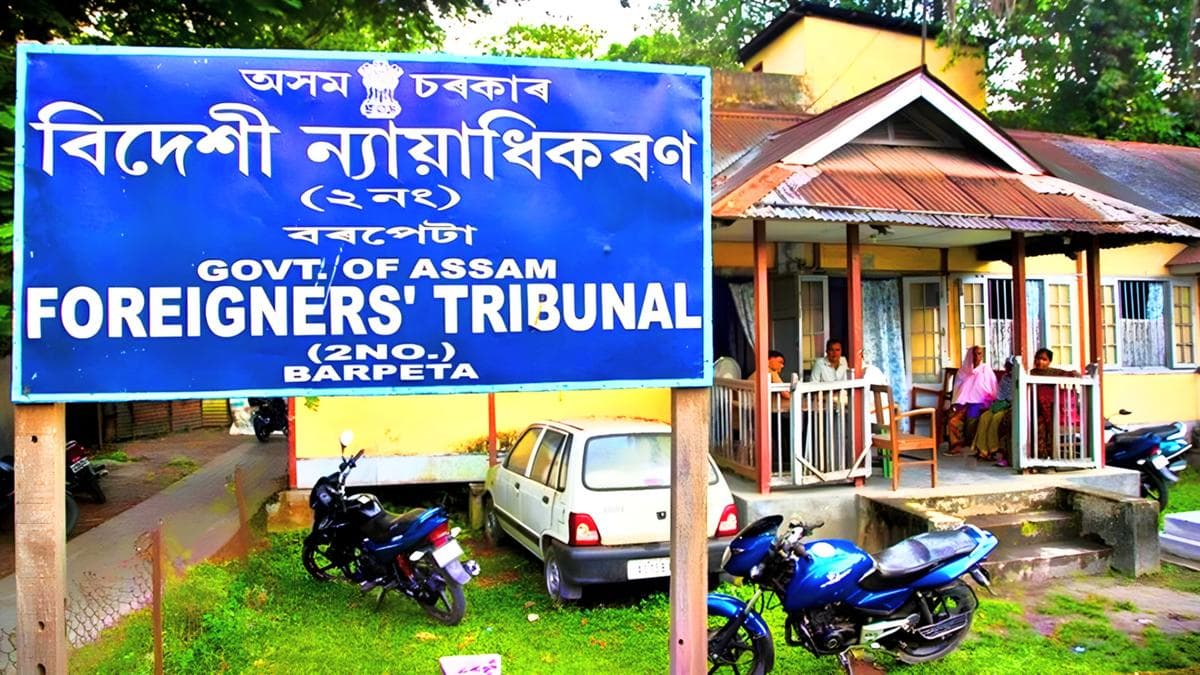
- 3The citizenship grants were processed by a member of the Foreigners' Tribunal located in Silchar, Assam.
- 4With these two new grants, the total number of individuals who have received citizenship under the CAA in Assam has increased to four.
- 5The Citizenship (Amendment) Act (CAA) was enacted in 2019, providing a path to Indian citizenship for persecuted minorities from Pakistan, Bangladesh, and Afghanistan.
In-Depth Analysis
The recent granting of Indian citizenship to two individuals, including a woman, under the Citizenship (Amendment) Act (CAA) in Assam marks a significant step in the implementation of this contentious law. This event, processed by a member of the Foreigners' Tribunal in Silchar, brings the total number of CAA beneficiaries in Assam to four and highlights the ongoing efforts to operationalize the Act across India. Understanding this development requires delving into the historical context, legal framework, and socio-political implications.
**Background Context: A Legacy of Migration and Identity**
Assam and the broader Northeastern region have a complex history intertwined with migration, primarily from erstwhile East Pakistan (now Bangladesh). The Partition of India in 1947 led to a significant influx of refugees, both Hindu and Muslim, into the region. This migration intensified during and after the 1971 Bangladesh Liberation War. The continuous demographic shifts fueled anxieties among indigenous communities about their cultural identity, land rights, and political representation, leading to the powerful Assam Movement (1979-1985). This movement culminated in the signing of the Assam Accord in 1985, which set March 25, 1971, as the cut-off date for detecting and deporting illegal immigrants, irrespective of religion. The Accord also mandated safeguards for the Assamese people. Against this backdrop, the demand for a National Register of Citizens (NRC) emerged, aiming to identify genuine Indian citizens and detect illegal immigrants.
The Citizenship (Amendment) Act, 2019 (CAA), was enacted by the Parliament to amend the Citizenship Act, 1955. It provides a path to Indian citizenship for Hindu, Sikh, Buddhist, Jain, Parsi, and Christian religious minorities who have fled persecution from Pakistan, Bangladesh, and Afghanistan and entered India on or before December 31, 2014. The Act excludes Muslims from its ambit, a provision that has been the primary source of controversy and legal challenges.
**What Happened: The First Grants in Assam**
The news reports indicate that two individuals, including a woman, have been granted Indian citizenship under the CAA in Assam. This is particularly noteworthy as it is the first time a woman has received citizenship under the Act in any northeastern state. The grants were facilitated by a Foreigners' Tribunal in Silchar, a quasi-judicial body responsible for determining the citizenship status of individuals suspected of being illegal immigrants. While the total number of beneficiaries under CAA remains small, these initial grants signal the operational commencement of the Act, which was notified on March 11, 2024, more than four years after its parliamentary passage.
**Key Stakeholders and Their Roles**
1. **Government of India**: The primary proponent and implementer of the CAA, viewing it as a humanitarian measure to protect persecuted minorities. The Ministry of Home Affairs is responsible for framing rules and overseeing implementation.
2. **Assam State Government**: Plays a crucial role in ground-level implementation, navigating the unique challenges posed by Assam's demographic history and the sensitivities surrounding the Assam Accord.
3. **Beneficiaries**: The persecuted religious minorities (Hindus, Sikhs, Buddhists, Jains, Parsis, Christians) from Pakistan, Bangladesh, and Afghanistan who seek Indian citizenship under the Act.
4. **Foreigners' Tribunals**: Quasi-judicial bodies that play a critical role in verifying claims and determining eligibility for citizenship or identifying illegal immigrants.
5. **Opponents of CAA**: Various civil society organizations, student bodies (like AASU), indigenous groups in the Northeast, opposition political parties, and legal experts. Their concerns range from the Act's alleged violation of secular principles (Article 14), its potential to undermine the Assam Accord (by regularizing non-Muslim immigrants who entered after 1971), and fears of demographic change.
6. **Supreme Court of India**: Currently seized with numerous petitions challenging the constitutional validity of the CAA. Its eventual verdict will be pivotal.
**Significance for India: A Multifaceted Impact**
This development holds immense significance for India. Politically, it marks the execution of a key electoral promise of the ruling dispensation. Socially, it attempts to provide succor to individuals who have faced religious persecution, aligning with India's long-standing tradition of offering refuge. However, it also deepens social divisions and anxieties, particularly in Assam, where the fear of dilution of indigenous identity is paramount. The exclusion of Muslims from the Act's ambit has raised concerns about India's secular fabric, as enshrined in the Preamble and Article 14 of the Constitution. Economically, integrating new citizens, while a humanitarian step, will require resources for their rehabilitation and assimilation into the workforce and social welfare systems. The legal challenges against CAA, centered on Article 14 (Right to Equality) and Article 21 (Right to Life and Personal Liberty), underscore the importance of constitutional principles in governance.
**Historical Context and Constitutional Provisions**
The Citizenship Act, 1955, is the foundational law for citizenship in India. Part II of the Indian Constitution, specifically Articles 5 to 11, deals with citizenship. Article 11 empowers Parliament to make any law relating to citizenship. The CAA, 2019, amended the 1955 Act, introducing a new basis for citizenship based on religious identity for specific communities from specific countries. This deviates from previous citizenship laws which were primarily based on birth, descent, registration, naturalization, or incorporation of territory, generally without religious criteria. The Assam Accord of 1985, a crucial historical document, established a uniform cut-off date of March 25, 1971, for all immigrants in Assam, regardless of religion. The CAA's December 31, 2014, cut-off date and religious classification are seen by critics as a direct contradiction to the spirit and letter of the Assam Accord.
**Future Implications: A Path Forward**
The implementation of the CAA is likely to continue, with more grants expected across the country. However, the fate of the Act ultimately rests with the Supreme Court, whose judgment on the constitutional challenges will have far-reaching implications for India's secular character, citizenship laws, and federal structure. In the Northeast, particularly Assam, the integration of new citizens will be a delicate process, requiring careful management to address the concerns of indigenous communities. The debate surrounding CAA also impacts India's international image, as it faces scrutiny from human rights organizations and other nations regarding its treatment of minorities and its adherence to international norms on refugees. The government's challenge will be to balance humanitarian concerns with constitutional principles and regional sensitivities, ensuring social harmony and upholding the rule of law. The implementation might also reignite protests and social unrest, especially if the concerns of the local populace in the Northeast are not adequately addressed through dialogue and policy safeguards.
Exam Tips
This topic falls under 'Indian Polity & Governance' and 'Current Affairs' sections for UPSC CSE (Prelims & Mains GS-II), SSC, State PSCs, and other competitive exams. Focus on the constitutional provisions related to citizenship (Articles 5-11), the Citizenship Act, 1955, and the specific amendments introduced by CAA, 2019.
Study the legal challenges to CAA, particularly arguments based on Article 14 (Right to Equality) and the concept of secularism. Understand the difference between refugee and illegal immigrant status and how CAA attempts to differentiate them based on religion.
For Assam-specific exams, pay close attention to the historical context of migration, the Assam Accord (1985), the NRC process, and the unique concerns of indigenous communities in the Northeast regarding demographic changes. Questions can involve comparing the cut-off dates of the Assam Accord and CAA.
Common question patterns include direct questions on CAA provisions (who are the beneficiaries, from which countries, cut-off date), the constitutional articles it amends or relates to, the arguments for and against its validity, and its impact on federalism and fundamental rights. Be prepared for analytical questions on its socio-political implications.
Related Topics to Study
Full Article
“For the first time, a woman was granted citizenship under the Act in the northeastern State,” says a member of Foreigners' Tribunal in Silchar