



Relevant for Exams
Union Minister Gadkari approves ₹1.50 lakh crore road projects for Maharashtra.
Summary
Union Minister Nitin Gadkari announced the approval of road projects worth ₹1.50 lakh crore for Maharashtra. This substantial investment is aimed at significantly enhancing the state's infrastructure and connectivity, which is vital for economic development and improving logistics. For competitive exams, this highlights major government policy on infrastructure and regional development initiatives.
Key Points
- 1Union Minister Nitin Gadkari announced the approval of road projects.
- 2The total value of the approved road projects is ₹1.50 lakh crore.
- 3These infrastructure projects are specifically approved for the state of Maharashtra.
- 4The projects are focused on the development and improvement of road infrastructure.
- 5Nitin Gadkari is a prominent leader of the BJP (Bharatiya Janata Party).
In-Depth Analysis
The announcement by Union Minister Nitin Gadkari regarding the approval of road projects worth ₹1.50 lakh crore for Maharashtra signifies a major push in India's infrastructure development agenda. This substantial investment is not merely about building roads; it represents a strategic move to bolster economic growth, improve connectivity, and integrate various regions of the state and the country more effectively.
**Background Context:** India, a rapidly developing economy, has long recognized the critical role of robust infrastructure in achieving its growth aspirations. Efficient transportation networks, particularly roads, are the lifelines of commerce, facilitating the movement of goods, services, and people. Despite significant progress, many regions still suffer from inadequate connectivity, leading to higher logistics costs, reduced market access for farmers and small businesses, and slower overall development. Maharashtra, being one of India's most industrialized states with major ports, economic hubs like Mumbai and Pune, and vast agricultural areas, requires a sophisticated road network to sustain its economic momentum and connect its diverse regions. The government, under programs like Bharatmala Pariyojana and PM Gati Shakti, has prioritized infrastructure development to reduce logistics costs to global benchmarks and enhance India's competitiveness.
**What Happened:** Union Minister Nitin Gadkari, a prominent figure in the BJP and known for his focus on infrastructure, announced a massive infusion of ₹1.50 lakh crore for road projects specifically for Maharashtra. This allocation is part of the broader national strategy to upgrade and expand the country's road network. While specific projects within this allocation were not detailed in the summary, such large-scale investments typically encompass the construction of new national highways, upgrading existing state highways, building expressways, bypasses, ring roads, and improving connectivity to industrial corridors, ports, and tourist destinations. The emphasis is on enhancing efficiency, reducing travel time, and ensuring all-weather connectivity across the state.
**Key Stakeholders Involved:** Several entities are crucial to the successful execution of these projects. The **Union Ministry of Road Transport and Highways (MoRTH)**, headed by Minister Gadkari, is the primary policymaker and approving authority. The **National Highways Authority of India (NHAI)** is the main implementing agency responsible for the development, maintenance, and management of National Highways. The **Government of Maharashtra**, through its Public Works Department and other agencies, plays a vital role in land acquisition, coordinating with local bodies, and ensuring smooth execution. **Local communities and citizens** are direct beneficiaries, but also stakeholders impacted by land acquisition and construction activities. Finally, **construction companies, contractors, and the workforce** involved in building these roads are critical economic actors whose efficiency and quality of work directly influence the project outcomes.
**Significance for India:** This investment holds immense significance for India. Firstly, it will significantly boost **economic growth** by creating direct and indirect employment opportunities during construction and operation. Better roads will reduce travel time and fuel consumption, leading to lower **logistics costs**, which is crucial for manufacturing, agriculture, and trade. Improved connectivity will enhance market access for agricultural produce, supporting farmers, and attract further industrial investments, particularly in less developed regions of Maharashtra. Socially, it will improve access to essential services like healthcare and education for remote populations and boost **tourism** by making destinations more accessible. Strategically, an efficient road network is vital for national security and disaster management.
**Historical Context:** India's road development journey has seen various phases. Post-independence, the focus was on connecting major cities. The National Highways Act, 1956, provided the legal framework for national highway development. Landmark projects like the Golden Quadrilateral and the North-South and East-West Corridors, initiated in the late 1990s and early 2000s, revolutionized inter-city connectivity. The current government's initiatives like Bharatmala Pariyojana, launched in 2017, aim for a holistic approach to road development, including economic corridors, inter-corridor and feeder routes, national corridors efficiency improvements, coastal and port connectivity roads, and greenfield expressways. This ₹1.50 lakh crore allocation for Maharashtra aligns perfectly with this long-term vision.
**Constitutional Articles, Acts, and Policies:** The development of National Highways falls squarely under the purview of the Union Government, as stipulated in the **Seventh Schedule of the Indian Constitution**, specifically **Entry 23 of the Union List**, which covers 'National highways declared by or under law made by Parliament to be national highways'. The **National Highways Act, 1956**, provides the legislative framework for the declaration, construction, and maintenance of National Highways. Furthermore, the **Bharatmala Pariyojana** is the overarching policy framework guiding such large-scale road infrastructure projects. More recently, the **PM Gati Shakti National Master Plan**, launched in 2021, aims to bring synergy in infrastructure planning and execution across 16 ministries, including MoRTH, to ensure multi-modal connectivity and integrated project implementation, reducing inefficiencies and delays.
**Future Implications:** The successful completion of these projects will transform Maharashtra's logistical landscape, making it a more attractive destination for investment. It will facilitate faster movement of goods to and from major ports like Mumbai and JNPT, strengthening India's position in global trade. The development could lead to the emergence of new growth centers along the improved corridors, fostering balanced regional development. However, future challenges include efficient land acquisition, ensuring environmental sustainability through 'green highways' initiatives, securing continuous funding, maintaining high construction quality, and implementing smart infrastructure technologies for traffic management and safety. The long-term impact hinges on effective project management and sustained policy focus on infrastructure.
Exam Tips
This topic falls under General Studies Paper-III (Indian Economy - Infrastructure, Planning, Government Budgeting) and General Studies Paper-II (Governance - Government Policies & Interventions, Federalism).
Study related topics like the Bharatmala Pariyojana, PM Gati Shakti National Master Plan, National Infrastructure Pipeline, and the role of Public-Private Partnerships (PPPs) in infrastructure development. Understand the difference between National Highways, State Highways, and other district roads.
Common question patterns include direct questions on government schemes (e.g., 'What is Bharatmala Pariyojana?'), analytical questions on the economic impact of infrastructure development, federal aspects of infrastructure funding and implementation, and challenges associated with large-scale projects (e.g., land acquisition, environmental clearances).
Related Topics to Study
Full Article
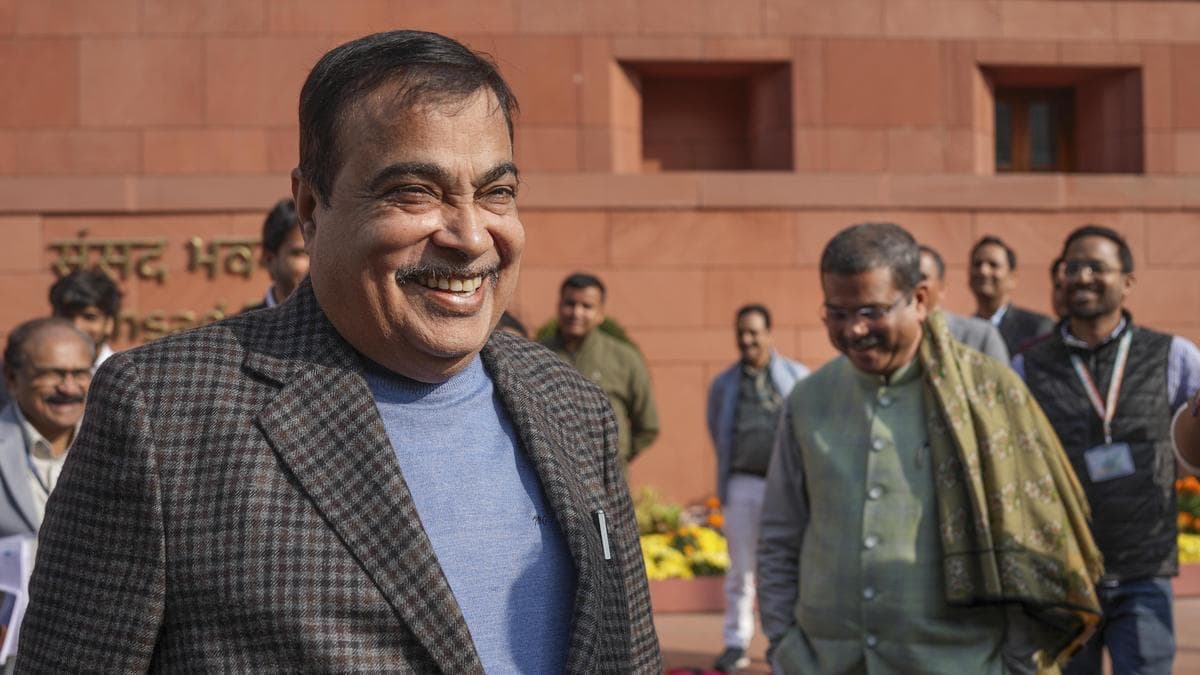
BJP leader Mr. Gadkari in detail briefed the media about the projects approved for Maharashtra