



Relevant for Exams
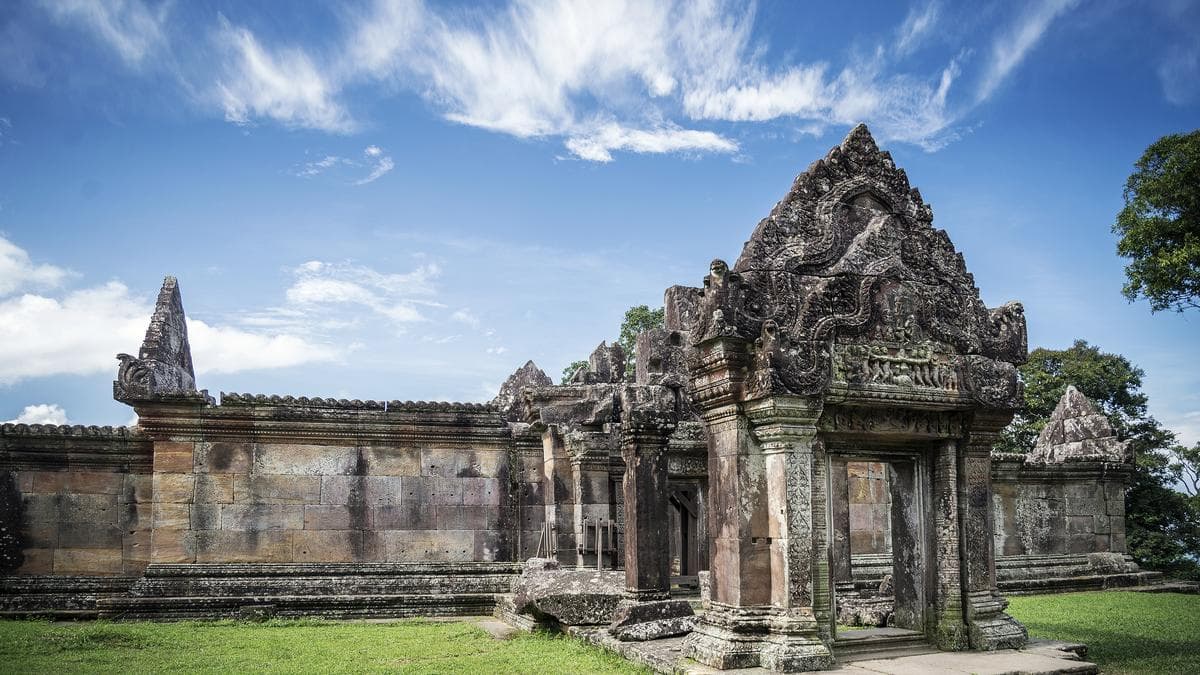
Ancient Hindu temple built by Khmer kings fuels border tensions between Thailand and Cambodia.
Summary
Ongoing border tensions between Thailand and Cambodia revolve around an ancient Hindu temple built by Khmer kings. This dispute highlights the complex interplay of historical heritage, national sovereignty, and international relations. For competitive exams, understanding such geopolitical flashpoints and their historical roots is crucial for questions on international affairs, geography, and cultural heritage.
Key Points
- 1The core of the ongoing border tensions is an ancient Hindu temple.
- 2The temple in dispute was constructed by Khmer kings.
- 3The border tensions are specifically between the nations of Thailand and Cambodia.
- 4The ancient Hindu temple is located at the heart of the border dispute.
- 5The conflict exemplifies how historical sites can become central to international geopolitical issues.
In-Depth Analysis
The dispute over the ancient Hindu temple of Preah Vihear, situated on the border between Thailand and Cambodia, is a fascinating and often volatile case study in how historical heritage can become a flashpoint for modern geopolitical tensions. Built by Khmer kings between the 9th and 12th centuries, primarily under Suryavarman I and Suryavarman II, this magnificent temple complex is dedicated to Shiva and is renowned for its intricate carvings and unique architectural style, perched atop a 525-meter cliff in the Dângrêk Mountains. Its strategic location and cultural significance have made it a focal point of national pride for both nations.
Historically, the region was part of the powerful Khmer Empire, which encompassed vast swathes of mainland Southeast Asia. The modern border issues began with the collapse of colonial rule. During the late 19th and early 20th centuries, French colonial authorities drew maps that placed Preah Vihear within Cambodia (then a French protectorate). However, Thailand (then Siam) had also asserted historical claims. After Cambodia gained independence in 1953, Thailand occupied the temple, leading to a protracted diplomatic and legal battle. The crux of the dispute lies in differing interpretations of maps and historical sovereignty. While the temple's architecture is undeniably Khmer, its geographical location on a disputed border has fueled nationalist sentiments on both sides.
In 1962, the International Court of Justice (ICJ) delivered a landmark ruling, awarding sovereignty over the temple to Cambodia. The court based its decision largely on the maps drawn by the French in 1907, which were accepted by Siam at the time. Despite this ruling, the exact demarcation of the surrounding 4.6 square kilometer area remained contentious, leading to recurring skirmishes. Tensions escalated significantly in 2008 when UNESCO inscribed Preah Vihear as a World Heritage Site, leading to renewed military clashes in 2008 and 2011, resulting in casualties and displacement. Both sides deployed troops, exchanging artillery fire and highlighting the fragility of peace despite international rulings.
Key stakeholders in this dispute include, primarily, **Thailand** and **Cambodia**, each asserting national sovereignty and historical claims over the temple. Thailand often emphasizes the temple's physical proximity to its territory and historical presence, while Cambodia relies on the 1962 ICJ ruling and the temple's undeniable Khmer origins. **UNESCO** is another crucial stakeholder, tasked with preserving global cultural heritage, but finding itself caught between national claims and international law. The **International Court of Justice (ICJ)** has played a judicial role, but its rulings require political will for full implementation. Regional organizations like **ASEAN** (Association of Southeast Asian Nations) have also attempted to mediate, recognizing that instability between member states impacts regional cohesion and security.
This dispute holds significant lessons and relevance for India. Firstly, it underscores the importance of **cultural heritage** in national identity and international relations. India, with its own rich tapestry of ancient monuments and UNESCO World Heritage Sites (e.g., Ajanta Caves, Hampi), understands the profound emotional and cultural value attached to such sites. The protection and preservation of heritage, both domestically (under the Ancient Monuments and Archaeological Sites and Remains Act, 1958) and globally (as a signatory to the UNESCO Convention concerning the Protection of the World Cultural and Natural Heritage, 1972), is a key aspect of India's foreign policy and cultural diplomacy. India has itself engaged in restoration projects in Southeast Asia, such as the Angkor Wat temple complex, demonstrating its commitment to shared heritage.
Secondly, the Preah Vihear case highlights the complexities of **border disputes** and the enforcement of **international law**. India has its own unresolved border issues, particularly with China and Pakistan. Understanding how the ICJ operates, the challenges in implementing its rulings, and the role of historical maps and colonial legacies is crucial. India's adherence to international law and peaceful resolution of disputes is enshrined in its Directive Principles of State Policy, specifically **Article 51** of the Constitution, which mandates the promotion of international peace and security, maintenance of just and honorable relations between nations, and respect for international law and treaty obligations. The dispute also impacts India's **'Act East' policy**, which aims to strengthen economic and strategic ties with Southeast Asian nations. Instability in the region can disrupt trade routes, investment flows, and broader strategic cooperation, affecting India's regional influence and economic interests.
Looking ahead, the future implications suggest that while direct military conflict may have subsided, the underlying territorial claims remain. The dispute serves as a constant reminder of the delicate balance between national sovereignty, shared cultural heritage, and international legal frameworks. ASEAN's role in fostering dialogue and preventing escalation will be critical. For India, the Preah Vihear case reinforces the need for robust diplomatic engagement in Southeast Asia, continued emphasis on multilateralism, and a principled stance on respecting international law to ensure regional stability, which is vital for its own strategic and economic growth.
Exam Tips
This topic falls under GS Paper 2 (International Relations, India's Foreign Policy) and GS Paper 1 (Art & Culture, Geography). Students should focus on the historical context of the Khmer Empire, the role of colonial legacies in border demarcation, and the functions of international bodies like ICJ and UNESCO.
When studying, relate this to India's 'Act East' policy and its strategic interests in Southeast Asia. Understand how such regional disputes can impact India's economic and security concerns. Also, connect it to India's own border disputes and its adherence to international law (e.g., Article 51 DPSP).
Common question patterns include direct questions on the Preah Vihear dispute (e.g., 'Discuss the historical and geopolitical significance of the Preah Vihear temple dispute'), analytical questions on the role of cultural heritage in international conflicts, or comparative questions linking this dispute to other border conflicts or the effectiveness of international judicial bodies.
Related Topics to Study
Full Article
The ancient Hindu temple built by Khmer kings sits at the heart of the ongoing border tensions between Thailand and Cambodia