



Relevant for Exams
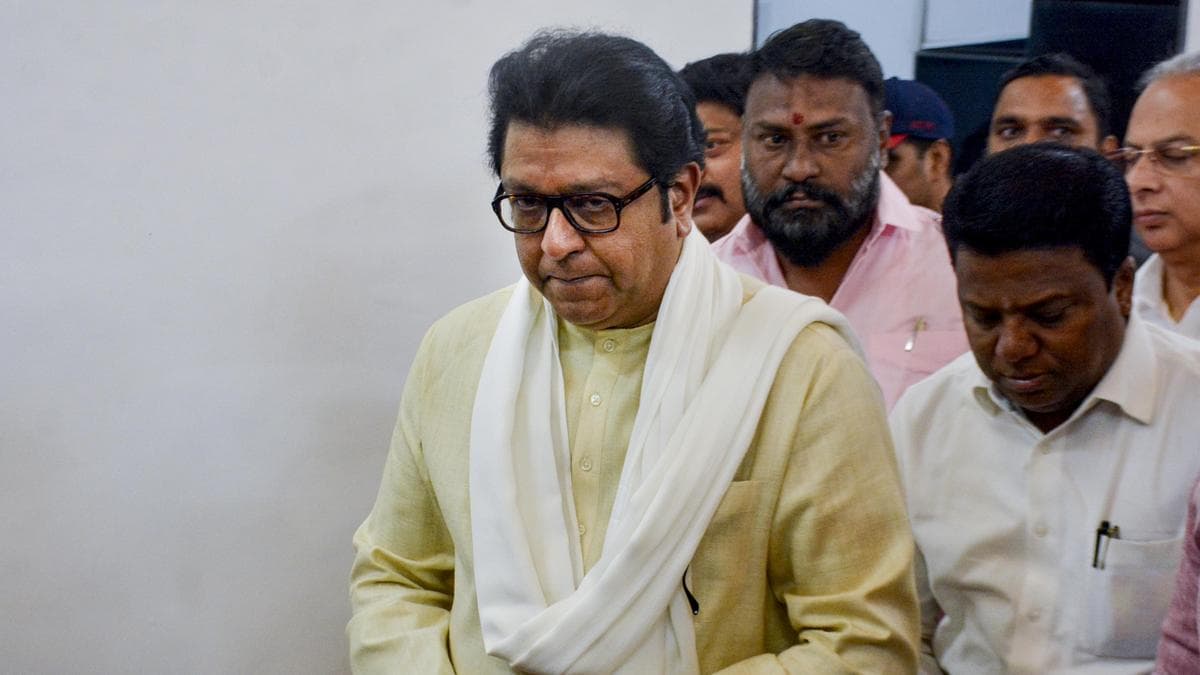
Raj Thackeray criticizes Maharashtra CM Fadnavis over rise in child abduction cases.
Summary
Maharashtra Navnirman Sena (MNS) chief Raj Thackeray criticized Chief Minister Devendra Fadnavis and the Mahayuti-led government for a reported rise in child abduction cases in Maharashtra. Thackeray conveyed his concerns via a letter, highlighting the government's perceived neglect of public safety issues. This event underscores political accountability regarding law and order, which is relevant for understanding state governance and public administration for competitive exams.
Key Points
- 1Maharashtra Navnirman Sena (MNS) chief Raj Thackeray issued criticism.
- 2The criticism was directed at Maharashtra Chief Minister Devendra Fadnavis.
- 3The core issue raised was the reported rise in child abduction cases in Maharashtra.
- 4Raj Thackeray conveyed his concerns through a formal letter addressed to the Chief Minister.
- 5The 'Mahayuti-led government' was specifically blamed for neglecting public safety.
In-Depth Analysis
The criticism leveled by Maharashtra Navnirman Sena (MNS) chief Raj Thackeray against Chief Minister Devendra Fadnavis concerning a reported surge in child abduction cases in Maharashtra brings into sharp focus critical aspects of state governance, public safety, and political accountability in India. This incident, while seemingly a regional political spat, resonates with broader themes vital for understanding the functioning of India's federal structure and the responsibilities of elected governments.
To understand the gravity of Thackeray's criticism, one must first grasp the political landscape of Maharashtra. The 'Mahayuti' refers to the ruling coalition, primarily comprising the Bharatiya Janata Party (BJP) and factions of Shiv Sena and Nationalist Congress Party (NCP). Devendra Fadnavis, a prominent BJP leader, holds significant sway within this alliance and has previously served as Chief Minister. Raj Thackeray, on the other hand, leads the MNS, a regional party often positioned as a vocal opposition, particularly on issues concerning Marathi identity and local governance. His criticism, conveyed through a formal letter, is a classic tactic used by opposition leaders to draw public and media attention to perceived governmental shortcomings, thereby pressuring the administration to act.
The core issue – a reported rise in child abduction cases – is profoundly alarming. Children are among the most vulnerable sections of society, and their safety is a paramount concern for any government. Abduction cases can have devastating long-term impacts on victims and their families, leading to trauma, exploitation, and even human trafficking. When an opposition leader highlights such an issue, it implies a perception of a breakdown in law and order, directly questioning the efficacy of the state's police force and the government's commitment to public safety.
Key stakeholders in this scenario include Raj Thackeray and the MNS, acting as the voice of opposition and public concern; Chief Minister Devendra Fadnavis and the Mahayuti government, who bear the ultimate responsibility for maintaining law and order and ensuring citizen safety; the Maharashtra Police, the executive arm tasked with crime prevention, investigation, and maintaining public order; and most importantly, the citizens of Maharashtra, especially parents and children, whose safety and well-being are at stake. The media also plays a crucial role in amplifying such criticisms and facilitating public discourse.
This incident holds significant implications for India. Firstly, it underscores the importance of **political accountability** in a democratic setup. Opposition parties, by raising such concerns, ensure that the ruling dispensation remains answerable to the electorate. Secondly, it highlights the challenges in **state governance**, particularly regarding law and order, which is a State Subject as per Entry 1 (Public Order) and Entry 2 (Police) of the State List in the Seventh Schedule of the Indian Constitution. This means state governments have primary responsibility for policing and public safety. A perceived failure in this domain can erode public trust and have political repercussions.
Historically, law and order has always been a sensitive issue in Indian politics, often becoming a major talking point during state assembly elections. Governments are frequently judged on their ability to maintain peace and ensure the safety of their citizens. The current criticism fits into this broader pattern, potentially shaping public perception ahead of future elections in Maharashtra.
Several constitutional articles and legal frameworks are relevant here. **Article 21**, guaranteeing the Right to Life and Personal Liberty, implicitly places a duty on the state to ensure a safe environment for its citizens. Furthermore, **Article 39(f)**, a Directive Principle of State Policy (DPSP), mandates that the State shall direct its policy towards securing that children are given opportunities and facilities to develop in a healthy manner and in conditions of freedom and dignity, and that childhood and youth are protected against exploitation and against moral and material abandonment. This DPSP, while not directly enforceable, guides legislative and executive action. The **Juvenile Justice (Care and Protection of Children) Act, 2015**, and the **Protection of Children from Sexual Offences (POCSO) Act, 2012**, are specific legislative measures enacted to protect children from various forms of harm, including abduction and exploitation. The Indian Penal Code (IPC) also contains specific sections dealing with kidnapping and abduction (e.g., Sections 359-374).
Looking ahead, the future implications of this criticism could be multifaceted. The Mahayuti government might respond by announcing new measures to enhance child safety, increasing police patrols, or initiating special drives against abductors. Failure to address the concerns effectively could lead to a decline in public confidence and provide further ammunition to the opposition. This incident could also spark a broader public discourse on child safety mechanisms, the effectiveness of law enforcement, and the need for greater community participation in child protection efforts. Ultimately, such political interventions, when focused on genuine public concerns, serve to strengthen democratic processes by holding power accountable and prompting necessary governmental action for the welfare of its citizens.
Exam Tips
This topic falls under 'Indian Polity & Governance' and 'Social Justice' sections of the UPSC Civil Services Exam (Prelims & Mains GS-II) and State PSC exams. Focus on the constitutional provisions related to law and order (Seventh Schedule, Article 21, DPSPs like Article 39(f)) and child protection laws (JJ Act, POCSO Act).
Study the roles and responsibilities of the Chief Minister and the State Council of Ministers, the functioning of state police, and the significance of opposition parties in a democracy. Understand the concept of federalism and how law and order being a state subject impacts governance.
Common question patterns include: direct questions on constitutional articles related to state powers; analytical questions on the role of opposition in ensuring accountability; case studies on law and order situations and government response; and questions on the legislative framework for child protection in India.
Related Topics to Study
Full Article
Mr. Thackeray has written a letter addressed to Chief Minister Devendra Fadnavis, where he criticised the Mahayuti-led government for neglecting critical issues of public safety