



Relevant for Exams
Bengaluru metro parking crisis worsens, affecting residential areas despite designated spaces.
Summary
Parking chaos has intensified around Bengaluru metro stations, spilling into residential areas, despite the Bengaluru Metro Rail Corporation Limited (BMRCL) providing designated parking at 66 out of 83 stations. This issue highlights the challenges of urban infrastructure and last-mile connectivity in rapidly growing cities, a crucial topic for competitive exams focusing on urban planning, public policy, and regional development.
Key Points
- 1The Bengaluru Metro Rail Corporation Limited (BMRCL) operates a 96-km network.
- 2BMRCL has designated parking facilities at 66 of its 83 metro stations.
- 3The designated parking capacity accommodates approximately 12,000 two-wheelers.
- 4The designated parking capacity also accommodates around 2,300 cars.
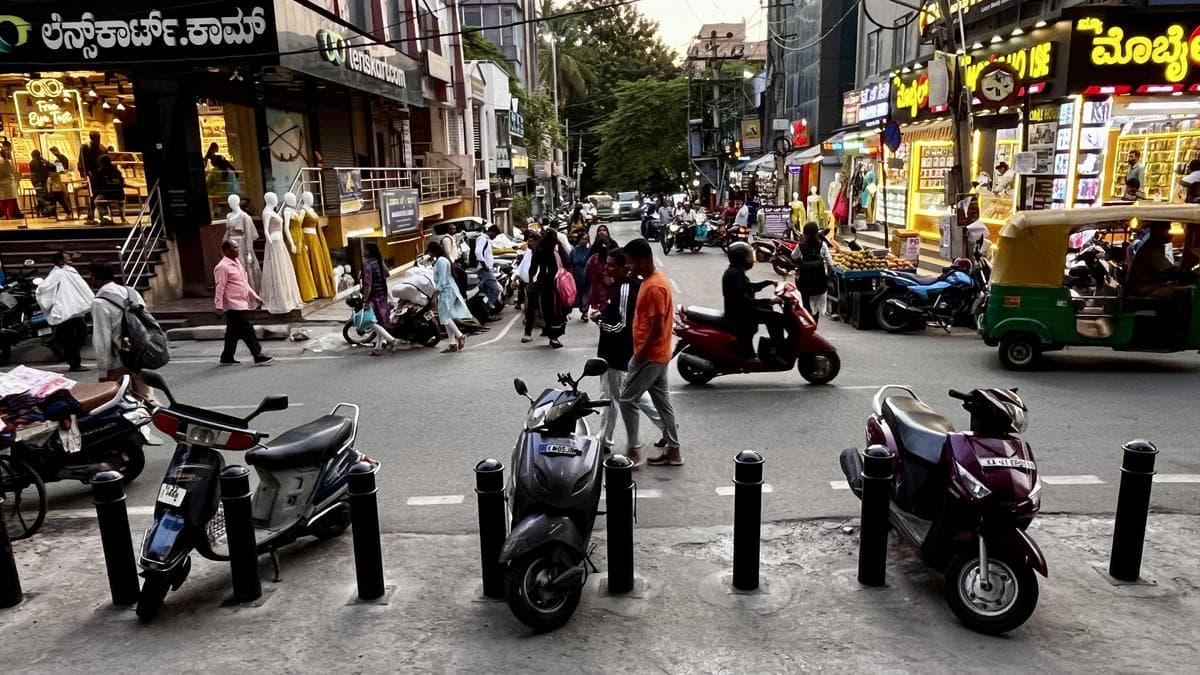
- 5The issue of parking chaos is occurring around Bengaluru metro stations and spilling into residential lanes.
In-Depth Analysis
The escalating parking chaos around Bengaluru's metro stations, spilling into residential areas, is a potent microcosm of the multifaceted challenges facing India's rapidly urbanizing cities. While the Bengaluru Metro Rail Corporation Limited (BMRCL) has made commendable strides in expanding its 96-km network, providing designated parking at 66 of its 83 stations for approximately 12,000 two-wheelers and 2,300 cars, this capacity clearly falls short of demand. This situation not only undermines the very purpose of public transport but also highlights critical gaps in urban planning, last-mile connectivity, and governance.
To understand this issue, we must first delve into Bengaluru's background context. Once a serene 'Garden City,' Bengaluru transformed into India's 'Silicon Valley' post-liberalization in the 1990s. This rapid economic boom led to an unprecedented influx of population, straining existing infrastructure. The city's population exploded from 5.3 million in 2001 to over 13 million today, leading to severe traffic congestion, pollution, and a dramatic increase in private vehicle ownership. The Namma Metro, initiated to alleviate these pressures, was envisioned as a sustainable solution to move people efficiently across the sprawling metropolis. However, the success of a metro system hinges not just on its primary network but also on seamless integration with other modes of transport – a concept often termed 'last-mile connectivity.'
The current parking crisis illustrates a fundamental breakdown in this integration. Commuters, often living several kilometers from a metro station, find it more convenient to drive their personal vehicles to the station rather than rely on often inadequate or unreliable feeder services (like buses, auto-rickshaws, or shared mobility options). When official parking spaces are full, or too expensive, these vehicles inevitably spill over into adjacent residential lanes, creating significant nuisance for local residents. This includes blocking driveways, reducing road space, increasing noise, and raising safety concerns, particularly for children and pedestrians.
Several key stakeholders are involved. The **BMRCL** is primarily responsible for the metro's operation and designated parking facilities. While they provide parking, the sheer scale of demand often overwhelms their capacity. **Commuters** are caught between the convenience of the metro and the necessity of personal transport for last-mile travel. **Residents** bear the direct brunt of the parking spillover, impacting their daily lives and neighborhood quality. The **Bruhat Bengaluru Mahanagara Palike (BBMP)**, as the urban local body, is responsible for overall urban planning, road infrastructure, traffic management, and enforcement of parking regulations. Its role is crucial in regulating on-street parking and developing integrated solutions. Finally, the **Karnataka State Government** plays an overarching role in policy formulation, funding, and ensuring inter-agency coordination.
This issue holds immense significance for India. It is a stark reminder of the challenges inherent in rapid urbanization and the struggle to build truly sustainable cities. The problem is not unique to Bengaluru; similar issues plague other metro cities like Delhi, Mumbai, and Hyderabad. It underscores the critical need for robust urban planning that prioritizes public transport and non-motorized transport (NMT) over private vehicles. The failure to address last-mile connectivity undermines the massive investments made in metro projects, negating their environmental and decongestion benefits. Socially, it creates friction between different groups of urban dwellers – commuters and residents – and impacts the overall quality of life.
Historically, Indian urban planning has often been reactive rather than proactive. Post-independence, the focus was on industrialization, with urban growth often an unplanned consequence. While policies like the **National Urban Transport Policy (NUTP) 2006** aimed to shift focus from 'moving vehicles' to 'moving people,' promoting public transport, NMT, and integrated land-use planning, implementation remains a challenge. The **74th Constitutional Amendment Act, 1992**, empowered Urban Local Bodies (ULBs) like BBMP with responsibilities including urban planning, roads, and provision of urban amenities (listed in the Twelfth Schedule, Article 243W). This legal framework provides the mandate for ULBs to manage traffic and parking, but often they lack the financial resources, technical expertise, or coordinated authority to do so effectively.
The future implications are clear: without a comprehensive, multi-modal transport strategy, the parking chaos will only worsen as metro networks expand. Solutions must involve: enhancing feeder bus services, promoting shared mobility options (e-rickshaws, bike-sharing), developing dedicated NMT infrastructure (footpaths, cycle tracks), implementing smart parking solutions (real-time availability, dynamic pricing), and, crucially, fostering better coordination between BMRCL, BBMP, and traffic police. The success of initiatives like the Smart Cities Mission also hinges on addressing such fundamental urban mobility challenges. Ultimately, the Bengaluru parking crisis serves as a vital lesson for India's urban future – that true urban development requires integrated planning, strong governance, and a citizen-centric approach to mobility.
Exam Tips
This topic falls under UPSC GS Paper I (Urbanization, Indian Society), GS Paper II (Governance, Policies, 74th Constitutional Amendment), and GS Paper III (Infrastructure, Sustainable Development, Environmental Impact). For State PSCs, it will be relevant under similar categories like Urban Development, Public Administration, and State Infrastructure.
When preparing, focus on understanding the concept of 'last-mile connectivity' and its importance for public transport systems. Relate it to broader themes like sustainable urban development, challenges of rapid urbanization, and the role of different government agencies.
Expect questions in the form of case studies on urban challenges, policy analysis (e.g., critique of National Urban Transport Policy implementation), or direct questions on the functions and challenges of Urban Local Bodies (ULBs) in managing urban infrastructure. Be prepared to suggest policy solutions and their implications.
Related Topics to Study
Full Article
Across the 96-km network, BMRCL has designated parking at 66 of the 83 stations, accommodating about 12,000 two-wheelers and 2,300 cars