



Relevant for Exams
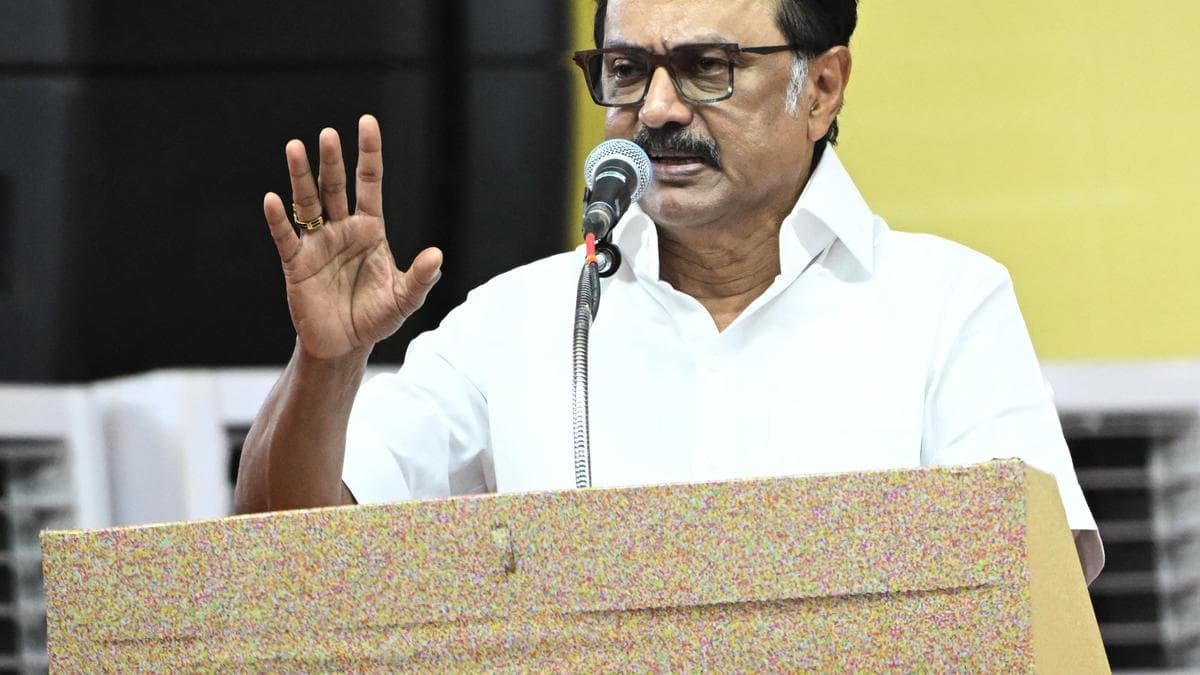
Tamil Nadu's DMK and AIADMK strategize for 2026 Assembly polls; DMK targets 2.5 crore votes.
Summary
The ruling DMK, led by Chief Minister M. K. Stalin, has initiated early strategic preparations for the 2026 Tamil Nadu Assembly elections, setting an ambitious target of 2.5 crore votes. Its primary political rival, AIADMK, is also drawing up strategies, banking on its and ally BJP's performance in the recent 2024 Lok Sabha election. This development signifies the early political maneuvering in Tamil Nadu, crucial for understanding state-level political dynamics for State PSC examinations.
Key Points
- 1The 2026 Assembly election is the focus of early political strategies in Tamil Nadu.
- 2M. K. Stalin is the current Chief Minister of Tamil Nadu and president of the ruling DMK party.
- 3The DMK has set a target of 2.5 crore votes for the upcoming 2026 Assembly election.
- 4The AIADMK is the traditional political adversary of the DMK in Tamil Nadu.
- 5AIADMK and its key ally, BJP, are banking on their performance in the 2024 Lok Sabha election for their 2026 strategy.
In-Depth Analysis
The political landscape of Tamil Nadu is once again abuzz as key parties, particularly the ruling Dravida Munnetra Kazhagam (DMK) and its traditional adversary, the All India Anna Dravida Munnetra Kazhagam (AIADMK), begin strategizing for the 2026 Assembly elections. This early maneuvering underscores the high stakes involved in state politics, especially in a state known for its unique Dravidian ideological moorings and significant contribution to national discourse.
**Background Context and Historical Rivalry:**
Tamil Nadu's political history is largely defined by the Dravidian movement, which emerged in the early 20th century, advocating for social justice, anti-Brahminism, and Tamil identity. The Justice Party was a precursor, followed by the Self-Respect Movement led by Periyar E.V. Ramasamy. His protégé, C.N. Annadurai, founded the DMK in 1949, which first came to power in 1967, ushering in an era of Dravidian rule that has largely continued since. The DMK's initial focus on language rights (anti-Hindi agitation) and state autonomy resonated deeply with the populace. In 1972, M.G. Ramachandran (MGR) split from the DMK to form the AIADMK, leading to a fierce, almost unbroken, two-party rivalry that has dominated Tamil Nadu politics for over five decades. This rivalry, epitomized by the duels between M. Karunanidhi (DMK) and MGR, and later between Karunanidhi and J. Jayalalithaa (AIADMK), has shaped the state's governance, policies, and electoral cycles. Both parties have championed welfare schemes, regional identity, and social justice, often engaging in competitive populism.
**Current Developments and Strategic Preparations:**
Currently, M.K. Stalin, son of M. Karunanidhi, leads the DMK as Chief Minister, having brought the party back to power in the 2021 Assembly elections. The recent announcement of a target of 2.5 crore votes for the 2026 Assembly elections by CM Stalin is a clear signal of the DMK's ambition to secure a stronger mandate and consolidate its position. This target is not merely numerical; it reflects a strategy to mobilize grassroots support, highlight achievements in governance, and counter anti-incumbency sentiments. On the other side, the AIADMK, now led by Edappadi K. Palaniswami (EPS), is banking on its performance, and that of its key ally, the Bharatiya Janata Party (BJP), in the recent 2024 Lok Sabha elections. While the AIADMK-BJP alliance faced a significant setback in the 2024 Lok Sabha polls, failing to win any seats, the party's strategy likely involves a careful re-evaluation of its alliances and a renewed focus on state-specific issues to regain public trust. The AIADMK's internal dynamics, particularly post-Jayalalithaa, have also been a critical factor, with a leadership tussle that only recently saw EPS consolidate power.
**Key Stakeholders and Their Roles:**
1. **DMK (Dravida Munnetra Kazhagam):** As the ruling party, led by M.K. Stalin, its primary goal is to retain power. Its strategy will involve showcasing its governance record, welfare initiatives (like the 'Kalaignar Magalir Urimai Thogai' scheme), and upholding Dravidian ideological principles. The 2.5 crore vote target indicates an aggressive campaign and voter outreach plan.
2. **AIADMK (All India Anna Dravida Munnetra Kazhagam):** The main opposition, led by E.K. Palaniswami, aims to unseat the DMK. Its strategy will involve critiquing the current government's performance, highlighting its own legacy, and potentially recalibrating its alliance strategy after the 2024 Lok Sabha results. The internal cohesion of the party will be crucial.
3. **BJP (Bharatiya Janata Party):** While a national party, the BJP has struggled to make significant inroads into Tamil Nadu due to the strong regional identity politics. Its role as an ally of AIADMK (as mentioned in the article) is significant, though the future of this alliance might be subject to change. The BJP seeks to expand its footprint in southern states, and Tamil Nadu remains a challenging but important target.
4. **The Electorate of Tamil Nadu:** A highly politically aware and discerning populace, influenced by welfare schemes, language, caste dynamics, and leadership charisma. Their choices will ultimately determine the outcome.
**Significance for India and Constitutional Relevance:**
Tamil Nadu is a vital state for India, both economically and politically. It is one of the most industrialized states, contributing significantly to India's GDP, and is a hub for manufacturing, IT, and textiles. Stable governance is crucial for continued economic growth. Politically, Tamil Nadu, with its 39 Lok Sabha seats, plays a significant role in national elections and coalition politics. The state's strong regional parties often champion principles of federalism, fiscal autonomy, and states' rights, influencing national debates on centre-state relations. This aligns with **Article 246** of the Constitution, which defines the legislative powers of the Union and states, and the **Seventh Schedule**, which lists subjects under Union, State, and Concurrent Lists. State Assembly elections, conducted under the supervision of the Election Commission of India (**Article 324**), are crucial for upholding democratic principles and ensuring representative governance. The Chief Minister and Council of Ministers operate under **Articles 163 and 164**, responsible for the administration of the state.
**Future Implications:**
The early strategic moves suggest an intensified political campaign in Tamil Nadu. We can expect a heightened focus on welfare schemes, identity politics (language, social justice), and economic development promises from both major parties. The future of the AIADMK-BJP alliance will be a key factor to watch, as will the performance of smaller parties like the Naam Tamilar Katchi (NTK) and Makkal Needhi Maiam (MNM), which could act as vote-splitters. The outcome of the 2026 elections will not only determine the state's leadership but also influence the national political narrative, particularly regarding the strength of regional parties and the BJP's southern strategy. It will also set the course for Tamil Nadu's policy trajectory for the latter half of the decade, impacting its social and economic development.
Exam Tips
This topic falls under the 'Indian Polity and Governance' section of the State PSC General Studies syllabus, specifically focusing on State Legislature, State Executive, and Regional Politics. Students should also link it to 'Current Events of State, National and International Importance'.
Study the history of the Dravidian movement, the formation of DMK and AIADMK, and the key leaders of both parties (e.g., C.N. Annadurai, M. Karunanidhi, M.G. Ramachandran, J. Jayalalithaa, M.K. Stalin, E.K. Palaniswami). Understand the ideological differences and similarities.
Common question patterns include direct questions about the current Chief Minister and party presidents, the number of Assembly/Lok Sabha seats in Tamil Nadu, significant state welfare schemes, and analytical questions on the impact of regional parties on federalism or the role of caste/language in state politics.
Related Topics to Study
Full Article
Early this week, Chief Minister and the ruling DMK president, M. K. Stalin “fixed a target” of 2.5 crore votes for the formation headed by his party. The ruling party’s traditional adversary, the AIADMK, is also banking on the performance put up by it and its key ally, BJP during the 2024 Lok Sabha election