



Relevant for Exams
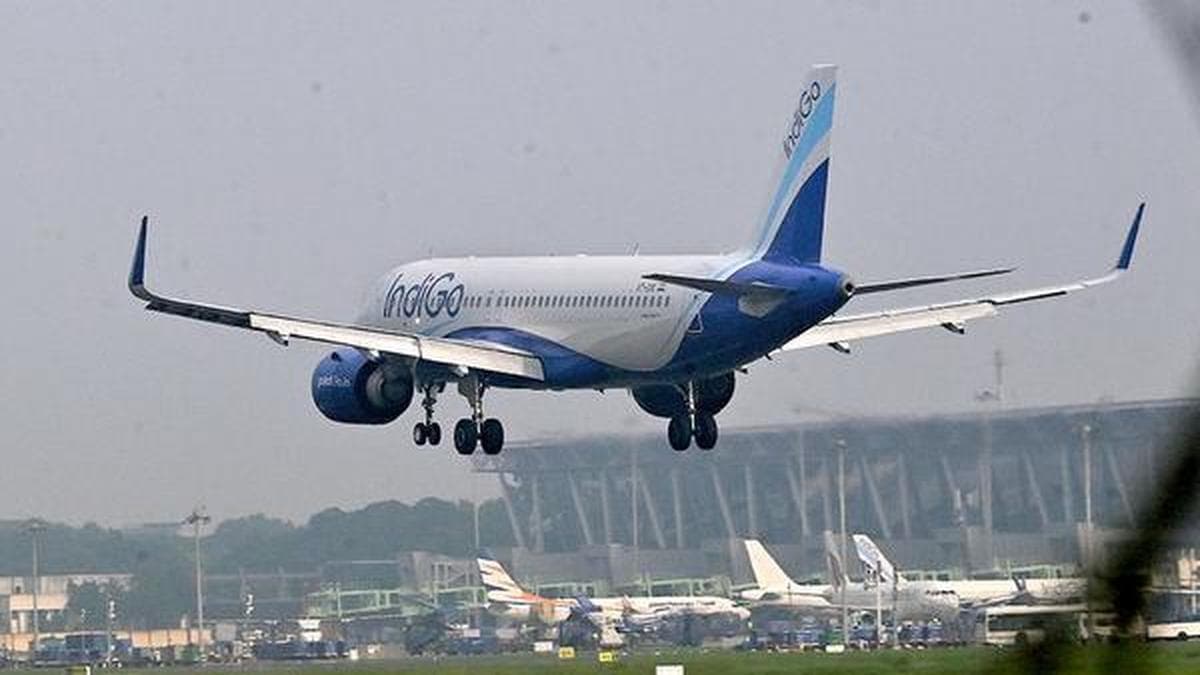
Dominant Indian airline (65% market share) reports stabilising operations after flight chaos.
Summary
An unnamed airline, which commands a significant 65% share of India's domestic aviation market, recently faced "days of chaos" and "hundreds of flight cancellations." While the airline reports operations are now stabilising, the incident highlights potential operational vulnerabilities within a dominant player in a critical sector. This market share statistic is particularly relevant for competitive exams focusing on India's economic and industrial landscape.
Key Points
- 1An unnamed airline holds a 65% share of India's domestic aviation market.
- 2The airline recently experienced "days of chaos" leading to "hundreds of flight cancellations."
- 3The operational disruptions significantly impacted services within India's domestic aviation sector.
- 4The affected airline has stated that its flight operations are now "stabilising."
- 5The incident underscores the high market concentration and potential vulnerabilities in India's domestic airline industry.
In-Depth Analysis
The recent operational turmoil experienced by an unnamed airline, which commands a staggering 65% share of India's domestic aviation market, serves as a critical case study for understanding the complexities and vulnerabilities within a vital economic sector. The 'days of chaos' and 'hundreds of flight cancellations' highlight not only the immediate inconvenience to passengers but also systemic issues that demand attention from regulators, policymakers, and industry stakeholders.
To truly grasp the significance, we must first consider the background context of Indian aviation. Post-liberalization in the early 1990s, the sector witnessed rapid growth, fueled by rising incomes, a burgeoning middle class, and the entry of private players. The early 2000s saw the rise of low-cost carriers (LCCs) like Air Deccan, SpiceJet, and IndiGo, democratizing air travel. This period, however, also saw the collapse of several airlines, including Kingfisher Airlines in 2012 due to financial mismanagement and the grounding of Jet Airways in 2019, underscoring the cut-throat competition and capital-intensive nature of the business. The current incident, while distinct, echoes these past vulnerabilities, albeit from a position of market dominance.
What happened, in essence, was a significant disruption to daily flight schedules, leading to widespread cancellations and delays. While the specific causes were not detailed in the summary, such large-scale operational meltdowns in aviation typically stem from a confluence of factors: pilot shortages (often due to aggressive expansion or attrition), unforeseen technical glitches, supply chain disruptions for spare parts, adverse weather conditions, or even internal labor disputes. For an airline with 65% market share, any hiccup is amplified across the entire network, impacting thousands of passengers daily. The airline's subsequent claim of 'stabilizing' operations indicates a reactive management of the crisis, but the underlying issues may require more profound structural changes.
Key stakeholders involved in this scenario are numerous. Firstly, the unnamed airline itself, its management, employees (pilots, cabin crew, ground staff), and shareholders bear direct responsibility and impact. Secondly, the passengers, who suffered significant inconvenience, financial losses, and disruption to their travel plans, are crucial stakeholders whose consumer rights must be protected. Thirdly, the Directorate General of Civil Aviation (DGCA), India's primary aviation safety regulator, plays a pivotal role in oversight, investigation, and ensuring compliance with safety and operational standards. The Ministry of Civil Aviation, as the policy-making body, is also involved. Furthermore, airport operators, other airlines (who might see a temporary surge in demand or face slot issues), and the broader tourism and business sectors are indirectly affected.
This incident matters profoundly for India for several reasons. Economically, a disruption by the largest player can have a ripple effect on business travel, tourism, and cargo movement, potentially impacting GDP. It raises questions about market concentration and the risks associated with a single entity holding such a dominant position. While market leadership can bring efficiencies, it also creates a single point of failure, making the entire system vulnerable. From a governance perspective, it puts the spotlight on the effectiveness of regulatory oversight by bodies like the DGCA. Are current regulations robust enough to prevent such disruptions, and are enforcement mechanisms adequate? Socially, it impacts public trust in air travel and highlights consumer protection issues. The ability of passengers to seek redressal and compensation under the Consumer Protection Act, 2019, becomes critical.
Historically, the Indian aviation sector has been characterized by cycles of boom and bust. The Air India privatization to the Tata Group in 2021 marked a significant shift, aiming for greater efficiency and competition. However, the current event shows that even with strategic changes, operational resilience remains a challenge. Relevant constitutional provisions and acts include the **Aircraft Act, 1934**, and the **Aircraft Rules, 1937**, which empower the DGCA to regulate civil aviation. The **Competition Act, 2002**, is highly pertinent, as it addresses issues of market dominance and potential abuse. While a dominant position isn't illegal, its misuse (e.g., predatory pricing, stifling competition) is. The **Consumer Protection Act, 2019**, provides a framework for consumer rights, including compensation for flight delays and cancellations. The **National Civil Aviation Policy, 2016**, aims to make air travel affordable and efficient, and such incidents test the policy's efficacy.
Looking ahead, the future implications are significant. This event could trigger a closer scrutiny by the DGCA into the operational capabilities, staffing levels, and maintenance practices of dominant airlines. It might also prompt a re-evaluation of competition policy within the sector to ensure healthy market dynamics and prevent excessive concentration. Airlines might be compelled to invest more in robust operational planning, pilot training, and maintenance infrastructure. For passengers, it underscores the importance of travel insurance and understanding their rights. Ultimately, a resilient and efficient aviation sector is crucial for India's economic growth and connectivity, making continuous regulatory vigilance and strategic planning paramount to prevent future 'turbulent skies'.
Exam Tips
This topic primarily falls under GS Paper 3 (Indian Economy) for UPSC, focusing on infrastructure, industrial policy, and regulatory bodies. For SSC/Banking/Railway exams, it's relevant for General Awareness sections on the Indian economy and current affairs.
Study related topics like the history of Indian civil aviation, the role and functions of regulatory bodies like DGCA and AAI, competition policy (Competition Act, 2002), and consumer protection laws (Consumer Protection Act, 2019). Understand the economic impact of infrastructure sectors.
Common question patterns include: 'Discuss the challenges faced by the Indian civil aviation sector,' 'Analyze the role of DGCA in ensuring aviation safety and consumer rights,' 'Examine the implications of market dominance in critical sectors like aviation,' or 'What measures can be taken to enhance operational resilience in the Indian airline industry?' Be prepared to provide both causes and solutions.
Related Topics to Study
Full Article
The airline, which commands a 65% share of India’s domestic aviation market, says operations are stabilising after days of chaos that saw hundreds of flight cancellations