



Relevant for Exams
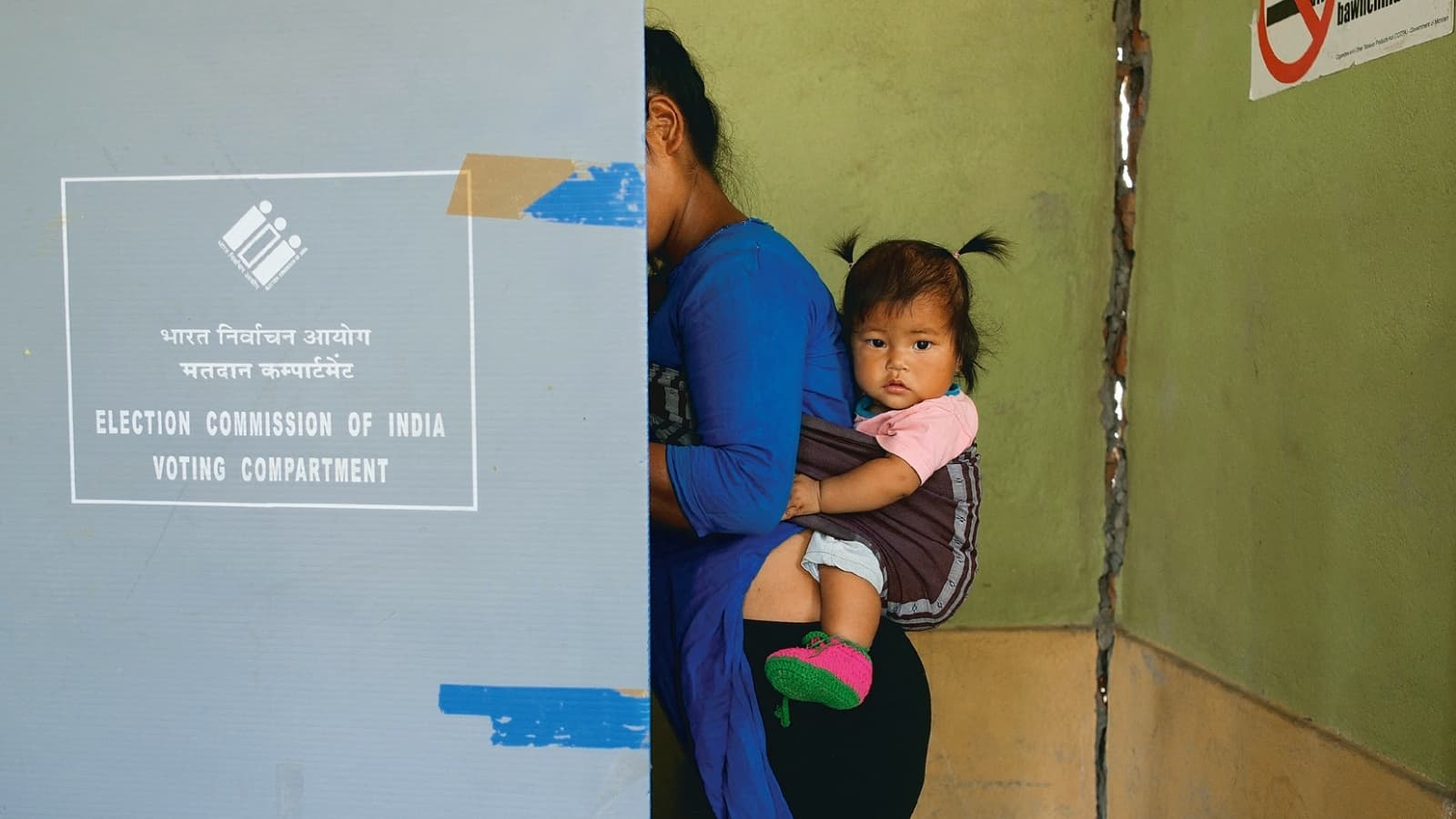
Himachal Pradesh improves voter gender ratio; 60% of new electors are women.
Summary
Himachal Pradesh has achieved an improvement in its electors' gender ratio, with a notable 60% of new voter enrollments comprising women. This development signifies increased female participation in the electoral process, which is crucial for understanding demographic shifts and electoral trends. For competitive exams, this highlights state-specific electoral data and the Election Commission's efforts.
Key Points
- 1The state of Himachal Pradesh has registered an improvement in its electors' gender ratio.
- 2A significant 60% of the new voter enrollments recorded are women.
- 3This trend indicates enhanced female participation in the electoral process within the state.
- 4The data reflects the outcome of recent electoral roll revision or enrollment drives in Himachal Pradesh.
- 5The improved gender ratio is a key demographic indicator for the state's electoral landscape.
In-Depth Analysis
Himachal Pradesh's recent achievement of improving its electors' gender ratio, with a remarkable 60% of new voter enrollments being women, signifies a crucial step towards more inclusive and representative democracy in India. This development is not merely a statistical update; it reflects deeper societal shifts and the concerted efforts of electoral bodies to ensure universal adult suffrage in its truest sense.
**Background Context: The Imperative of Inclusive Electoral Rolls**
In a democratic framework, the electoral roll forms the bedrock of political participation. An accurate and inclusive electoral roll is vital for free and fair elections, reflecting the true demographic composition of the electorate. Historically, India, like many other nations, has grappled with disparities in voter registration, often seeing lower enrollment rates among women, marginalized communities, and migrant populations. This 'missing voters' phenomenon has been a persistent concern for the Election Commission of India (ECI), as it directly impacts the legitimacy and representativeness of elected bodies. Efforts to bridge this gap, particularly for women, stem from the understanding that their political participation is fundamental to gender equality and the development of policies that address their specific needs and concerns. Various campaigns, awareness drives, and simplified registration processes have been initiated over the years to encourage greater female enrollment.
**What Happened: Himachal Pradesh's Notable Achievement**
Himachal Pradesh has successfully demonstrated a significant improvement in its electors' gender ratio. The most striking aspect is that 60% of the newly enrolled voters are women. This indicates that the state has not only increased its overall voter base but has done so by actively bringing more women into the electoral fold. Such a trend typically results from dedicated electoral roll revision exercises, special enrollment drives, and extensive awareness campaigns, often under the ECI's flagship Systematic Voters' Education and Electoral Participation (SVEEP) program. These efforts focus on reaching out to eligible citizens, especially those who might have been excluded due to various socio-economic or logistical barriers, and educating them about their right to vote and the process of registration. The improvement in gender ratio implies a move towards a more balanced representation of men and women on the electoral rolls, which is a key indicator of democratic health.
**Key Stakeholders Involved**
Several entities play crucial roles in this outcome. The **Election Commission of India (ECI)**, an autonomous constitutional body established under Article 324, is the primary authority responsible for supervising, directing, and controlling the preparation of electoral rolls and the conduct of elections. Its state-level counterparts, the **Chief Electoral Officers (CEOs)** and District Election Officers (DEOs) in Himachal Pradesh, are directly responsible for implementing enrollment drives and ensuring the accuracy of electoral rolls. **State governments** provide the administrative machinery and support for ECI initiatives. **Political parties** also have a vested interest in maximizing voter registration, as a larger, more representative electorate can reshape electoral outcomes. Finally, **civil society organizations, NGOs, and local community leaders** often play a vital role in grassroots mobilization, awareness campaigns, and assisting eligible citizens, especially women, in the registration process.
**Why This Matters for India**
This development in Himachal Pradesh holds profound significance for India. Firstly, it strengthens the democratic fabric by ensuring greater inclusivity. When more women are registered and participate, it enhances the legitimacy and representativeness of the electoral process. Secondly, it is a significant step towards **gender equality and women's empowerment**. Political participation is a fundamental aspect of empowerment, allowing women to voice their concerns and influence policy-making. An improved gender ratio on electoral rolls often correlates with higher female voter turnout, which in turn can lead to greater accountability from elected representatives on issues pertinent to women. Thirdly, this trend provides valuable **demographic insights**. It suggests a potential shift in the socio-political landscape, where women's votes could become an even more decisive factor in elections. This could compel political parties to field more women candidates and address women-centric issues more robustly in their manifestos. Finally, Himachal Pradesh's success can serve as a **model for other states** facing similar challenges in electoral roll gender parity.
**Constitutional and Historical Context**
India adopted **Universal Adult Suffrage** with the commencement of its Constitution on January 26, 1950, granting every citizen aged 21 (later reduced to 18 by the 61st Constitutional Amendment Act, 1988) the right to vote, irrespective of gender, religion, caste, or economic status. This is enshrined in **Article 326** of the Constitution. The **Representation of the People Act, 1950**, outlines the provisions for the preparation and revision of electoral rolls, while the **Representation of the People Act, 1951**, governs the conduct of elections. Historically, the struggle for women's suffrage in India predates independence, with organizations like the Women's Indian Association advocating for voting rights. Post-independence, the ECI has consistently worked to ensure that the constitutional promise of universal suffrage translates into actual participation, with targeted programs like SVEEP launched in 2009 playing a crucial role in voter education and registration.
**Future Implications**
The improved gender ratio in Himachal Pradesh's electoral rolls has several future implications. It is likely to lead to a higher female voter turnout in subsequent elections, potentially influencing election results and encouraging political parties to tailor their campaigns and policies to address women's issues more directly. This success story could inspire other states to intensify their efforts in ensuring inclusive electoral rolls. However, the challenge remains to sustain this momentum and translate increased registration into actual voting and, ultimately, greater representation of women in legislative bodies. Continued vigilance and proactive measures from the ECI and state electoral machinery will be essential to maintain and further improve this positive trend, ensuring that India's democracy remains vibrant, inclusive, and truly representative of all its citizens.
Exam Tips
This topic falls under GS Paper II: Polity and Governance (Elections, Election Commission of India, Electoral Reforms) and GS Paper I: Indian Society (Women's empowerment, Demographic trends).
Study the constitutional provisions related to elections (Article 324, 326), the Representation of the People Acts (1950 & 1951), and the role and functions of the Election Commission of India (ECI) and its SVEEP program.
Common question patterns include: (a) Factual questions on specific initiatives (e.g., SVEEP) or constitutional articles; (b) Analytical questions on the impact of women's political participation on democracy and governance; (c) Policy-oriented questions on challenges in electoral roll management and measures for inclusive elections.