



Relevant for Exams
Myanmar officer in India claims 20,000 desertions, urges India to reject Dec 28 election.
Summary
A former Myanmar Army officer, Capt. Kaung Thu Win, who has sought refuge in India, claimed that 20,000 Myanmar soldiers and 200 officials have deserted the military. He urged India to convey to Myanmar's military that the upcoming election on December 28 is rejected by the people. This development is significant for understanding India-Myanmar relations, regional stability, and potential refugee issues, making it relevant for exams focusing on international relations and border security.
Key Points
- 1Capt. Kaung Thu Win, a former Myanmar Army officer, has sought refuge in India.
- 2He claimed that 20,000 Myanmar soldiers have deserted the military.
- 3Additionally, 200 Myanmar officials have also reportedly deserted.
- 4The officer urged India to convey to Myanmar's military that the election scheduled for December 28 is rejected by the people.
- 5The issue highlights the internal conflict and political situation in India's neighboring country, Myanmar.
In-Depth Analysis
The recent claim by former Myanmar Army officer Capt. Kaung Thu Win about 20,000 soldiers and 200 officials deserting the military, coupled with his plea for India to reject the upcoming December 28 election, offers a critical lens into the ongoing crisis in Myanmar and its profound implications for India. To truly grasp its significance, we must delve into the intricate layers of background, key players, and geopolitical ramifications.
**Background Context: Myanmar's Descent into Crisis**
Myanmar has been in turmoil since February 1, 2021, when the military, known as the Tatmadaw, seized power in a coup, overthrowing the democratically elected government led by Aung San Suu Kyi's National League for Democracy (NLD). The coup plunged the nation into a severe political, economic, and humanitarian crisis. The Tatmadaw justified its actions by alleging widespread fraud in the November 2020 general election, a claim largely dismissed by independent observers. This power grab sparked widespread protests, which were brutally suppressed by the military, leading to the formation of armed resistance groups, most notably the People's Defence Force (PDF), operating under the National Unity Government (NUG), a parallel government formed by ousted lawmakers and ethnic leaders. The country is now embroiled in a civil war, with intense fighting across various regions, particularly in border areas with India and Thailand.
**What Happened: A Defector's Alarming Claims**
Capt. Kaung Thu Win, a former Myanmar Army officer who has sought refuge in India, made startling claims regarding the scale of desertions within the Tatmadaw. His assertion that 20,000 soldiers and 200 officials have deserted underscores the severe morale crisis and internal fragmentation within the military junta. These desertions, if true, indicate a significant weakening of the Tatmadaw's fighting capabilities and internal cohesion. Furthermore, his urgent appeal to India to convey to Myanmar's military that the upcoming December 28 election is rejected by the people highlights the NUG's and the broader resistance movement's stance that any election held under the military junta would be a sham, lacking legitimacy and further entrenching the military's rule. This call puts India in a delicate diplomatic position, balancing its 'Neighbourhood First' policy with democratic principles and regional stability.
**Key Stakeholders Involved**
1. **Myanmar Military (Tatmadaw):** The ruling junta, facing widespread resistance and international condemnation. Its legitimacy is contested, and its internal stability is reportedly deteriorating. The proposed election is an attempt to legitimize its rule.
2. **National Unity Government (NUG) & People's Defence Force (PDF):** The primary opposition and armed resistance, seeking to restore democracy and overthrow the junta. They view any election under military rule as illegitimate.
3. **India:** A crucial neighbor sharing a 1,643 km border with Myanmar. India is a key stakeholder due to its strategic interests, border security concerns, and 'Act East Policy'.
4. **Refugees/Displaced Persons:** Thousands of Myanmar citizens, including military personnel, have sought refuge in India (primarily Mizoram and Manipur) and other neighboring countries, creating humanitarian challenges.
5. **International Community:** Organizations like the UN and ASEAN, along with various nations, have condemned the coup and called for a return to democracy, though responses have varied in intensity and effectiveness.
**Why This Matters for India: A Multifaceted Impact**
This situation holds immense significance for India across several dimensions:
* **Border Security and Refugee Influx:** The porous India-Myanmar border, particularly along Mizoram, Manipur, Nagaland, and Arunachal Pradesh, is highly vulnerable. Increased conflict and desertions lead to a fresh influx of refugees, including former soldiers, posing humanitarian, security, and administrative challenges. India, while not a signatory to the 1951 Refugee Convention, has historically offered refuge on humanitarian grounds. However, managing such large-scale influxes tests state resources and social harmony. The Foreigners Act, 1946, and the Citizenship Act, 1955, govern the entry and stay of foreign nationals, but a specific national refugee law is absent, leading to ad-hoc policies.
* **Regional Stability and Insurgency:** The instability in Myanmar directly impacts India's northeastern states, which share ethnic ties across the border. Insurgent groups active in India's Northeast have historically used Myanmar territory as a safe haven. A weakened Tatmadaw or a prolonged civil war could empower these groups, exacerbating India's internal security challenges.
* **Act East Policy:** Myanmar is a cornerstone of India's 'Act East Policy', vital for connecting India to Southeast Asian markets and enhancing regional connectivity projects like the Kaladan Multi-Modal Transit Transport Project. Instability threatens these strategic initiatives, hindering trade, infrastructure development, and India's geopolitical influence.
* **Drug Trafficking and Illegal Arms Trade:** The 'Golden Triangle' region, bordering Myanmar, Laos, and Thailand, is a major hub for illicit drug production (especially opium and methamphetamine). Instability in Myanmar can lead to increased drug trafficking and illegal arms proliferation across the border into India, fueling crime and insurgency.
* **Diplomatic Dilemma:** India faces a delicate balancing act. While it upholds democratic values, its pragmatic foreign policy often necessitates engagement with the de-facto ruling power for strategic interests. Rejecting the election explicitly, as urged by Capt. Win, could strain ties with the Tatmadaw, potentially pushing Myanmar further into China's orbit.
**Historical Context and Future Implications**
India has a complex history with Myanmar, marked by periods of democratic rule and military dictatorships. India initially supported Myanmar's pro-democracy movement in the late 1980s and 1990s but later shifted to a more pragmatic engagement with the military junta to counter Chinese influence and secure its border interests. This shift underscores India's foreign policy priorities. The current crisis is reminiscent of past periods of instability, but with an unprecedented level of internal resistance.
Looking ahead, the situation is precarious. The civil war is likely to intensify, potentially leading to a greater refugee crisis and heightened cross-border security challenges for India. The Tatmadaw's proposed election, if it proceeds, will likely lack international legitimacy and deepen the political divide. India will continue to navigate this complex scenario, prioritizing its national security and strategic interests while subtly advocating for a return to democracy and stability. The international community's role in pressuring the junta and supporting humanitarian efforts will be crucial, but a unified approach remains elusive. India's ability to maintain a delicate balance while protecting its regional interests will define its diplomatic success in the coming years.
Exam Tips
This topic falls primarily under GS-II (International Relations and India and its Neighbourhood) and GS-III (Internal Security, Border Management) of the UPSC Civil Services Syllabus. Focus on the geopolitical context, India's foreign policy challenges, and security implications.
Study related topics like India's 'Act East Policy', 'Neighbourhood First Policy', border management challenges (e.g., Free Movement Regime with Myanmar), refugee policies in India (lack of a comprehensive law, international conventions), and the role of ASEAN in regional stability.
Common question patterns include: analyzing the implications of the Myanmar crisis for India's national security and foreign policy; discussing India's options in dealing with the military junta and refugee influx; evaluating the effectiveness of India's 'Act East Policy' in the context of regional instability; and comparing India's approach to refugee issues with international norms.
Related Topics to Study
Full Article
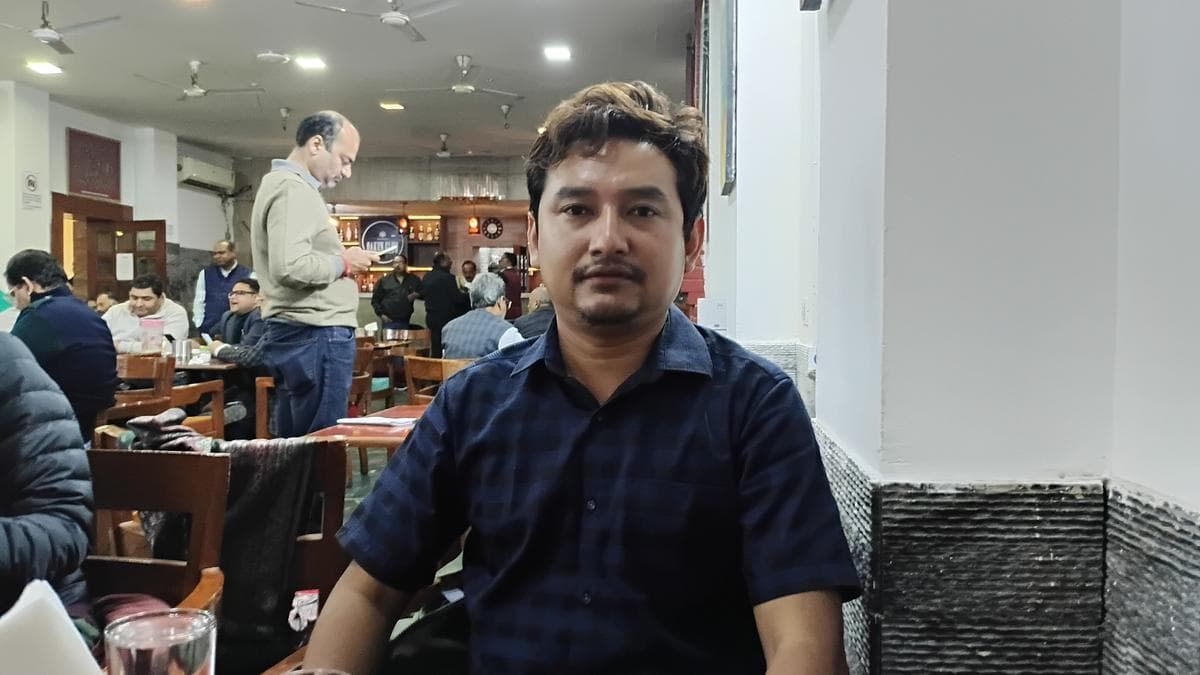
Capt. Kaung Thu Win urges India to convey to Myanmar’s military that the “people of Myanmar have rejected the election” that will take place on December 28