
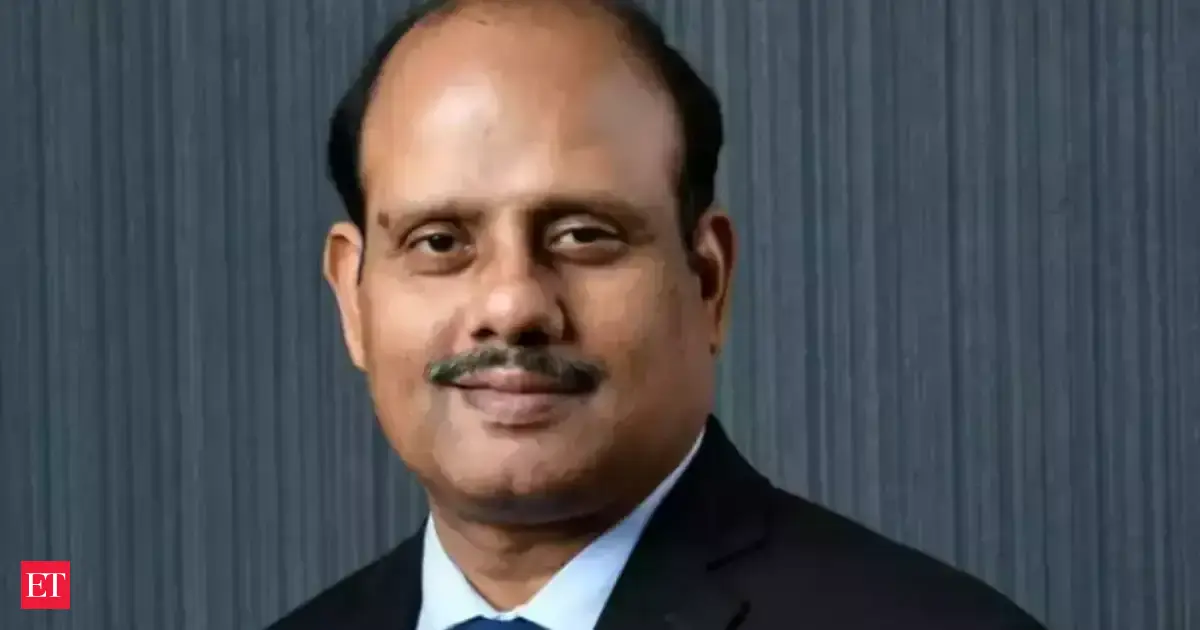
RBI Deputy Governor Swaminathan J issued directive to regulated entities on grievance redressal review
GK and monthly revision
RBI Deputy Governor Swaminathan J asks regulated entities to review internal grievance redressal processes
RBI Deputy Governor Swaminathan J directed regulated entities to review internal grievance redressal mechanisms and design complaint management systems that prevent bypassing the Internal Ombudsman. He emphasized leveraging technology for faster, transparent resolution amid evolving customer expectations. This directive strengthens consumer protection in financial services and aligns with RBI's focus on governance and accountability. For exams, it highlights RBI's regulatory priorities and the role of Internal Ombudsman in grievance redressal.
Revision structure
Monthly events and exam calendar context
Static GK and one-liner notes
Quiz and mock-test revision path
Key points
Exam-ready takeaways
Entities asked to design complaint systems preventing bypass of Internal Ombudsman
Emphasis on technology-driven, faster and transparent grievance resolution
Directive reflects RBI's focus on consumer protection and governance in financial services
Internal Ombudsman mechanism is central to RBI's grievance redressal framework for regulated entities
Detailed analysis
Full exam-oriented breakdown
The Reserve Bank of India (RBI), under the leadership of Deputy Governor Swaminathan J, has issued a significant directive to all regulated entities — including commercial banks, non-banking financial companies (NBFCs), payment system operators, and other financial intermediaries — to comprehensively review and strengthen their internal grievance redressal mechanisms. This directive, rooted in the RBI's ongoing commitment to consumer protection and financial sector governance, comes at a time when digital financial services have expanded exponentially, especially post-COVID-19, transforming customer expectations for speed, transparency, and accountability. The core of the directive emphasizes that complaint management systems must be designed to prevent any bypassing of the Internal Ombudsman (IO), a quasi-judicial mechanism mandated by the RBI for banks and select NBFCs under the Internal Ombudsman Scheme, 2018 (for banks) and extended to NBFCs in 2020. The Internal Ombudsman serves as an independent, in-house appellate authority that reviews complaints partially or fully rejected by the entity's frontline grievance redressal officers, ensuring a second layer of scrutiny before a customer approaches the RBI's Banking Ombudsman Scheme (now integrated into the Reserve Bank - Integrated Ombudsman Scheme, 2021). Historically, the RBI introduced the Banking Ombudsman Scheme in 1995 under Section 35A of the Banking Regulation Act, 1949, to provide a cost-free, expeditious dispute resolution mechanism. Over the years, the framework evolved — the Internal Ombudsman was introduced to reduce the burden on the external Ombudsman and promote self-correction within institutions. However, supervisory findings revealed that some entities were allowing complaints to be resolved or closed at lower levels without IO review, undermining the scheme's integrity. Deputy Governor Swaminathan's directive directly addresses this governance gap. Key stakeholders include the RBI's Department of Consumer Education and Protection (DCEP), regulated entities' senior management and compliance officers, Internal Ombudsmen (typically retired senior bankers or legal professionals), and most importantly, the end consumers — retail depositors, borrowers, digital payment users, and small businesses. The directive underscores that technology should not merely automate processes but enhance transparency — for instance, through real-time complaint tracking, AI-driven root cause analysis, and audit trails that ensure no complaint skips the IO stage. Constitutionally, while financial regulation falls under the Union List (Entry 45, Banking; Entry 46, Insurance; Entry 47, Stock Exchanges), consumer protection in financial services aligns with the Directive Principles of State Policy, particularly Article 39(b) and (c) — equitable distribution of material resources and prevention of concentration of wealth — and Article 43, which advocates for securing living standards. The Consumer Protection Act, 2019, though primarily for goods and services, complements this by recognizing unfair trade practices, a principle the RBI extends to financial mis-selling and service deficiencies. This move connects to broader themes: strengthening governance in financial institutions (linking to the RBI's Prompt Corrective Action framework and the proposed Financial Resolution and Deposit Insurance Bill), enhancing trust in digital payments (critical for the success of UPI, CBDC, and financial inclusion), and aligning with global standards like the G20/OECD High-Level Principles on Financial Consumer Protection. Looking ahead, we can expect: (1) stricter supervisory scrutiny of IO functioning during RBI inspections; (2) potential penalties under the Banking Regulation Act for non-compliance; (3) integration of grievance data into the RBI's Centralized Complaint Management System (CMS) for analytics; and (4) possible extension of the IO framework to fintechs and payment aggregators as the regulatory perimeter expands. For aspirants, this is not just a circular — it's a window into how India's central bank balances innovation with protection, governance with agility, in the world's fastest-growing major digital economy.
How to study
Turn news into exam marks
Revise monthly events by exam family instead of reading random updates.
Pair one-liners with mock tests so mistakes become the next revision list.
Keep state job pages, calendar pages and GK packs connected in one path.