
The news refers to a quiz on ISRO's PSLV rocket history, triggered by the failure of the PSLV-C62 mission.
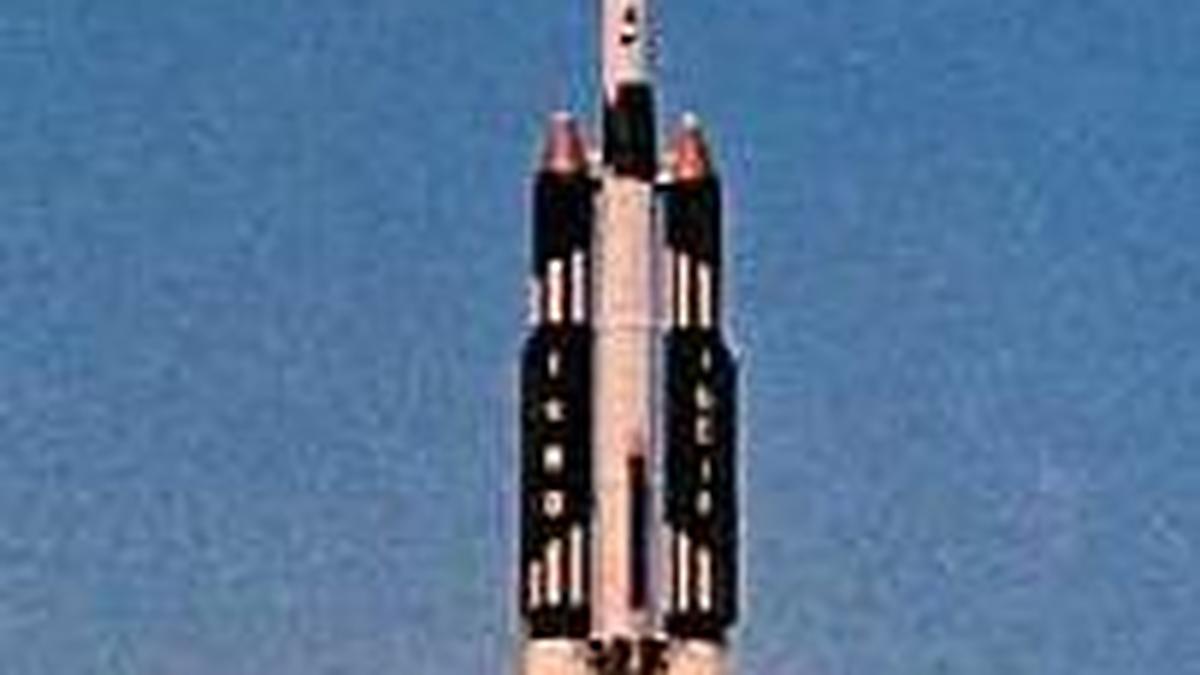
GK and monthly revision
Daily Quiz: On ISRO’s PSLV rocket
The article discusses a quiz on the storied history of ISRO's Polar Satellite Launch Vehicle (PSLV) rocket, prompted by the recent failure of the PSLV-C62 mission. PSLV is a crucial component of India's space program, renowned for its reliability and role in numerous landmark missions. Understanding PSLV's history, capabilities, and key missions is highly significant for competitive exams, particularly in the science and technology sections, highlighting India's advancements in space exploration.
Revision structure
Monthly events and exam calendar context
Static GK and one-liner notes
Quiz and mock-test revision path
Key points
Exam-ready takeaways
PSLV (Polar Satellite Launch Vehicle) is ISRO's third-generation launch vehicle, widely known as the 'workhorse' for its reliability.
The first successful launch of PSLV was PSLV-D2 on October 21, 1994, which successfully placed the IRS-P2 satellite into orbit.
PSLV-C37 set a world record on February 15, 2017, by successfully launching 104 satellites in a single mission.
Key missions launched by PSLV include Chandrayaan-1 (PSLV-C11) in 2008 and the Mars Orbiter Mission (PSLV-C25) in 2013.
Detailed analysis
Full exam-oriented breakdown
The news of a quiz on the storied history of ISRO's Polar Satellite Launch Vehicle (PSLV) rocket, prompted by a recent mission failure (PSLV-C62), brings into sharp focus one of India's most significant technological achievements. The PSLV is not just a rocket; it is a symbol of India's self-reliance in space technology, a testament to decades of scientific endeavour, and a crucial enabler of national development and strategic autonomy. **Background Context and Historical Journey:** India's journey in space began with the vision of Dr. Vikram Sarabhai, who recognized the potential of space technology for national development. The establishment of ISRO in 1969 marked the formal beginning of this ambitious journey. Early efforts focused on developing indigenous satellite technology and launch capabilities. After initial experimental vehicles like SLV-3 and ASLV, the need for a more robust and versatile launch vehicle became apparent. This led to the conception of the PSLV, a third-generation launch vehicle designed primarily to place Indian Remote Sensing (IRS) satellites into Polar Sun-Synchronous Orbits (SSO). Its development was a monumental task, involving complex engineering challenges and the mastering of cryogenic technology. The first successful launch of PSLV was PSLV-D2 on October 21, 1994, which successfully placed the IRS-P2 satellite into orbit. This mission was a watershed moment, demonstrating India's capability to launch its own satellites. Since then, the PSLV has earned the moniker 'workhorse' of ISRO, known for its exceptional reliability and versatility. It has undergone several upgrades and variants, including PSLV-CA (Core Alone), PSLV-DL, PSLV-QL, and PSLV-XL, each designed to cater to different payload requirements and mission profiles. **Key Stakeholders and Their Roles:** At the heart of India's space program is the **Indian Space Research Organisation (ISRO)**, an agency under the Department of Space (DoS), which reports directly to the Prime Minister of India. ISRO is responsible for the design, development, and operation of launch vehicles and satellites. The **Department of Space (DoS)** formulates space policies and oversees their implementation. Recently, **NewSpace India Limited (NSIL)**, a Public Sector Undertaking (PSU) under DoS, has been established to commercialize ISRO's technologies and products, including PSLV launches for international customers. **Indian National Space Promotion and Authorization Centre (IN-SPACe)** acts as a single-window agency to promote, enable, authorize, and supervise space activities of non-governmental entities (NGEs) and private sectors. The **Indian government** provides the strategic direction, funding, and policy framework for the entire space program. **Significance for India:** PSLV's success has profound implications for India. Firstly, it ensures **self-reliance** in launching satellites, reducing dependence on foreign launch providers and saving significant foreign exchange. Secondly, it has enabled critical **national applications** in remote sensing, meteorology, disaster management, and communication, directly contributing to socio-economic development. Thirdly, PSLV has been instrumental in India's foray into **planetary exploration**, launching landmark missions like Chandrayaan-1 (PSLV-C11, 2008) to the Moon and the Mars Orbiter Mission (PSLV-C25, 2013). These missions have not only advanced scientific knowledge but also elevated India's global standing in space. Fourthly, PSLV's reliability has made India a preferred destination for **commercial satellite launches**, with PSLV-C37 setting a world record on February 15, 2017, by successfully launching 104 satellites in a single mission. This commercial success generates revenue and strengthens India's 'space economy'. Strategically, indigenous launch capabilities are vital for national security and strategic reconnaissance. **Broader Themes and Constitutional Linkages:** While there's no specific constitutional article dedicated to space, India's space program aligns with several constitutional principles and national policies. The pursuit of scientific and technological excellence, as embodied by ISRO, reflects the **Fundamental Duty** enshrined in **Article 51A(h)**, which mandates citizens to 'develop the scientific temper, humanism and the spirit of inquiry and reform.' The benefits derived from space applications, such as improved weather forecasting for farmers or disaster warning systems, contribute to the **Directive Principles of State Policy**, particularly those aimed at improving public welfare. The **Indian Space Policy 2023** further solidifies the government's vision, aiming to increase private sector participation, foster innovation, and make India a global leader in the space economy. This policy, along with the establishment of IN-SPACe and NSIL, demonstrates a strategic shift towards leveraging space for economic growth and international collaboration. **Future Implications:** The recent PSLV-C62 mission failure serves as a reminder of the inherent risks in space exploration, but it is also an opportunity for learning and improvement. ISRO's robust review mechanisms ensure that such incidents lead to enhanced reliability. Looking ahead, PSLV will continue to be a crucial launch vehicle, but its role might evolve with the advent of more powerful rockets like GSLV Mk-III (LVM3) and the development of next-generation launch vehicles (NGLV). The focus will also shift towards increasing private sector participation in satellite manufacturing and launch services, as outlined in the new space policy. India is also working on ambitious human spaceflight missions like Gaganyaan, where reliable launch systems are paramount. The 'workhorse' PSLV will likely continue to evolve, adapting to new challenges and solidifying India's position as a major spacefaring nation, contributing to global space exploration and applications.
How to study
Turn news into exam marks
Revise monthly events by exam family instead of reading random updates.
Pair one-liners with mock tests so mistakes become the next revision list.
Keep state job pages, calendar pages and GK packs connected in one path.